
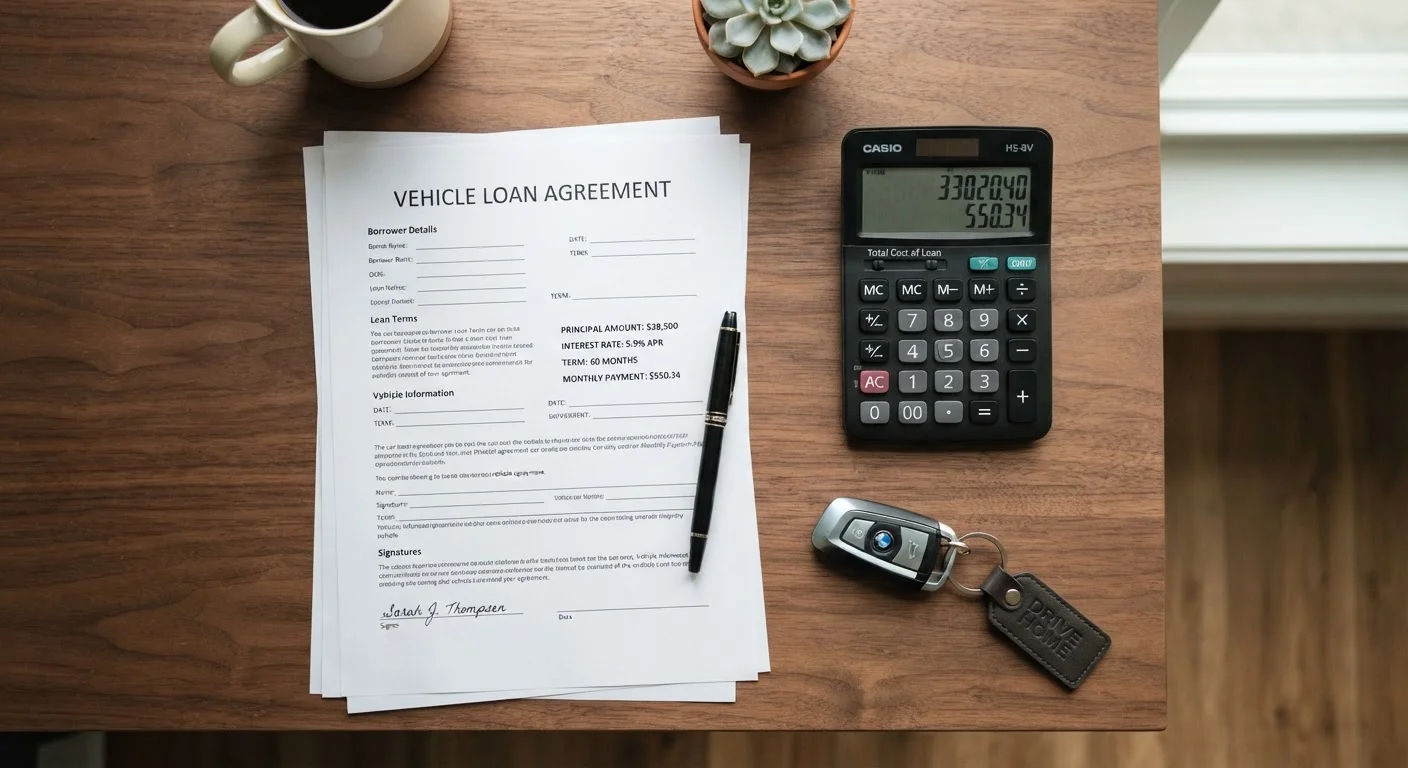
The Mechanics of Simple Interest on a Car Loan
Most auto loans in the United States use simple interest - interest is calculated only on the remaining principal balance, not on previously accrued interest. Each day that passes, a small amount of interest accrues based on that day's outstanding balance. When your monthly payment arrives, the lender applies it first to the accumulated interest, then to the principal.
This is meaningfully different from how credit card debt works. For a deeper look at that contrast, see our explanation of how interest compounds on credit card debt.
Because the principal is highest at the start of your loan, so is the daily interest charge. As you make payments and the balance declines, a progressively larger share of each fixed payment reduces the amount you actually owe. This pattern is what lenders call an amortization schedule.
Auto Loans vs. Compound Interest Products
Unlike a savings account or certain types of debt, standard auto loans do not compound interest - meaning you are never charged interest on previously accrued interest. This makes them more predictable than revolving credit products. For a broader understanding of how compounding works in other financial contexts, see our breakdown of compound interest over time.
How Loan Term Length Changes What You Pay
Stretching a loan from 48 months to 72 months lowers the monthly payment - but it keeps a higher principal balance outstanding for longer, generating more cumulative interest. Consider a simplified illustration: on a $25,000 loan at 7% APR, a 48-month term produces a meaningfully lower total interest cost than a 72-month term, even though the monthly payment difference feels manageable.
~$6,000+
Extra interest on a 72- vs. 48-month $25K loan at 7%
Illustrative calculation based on standard amortization math; actual amounts vary by rate, fees, and lender terms.
72 months
Most common new-car loan term in recent years
Industry data from Experian's State of the Automotive Finance Market reports consistently shows loan terms of 72 months or longer accounting for a large share of new-vehicle financing.
Day 1
When interest starts accruing on most auto loans
Simple interest auto loans begin accruing interest from the date of origination, meaning delays between signing and first payment can add to your total cost.
The lesson isn't that longer terms are always wrong - cash flow matters - but that the true cost of a longer term is often larger than the monthly payment difference suggests. Pairing this with an understanding of the full cost of owning a car beyond the monthly payment gives a clearer picture of what vehicle ownership actually demands financially.
APR vs. Interest Rate: What You're Really Agreeing To
Lenders are required to disclose the APR on loan offers, and for good reason. The stated interest rate only reflects the annual cost of borrowing the principal. APR folds in origination fees and other lender charges to produce a single, standardized annual cost figure.
Two loans with the same interest rate but different fees will have different APRs - and the one with the higher APR will cost you more overall. Always use APR as your primary comparison point. If you want a full grounding in borrowing terminology before you sit down with a lender, our glossary of key borrower terms covers the essentials clearly.
Always Request a Full Amortization Schedule
Before signing any auto loan agreement, ask the lender for a month-by-month amortization schedule. This document shows exactly how much of each payment goes to interest versus principal at every stage of the loan. Reviewing it helps you understand your true cost - and spot the most effective moments to make extra principal payments.
How Extra Payments Work in Your Favor
Because auto loan interest accrues daily on the outstanding balance, any additional amount you apply directly to principal immediately reduces the base on which future interest is calculated. A $50 extra principal payment in month three has a compounding benefit - it lowers every subsequent month's interest charge for the life of the loan.
This is not a strategy that requires large lump sums. Rounding up monthly payments, applying tax refunds to principal, or making one extra payment per year each provide measurable interest savings. Always confirm with your lender that any extra payment is designated toward principal only - otherwise it may simply be treated as an early payment of the next scheduled installment, which provides less benefit.
This article is for general informational and educational purposes only and does not constitute personalized financial or legal advice. Consult a licensed financial professional for guidance specific to your situation.