
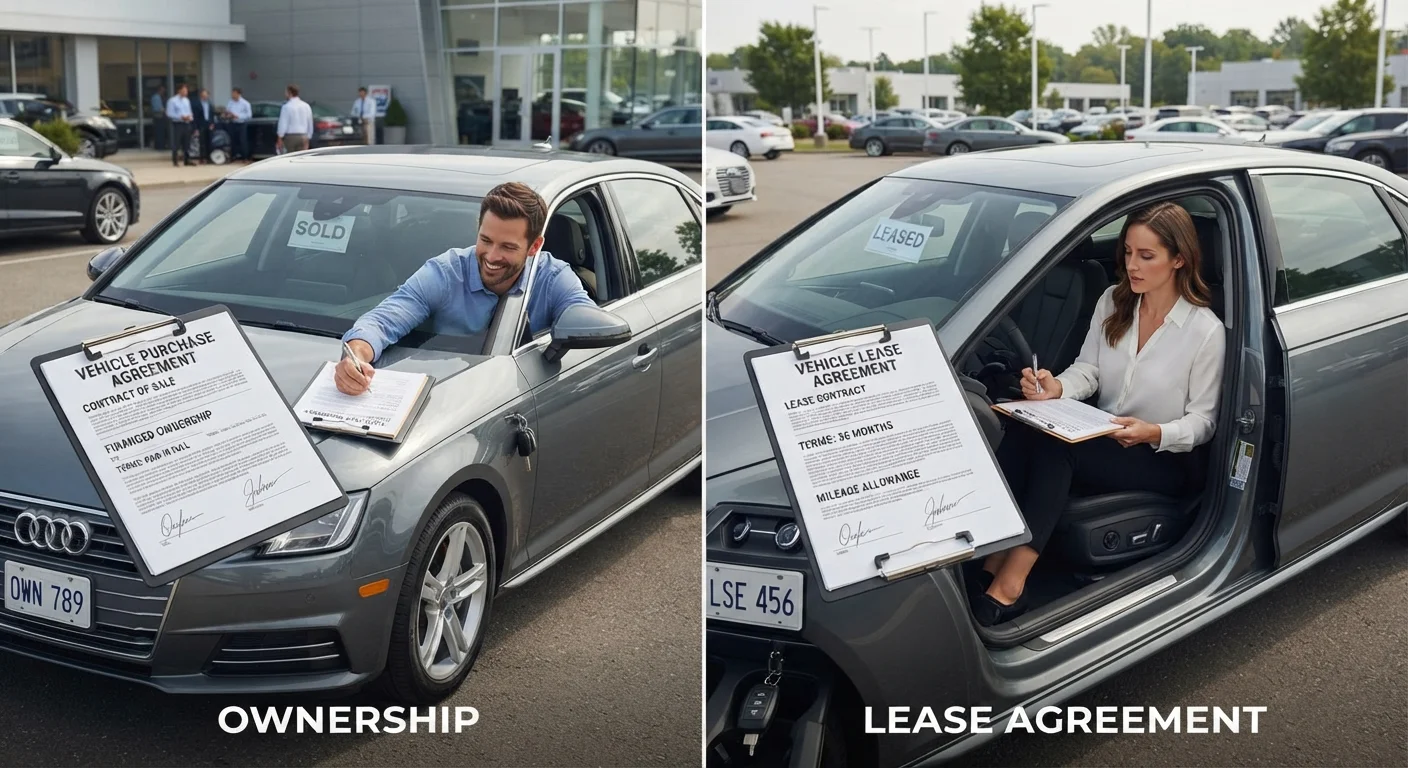
The Core Difference: Ownership vs. Access
When you buy a car - whether with cash or a loan - you own it outright once the loan is paid off. You can drive it as many miles as you like, sell it whenever you want, and keep it until the wheels fall off. When you lease a car, you're essentially renting it from the dealer or leasing company for a fixed term, typically 24 to 36 months. At the end, you either hand it back or, with many leases, have the option to buy it at a predetermined residual value.
This distinction has real financial and practical consequences. Understanding those consequences starts with knowing your own driving habits and what you actually need from a vehicle. For a broader look at what ownership really costs, see the full cost of owning a car beyond the monthly payment.
| Criterion | Buying | Leasing |
|---|---|---|
| Ownership | Yes - full ownership after payoff | No - vehicle is returned or bought out |
| Monthly Payment | Higher (financing full value) | Lower (financing depreciation only) |
| Mileage Limits | None | Typically 10,000-15,000 miles/year |
| Upfront Costs | Down payment + taxes + fees | First payment + fees (varies) |
| Long-Term Cost | Lower if kept past loan payoff | Higher if leasing continuously |
| Flexibility to Modify | Full - any modification allowed | Restricted - must return near-original |
| Warranty Coverage | Expires; repair costs shift to owner | Usually covered through lease term |
| Early Exit | Sell or trade in anytime | Early termination fees apply |
How Mileage Changes the Math
Mileage is often the deciding factor. Most lease agreements cap annual mileage at 10,000, 12,000, or 15,000 miles. If you exceed that cap, you'll pay a per-mile overage fee at lease-end - commonly $0.15 to $0.25 per mile. For a driver who exceeds the cap by 5,000 miles over a three-year lease, that's potentially $2,250 in fees tacked on at return.
Buyers face no such restrictions. If your commute is long, you travel frequently for work, or you take regular road trips, purchasing typically makes more financial sense. Conversely, a driver with a short urban commute who barely hits 10,000 miles annually may find leasing slots neatly into their lifestyle without ever triggering a penalty.
15,000
Average annual miles driven by US drivers
The Federal Highway Administration reports the average American drives approximately 15,000 miles per year - right at or above many standard lease caps.
~20-30%
Typical first-year vehicle depreciation
Many vehicles lose 20-30% of their value within the first year of ownership, according to general industry depreciation estimates.
$0.15-$0.25
Typical per-mile lease overage fee
Excess mileage charges on most consumer leases fall in this range per mile, making high-mileage driving significantly more expensive under a lease.
It's also worth factoring in how depreciation affects buyers. Vehicles lose a significant portion of their value in the first few years of ownership - a reality that benefits lessees in the short term, since they simply return the car when depreciation is steepest. If you're buying, understanding how that curve works matters. Our article on depreciation and your car's resale value breaks down the math.
Monthly Payments and Budget Fit
Lease payments are generally lower than loan payments for the same vehicle because you're only financing the depreciation that occurs during the lease term - not the full purchase price. This can make a newer or higher-trim vehicle accessible at a monthly cost that a purchase loan wouldn't allow.
However, lower monthly payments don't automatically mean lower total cost. Over a decade, someone who buys and keeps a paid-off vehicle will typically spend less than someone in a continuous cycle of new leases. Leasing works best when you treat it as a deliberate financial strategy rather than simply a way to afford more car. For guidance on how to classify this kind of recurring expense in a spending plan, the framework in fixed vs. variable expenses is a useful foundation.
Gap Insurance and Lease Agreements
Many leases include Guaranteed Asset Protection (GAP) coverage, which covers the difference between what you owe on the lease and the vehicle's actual cash value if it's totaled or stolen. Buyers who finance a vehicle often have the option to purchase GAP insurance separately. Whether buying or leasing, review your financing documents carefully to understand what coverage is included and what you may need to add. Insurance terms vary by provider.
Flexibility, Restrictions, and the End of Term
Ownership gives you options at every stage. You can sell privately, trade in, refinance, or simply keep driving. Lessees have a narrower set of choices and face restrictions along the way: no significant modifications, wear-and-tear standards that can trigger end-of-lease charges, and early termination fees that can be substantial if your situation changes mid-lease.
On the maintenance side, both paths carry responsibilities. Lessees must keep up with scheduled service - skipping it can result in penalties - while owners bear all maintenance costs as the vehicle ages. See routine maintenance tasks most drivers forget for a practical checklist that applies regardless of which path you choose. For a related look at how the new-vs-used decision interacts with financing, new car vs. used car trade-offs covers the key variables honestly.
This article is for general informational purposes only and does not constitute financial or legal advice. Consult a licensed financial professional before making vehicle financing decisions based on your personal circumstances.