
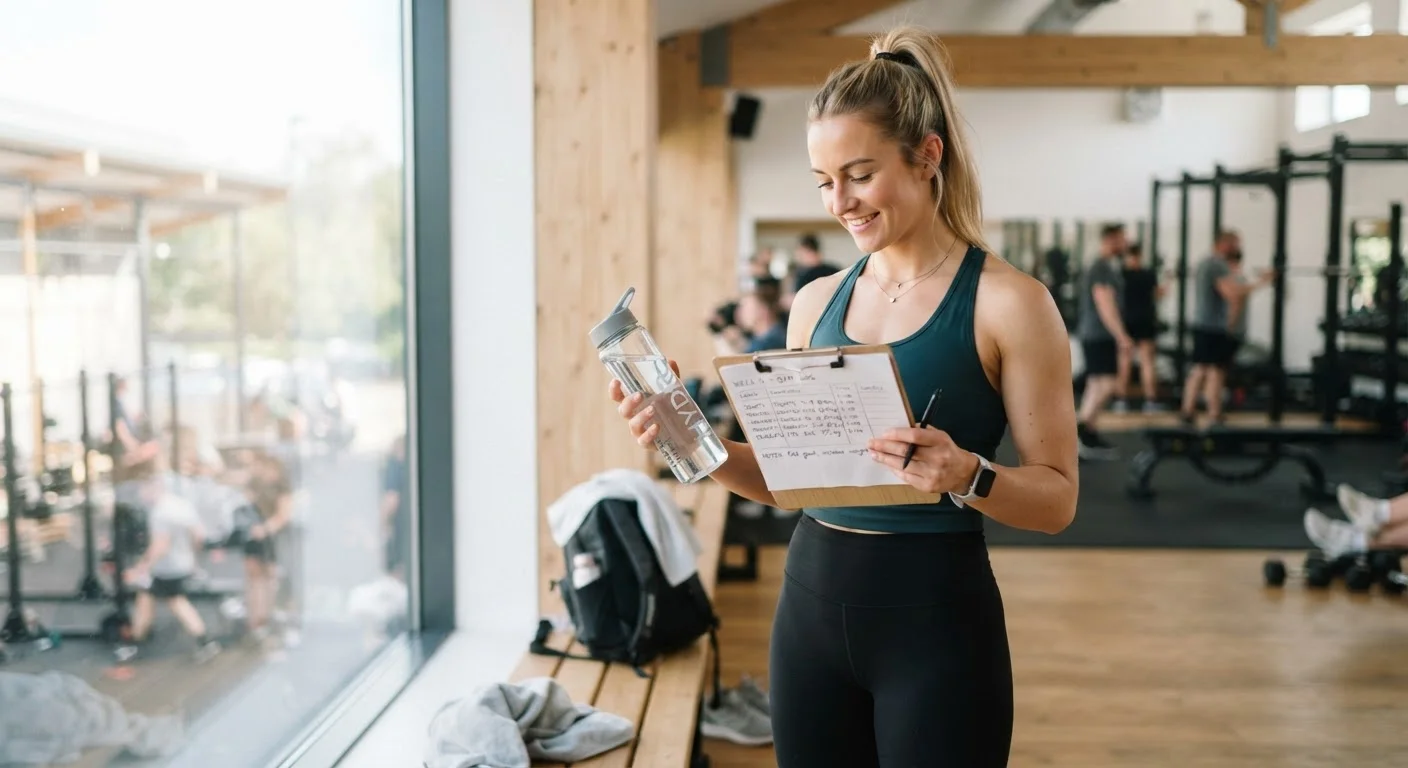
Why a Pre-Exercise Check Matters
Most workout injuries and setbacks don't happen because people pushed too hard - they happen because people didn't pause long enough to notice warning signs before they started. A brief pre-exercise review takes minutes but can prevent weeks of recovery time.
This checklist applies whether you're returning to fitness after a long break, ramping up the intensity of an existing routine, or simply starting fresh. If you're new to structured exercise, our guide on starting a fitness routine when you've been sedentary for years pairs directly with this checklist to help you build sustainable habits safely.
Work through the items below before each session - especially when beginning a new program or increasing your training load.
Water bottle (insulated)
Keeps fluids accessible throughout your session to support consistent hydration.
Fitness journal or tracking app
Logs previous sessions so you can assess recovery time and plan appropriate intensity.
Properly fitted athletic footwear
Provides appropriate support and grip for your specific workout type, reducing injury risk.
Light snack (e.g., banana, whole-grain crackers)
Provides available energy for exercise without overloading the digestive system.
How to Use This Checklist
Review each group before starting your workout. Must items are non-negotiable - skip them and you increase your injury or health risk meaningfully. Should items are strongly recommended and support performance and recovery. Nice-to-have items are optional enhancements for those who want an extra edge.
If any item flags a concern - particularly in the Health Signals group - take it seriously. Pause, adjust your plan, or consult a healthcare professional before continuing. For help structuring workouts that fit your real schedule, see our resource on building a weekly exercise schedule that fits real life.
Health Signals
Hydration & Nutrition
Sleep & Recovery
Equipment & Environment
Mindset & Plan Readiness
Stop and Seek Medical Advice If You Notice These Signs
Chest pain or pressure, irregular heartbeat, sudden severe dizziness, or difficulty breathing are not symptoms to push through. These may indicate a serious cardiovascular or respiratory condition. Do not begin or continue exercise if any of these are present - contact a healthcare provider or emergency services immediately. This checklist does not replace medical clearance for individuals with known heart disease, recent surgery, or other serious health conditions.
After the Checklist: Set Yourself Up to Finish Well
Completing this checklist is the starting line, not the finish line. Once you've confirmed you're ready to train, build in a proper warm-up - light movement that elevates your heart rate gradually and primes the muscles you'll be using. Our article on warm-up and cool-down routines worth actually doing covers exactly what to include and what to skip.
Revisit this checklist regularly. As your fitness level changes or your routine evolves, some items will shift in how they apply to you - and that's a sign of progress.
Don't Skip the Warm-Up After Clearing the Checklist
Completing this pre-exercise review means you're ready to begin - not ready to go full intensity immediately. Jumping into high-effort exercise with cold muscles significantly increases the risk of strains and tears. Always follow this checklist with 5-10 minutes of gradual movement to prepare your body for the demands ahead.
High Heat and Humidity Require Extra Caution
Exercising in hot or humid conditions raises the risk of heat exhaustion and heat stroke, even for fit individuals. Reduce intensity, increase hydration, and plan outdoor workouts for cooler parts of the day. If you feel overheated, stop exercising and move to a cool environment immediately.
This article is for general informational and educational purposes only and does not constitute medical advice. Always consult a qualified healthcare professional before beginning, changing, or intensifying an exercise program, especially if you have a known health condition, are pregnant, or have been recently ill or injured.