
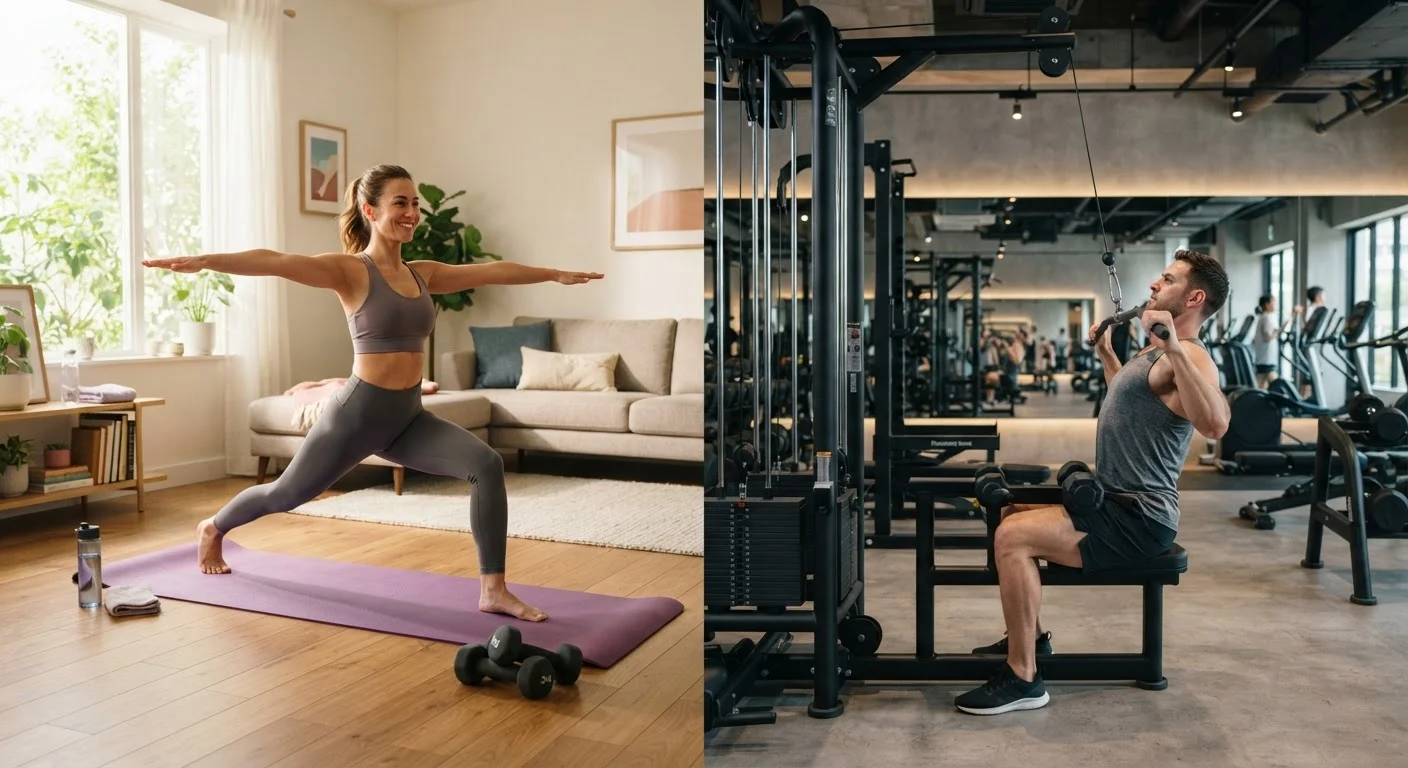
The Real Cost Comparison
The financial picture is more nuanced than a simple monthly fee comparison. A gym membership in the United States commonly ranges from under $25 to over $100 per month depending on location and amenities - that's roughly $300 to $1,200 or more annually, plus potential initiation fees. Over five years, cumulative spending can be substantial.
Home setups involve different math. A basic resistance band collection costs relatively little, but a functional home gym - including an adjustable bench, a set of dumbbells or kettlebells, and a cardio option like a jump rope or stationary bike - can run anywhere from a few hundred to several thousand dollars upfront. After that initial investment, ongoing costs are minimal.
The break-even point varies by individual, but many home exercisers find their setup pays for itself within one to three years compared to a mid-range gym membership. For a deeper look at how fitness expenses fit into monthly budgeting, the Budgeting Basics hub offers practical frameworks for tracking discretionary spending.
~$563
Average annual U.S. gym membership cost
The International Health, Racquet & Sportsclub Association (IHRSA) has reported average annual membership spending in this range for U.S. fitness club members.
~50%
Gym members who rarely use their membership
Industry research has long found that a significant share of gym members - often estimated around half - attend infrequently relative to their stated intentions when signing up.
Equipment, Space, and Exercise Variety
A commercial gym's primary advantage is variety. Olympic barbells, cable machines, squat racks, swimming pools, and group fitness studios are rarely replicable at home without substantial investment. For anyone pursuing powerlifting, Olympic weightlifting, or highly specialized training, the gym's equipment roster is genuinely difficult to match.
Home workouts, however, are more versatile than many people assume. Bodyweight training - push-ups, pull-ups, lunges, planks - can build genuine strength and cardiovascular fitness without any equipment. If you're curious about how different training styles affect your body, understanding the physiological differences between cardio and strength training can help you identify which approach aligns with your goals.
Space is a legitimate constraint. Not every home has a spare room or garage. Even a cleared 6-by-6-foot area, however, supports a surprisingly comprehensive routine when programmed thoughtfully.
| Home Workouts | Gym Membership | |
|---|---|---|
| Upfront Cost | Moderate to high (equipment) | Low to moderate (initiation fee) |
| Ongoing Cost | Minimal after setup | $25-$100+ per month |
| Equipment Variety | Limited by budget and space | Extensive, professionally maintained |
| Convenience | No commute; available 24/7 | Requires travel; set operating hours |
| Accountability & Social Support | Self-directed; limited external cues | Classes, trainers, and training partners |
| Space Required | Minimum 6×6 ft for basics | No personal space needed |
| Best For | Flexible, self-motivated individuals | Those needing structure or specialized gear |
Consistency, Motivation, and Environment
Research in behavioral science consistently finds that environmental design strongly influences habit formation. A gym creates a dedicated context for exercise - walking through its doors signals to the brain that it's time to work. That environmental cue is powerful, especially early in a fitness journey.
Home workouts remove the commute friction that derails many gym-goers, but they introduce competing distractions: household chores, family members, screens. Some people flourish in that autonomous environment; others find motivation difficult to sustain without external structure.
Design Your Environment for Success
If training at home, designate a specific physical space - even a small corner - solely for exercise. Keeping equipment visible and accessible reduces the mental effort of starting a session. Similarly, scheduling workouts at the same time each day helps transform them from decisions into habits. Small environmental nudges often matter more than motivation alone.
Social dynamics also matter. Group fitness classes, training partners, and even ambient gym energy can elevate effort and enjoyment. If those elements matter to you, a gym membership may deliver value that isn't captured in any equipment spec sheet. For strategies on building a routine that actually sticks around a real-life schedule, see building a weekly exercise schedule that fits real life.
It's also worth separating mythology from evidence when setting expectations. Common fitness myths - like the idea that results require gym machines - can quietly undermine home exercisers' confidence in their approach.
Making the Decision: Questions Worth Asking
Neither option is objectively superior. The following questions can help clarify which environment better supports your individual situation:
- How far is your nearest gym, and does that commute realistically fit your schedule? A 20-minute round trip adds up to over 120 hours per year.
- Do you have the self-direction to train without external accountability? Honest self-assessment here prevents wasted spending in either direction.
- What are your specific fitness goals? Heavy barbell training, lap swimming, or supervised physical therapy all favor a gym. Flexibility, bodyweight strength, and general conditioning are highly achievable at home.
- What is your actual available space and budget for equipment? A modest, well-chosen home setup often outperforms an unused gym membership.
Some people find a hybrid approach works well - maintaining a lower-cost gym membership for specific equipment while doing the majority of training at home. Consistency, not intensity or location, tends to drive long-term outcomes - a finding worth anchoring any decision to.
This article is for general informational purposes only and does not constitute medical or professional fitness advice. Consult a qualified healthcare provider or certified fitness professional before beginning or significantly changing an exercise program, particularly if you have an existing health condition or injury.