
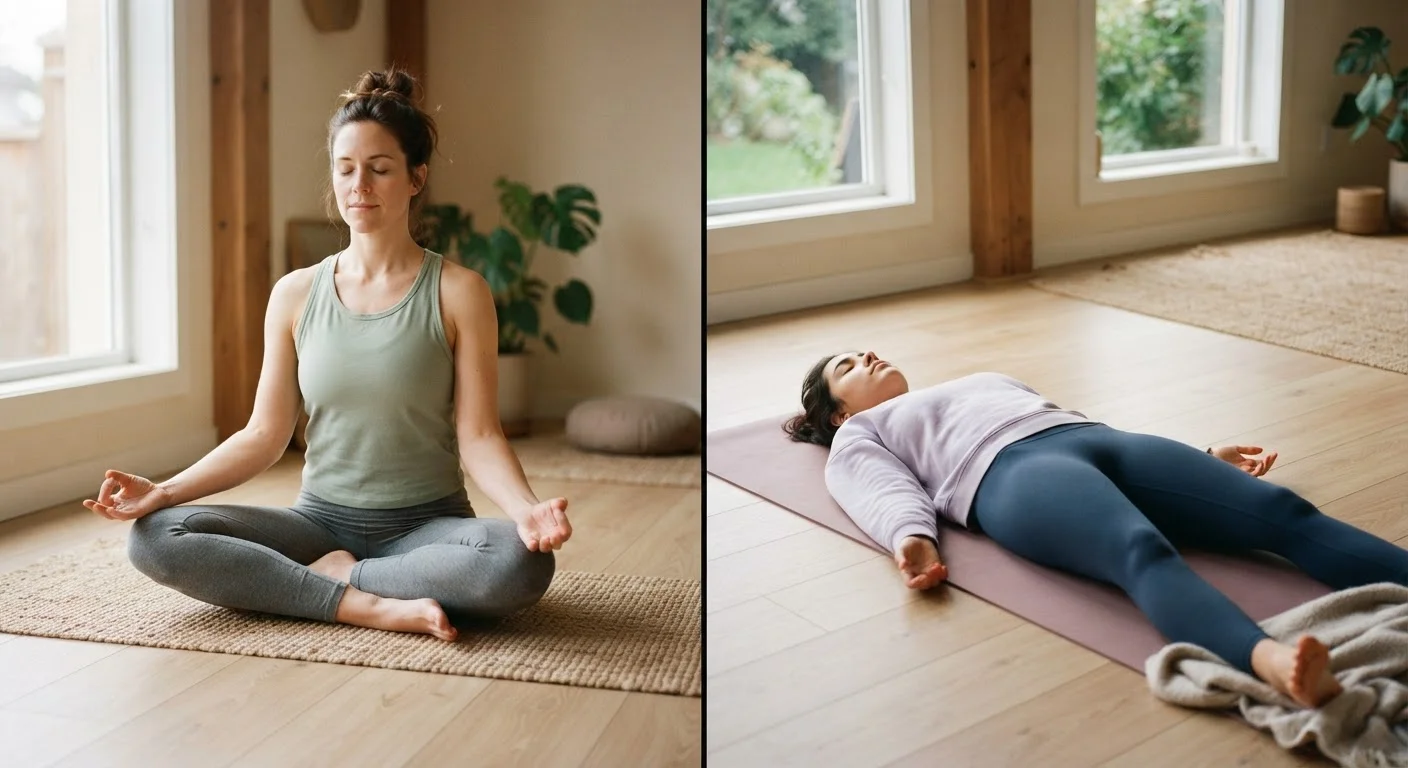
How Each Technique Works
Despite sharing the goal of stress relief, deep breathing and progressive muscle relaxation (PMR) target the body through distinct pathways. Understanding the mechanism behind each helps you choose the right tool for the right moment.
Deep breathing - sometimes called diaphragmatic or controlled breathing - deliberately slows and deepens the breath to stimulate the vagus nerve and activate the parasympathetic nervous system (often called the "rest and digest" system). Physiologically, this can reduce heart rate, lower cortisol levels, and counteract the body's stress response. Common patterns include box breathing (equal counts of inhale, hold, exhale, hold) and the 4-7-8 method, though any slow, intentional breathing offers benefit.
Progressive muscle relaxation, developed by physician Edmund Jacobson in the early 20th century, takes a body-first approach. The practice guides you through a sequence of muscle groups - feet, calves, thighs, abdomen, shoulders, hands, face - tensing each group firmly for several seconds, then releasing. The contrast between tension and release teaches the body to recognize and let go of chronic tightness that often goes unnoticed under everyday stress.
Both techniques are explored in detail as part of a broader toolkit in our guide to mental wellness practices worth knowing about.
| Criterion | Deep Breathing | Progressive Muscle Relaxation |
|---|---|---|
| Primary mechanism | Regulates nervous system via breath control | Releases tension through tense-and-release cycles |
| Time required | 2-5 minutes | 15-20 minutes |
| Location flexibility | Anywhere, including public spaces | Requires privacy and space to sit or lie down |
| Learning curve | Very low - immediate to practice | Moderate - benefits build with repetition |
| Best for physical tension | Moderate benefit | Strong, targeted benefit |
| Best for acute stress | Highly effective, immediate use | Less practical in the moment |
| Sleep support | Helpful as part of a bedtime routine | Particularly well-studied for sleep onset |
| Equipment needed | None | None (mat or comfortable surface helpful) |
Research Backing and Practical Evidence
Both approaches have accumulated meaningful research support, though the quality and volume of studies vary.
Deep breathing has been studied in clinical, workplace, and athletic settings. Research suggests regular practice is associated with reduced self-reported anxiety, lower physiological markers of stress (such as heart rate variability improvements), and better emotional regulation. Its speed and simplicity have made it a core component in cognitive-behavioral therapy (CBT) and mindfulness-based stress reduction (MBSR) programs.
PMR has a longer clinical history. It has been studied as a supportive intervention for conditions including generalized anxiety, insomnia, hypertension, and tension headaches. A body of randomized controlled trials suggests PMR may reduce subjective anxiety and improve sleep onset - though effects vary between individuals and are generally most significant when practiced consistently over several weeks.
~60%
Anxiety reduction reported in PMR studies
A meta-analysis published in PLOS ONE found PMR produced meaningful reductions in anxiety across multiple randomized controlled trials.
4-7 mins
Time for deep breathing to shift physiological stress markers
Research suggests even brief sessions of slow, controlled breathing can produce measurable changes in heart rate variability and cortisol response.
3-4 weeks
Typical duration before PMR benefits consolidate
Clinical practice guidelines generally recommend consistent daily PMR practice over several weeks for the most durable tension-reduction outcomes.
It is worth noting that most studies in this space rely on self-reported outcomes, and individual responses differ considerably. Neither technique is a substitute for professional treatment when stress is severe or persistent. If you're unsure whether your stress response needs more than a self-directed reset, our article on signs your stress response may need more than a mental reset outlines when to seek professional support.
Choosing the Right Approach for You
Selecting between the two is less about which is objectively better and more about fit - your lifestyle, symptoms, and how much time you have.
Deep breathing wins on accessibility. It can be done seated at a desk, in a car before a difficult meeting, or in a crowded space without drawing attention. If your stress tends to peak suddenly or unpredictably, having a breathing technique ready is a significant practical advantage.
PMR wins on physical specificity. If you routinely notice tight shoulders after a workday, clench your jaw under pressure, or struggle to fall asleep because your body won't switch off, the deliberate muscle-focus of PMR addresses those patterns more directly. It typically takes 15-20 minutes per session and requires enough privacy and space to lie down or sit comfortably.
The good news is that these techniques are complementary, not mutually exclusive. Many people use deep breathing as a quick daytime tool and PMR as an evening wind-down practice. Before settling on a routine, it's also worth questioning assumptions about what stress is and isn't - our piece on stress myths worth questioning offers a useful reality check.
These Techniques Work Best with Consistency
Like any skill, both deep breathing and PMR show the most benefit with regular, repeated practice rather than occasional use. Starting with even a few minutes daily - rather than waiting for a stressful moment - helps build the habit and strengthens the body's learned relaxation response over time. Consistency matters more than duration.
This article is for general informational purposes only and is not a substitute for professional medical or mental health advice. If you are experiencing significant or persistent stress, anxiety, or related symptoms, please consult a qualified healthcare provider.