
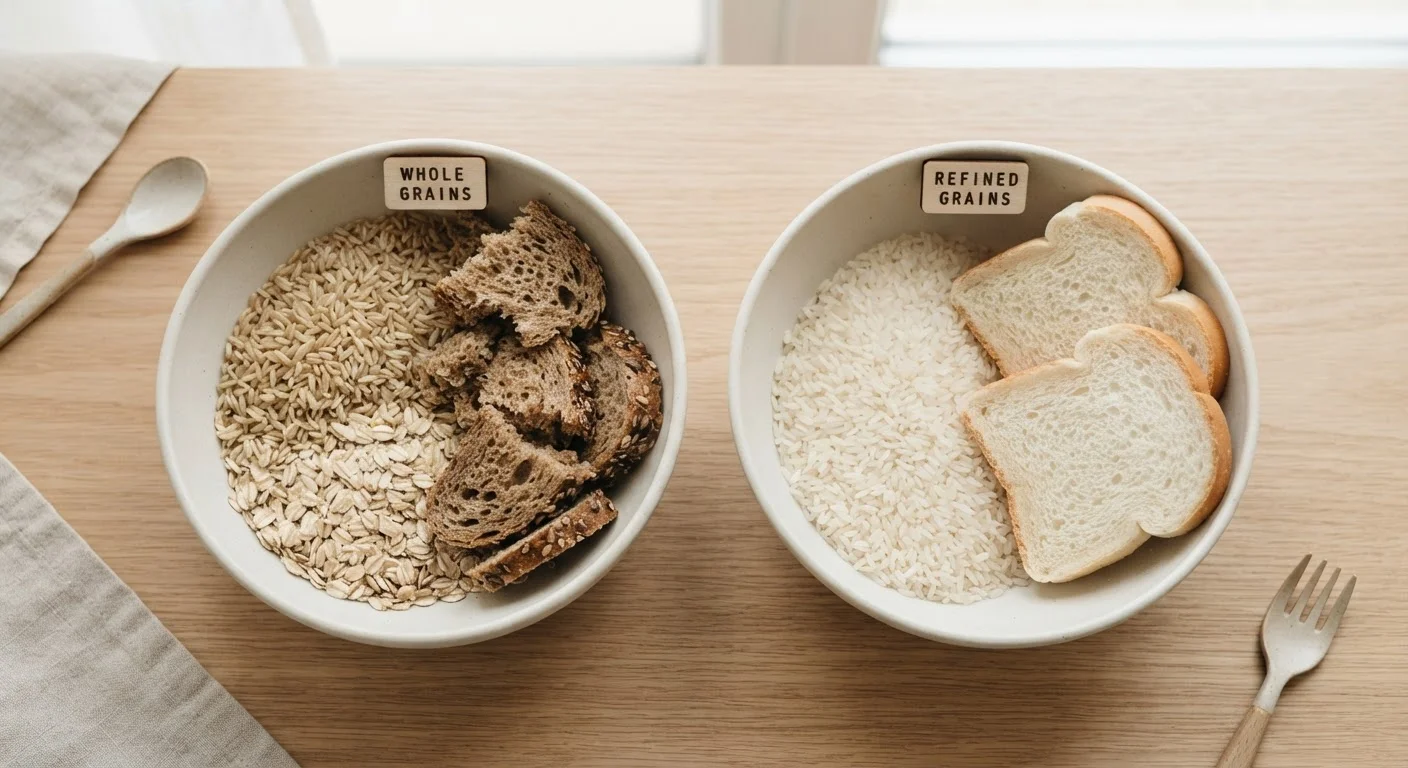
What Makes a Grain 'Whole' or 'Refined'?
A grain kernel has three edible parts: the bran (outer layer, rich in fiber and B vitamins), the germ (the embryo, containing healthy fats, vitamins, and minerals), and the endosperm (the starchy inner portion). A whole grain keeps all three intact. A refined grain has had the bran and germ removed — usually to improve texture and extend shelf life — leaving mostly the starchy endosperm.
Common whole grains include oats, brown rice, quinoa, whole wheat, bulgur, and barley. Common refined grains include white flour, white rice, and most commercial breads, pastries, and crackers made without whole grain labeling.
Some refined grains are enriched — meaning certain nutrients like iron and B vitamins (thiamin, niacin, folic acid) are added back after milling. While this helps restore some nutritional value, the fiber lost during processing is not meaningfully replaced, which has significant downstream effects on digestion and blood sugar regulation.
| Criterion | Whole Grains | Refined Grains |
|---|---|---|
| Parts retained | Bran, germ, endosperm | Endosperm only |
| Fiber content | High | Low (unless added back) |
| Blood sugar response | Slower, more gradual rise | Faster, sharper spike |
| Micronutrient retention | Full natural profile | Partial (enrichment restores some) |
| Shelf life | Shorter (germ contains oils) | Longer |
| Texture in cooking | Chewier, denser | Softer, lighter |
| Common examples | Oats, brown rice, whole wheat | White rice, white flour, white bread |
How Each Type Affects Blood Sugar and Digestion
One of the most clinically meaningful differences between whole and refined grains is how the body processes them. Because refined grains lack fiber and have a less intact physical structure, they are digested and absorbed more rapidly. This leads to a faster, sharper rise in blood glucose — a concept measured by the GI, or glycemic index.
Whole grains, by contrast, digest more slowly. Their fiber content — especially soluble fiber found in oats and barley — slows the movement of food through the digestive tract and blunts glucose absorption. This produces a more gradual rise in blood sugar, which may support sustained energy levels and reduced hunger between meals.
95%
Americans not meeting whole grain recommendations
According to USDA dietary data, roughly 95% of Americans do not meet the recommended daily intake of whole grains.
~25g
Daily fiber recommendation for adults
The Dietary Guidelines for Americans recommend approximately 25–38 grams of fiber daily depending on age and sex, much of which can come from whole grains.
2–3x
More fiber in whole vs. refined grains
Whole wheat bread typically contains two to three times more fiber per serving than white bread made from refined flour.
For gut health, the difference is equally notable. Fiber from whole grains acts as a prebiotic, feeding the beneficial bacteria that live in the large intestine. A diet low in fiber — as is common when refined grains dominate — is associated with reduced microbial diversity in the gut. To learn more about fiber's broader role in the body, see our in-depth guide to dietary fiber.
This article is for general informational and educational purposes only and is not a substitute for professional medical or dietary advice. Consult a qualified healthcare provider or registered dietitian before making significant changes to your diet, especially if you have a medical condition such as diabetes or a digestive disorder.
Making the Switch: Practical Strategies
Replacing refined grains with whole grains doesn't have to be an all-or-nothing effort. Gradual swaps tend to be more sustainable and allow the palate to adjust to different textures and flavors over time.
Check the Ingredient List, Not Just the Label
Front-of-package claims like "multigrain" or "wheat bread" can be misleading — these terms don't mean the product is predominantly made from whole grains. The most reliable check is the ingredient list: the first ingredient should say "whole wheat," "whole oat," "whole grain corn," or another whole grain. If it says "enriched flour" first, the product is primarily refined, regardless of its marketing claims.
- Start with breakfast: Oatmeal, whole grain toast, or high-fiber cereals are accessible entry points where the taste difference is often minimal.
- Swap rice: Brown rice, farro, or quinoa can replace white rice in most dishes. Mixing half-and-half is a low-friction starting point.
- Read labels carefully: Look for "whole wheat" or "whole grain" as the first ingredient. Terms like "multigrain," "wheat bread," or "made with whole grains" do not guarantee a predominantly whole grain product.
- Experiment with ancient grains: Barley, millet, and bulgur offer varied textures and nutrient profiles worth exploring in soups, salads, and sides.
Dietary guidelines from the U.S. Department of Agriculture recommend that at least half of all grains consumed daily be whole grains. For most Americans, current intake falls well short of this target, making gradual, consistent substitution one of the most impactful dietary adjustments available.