
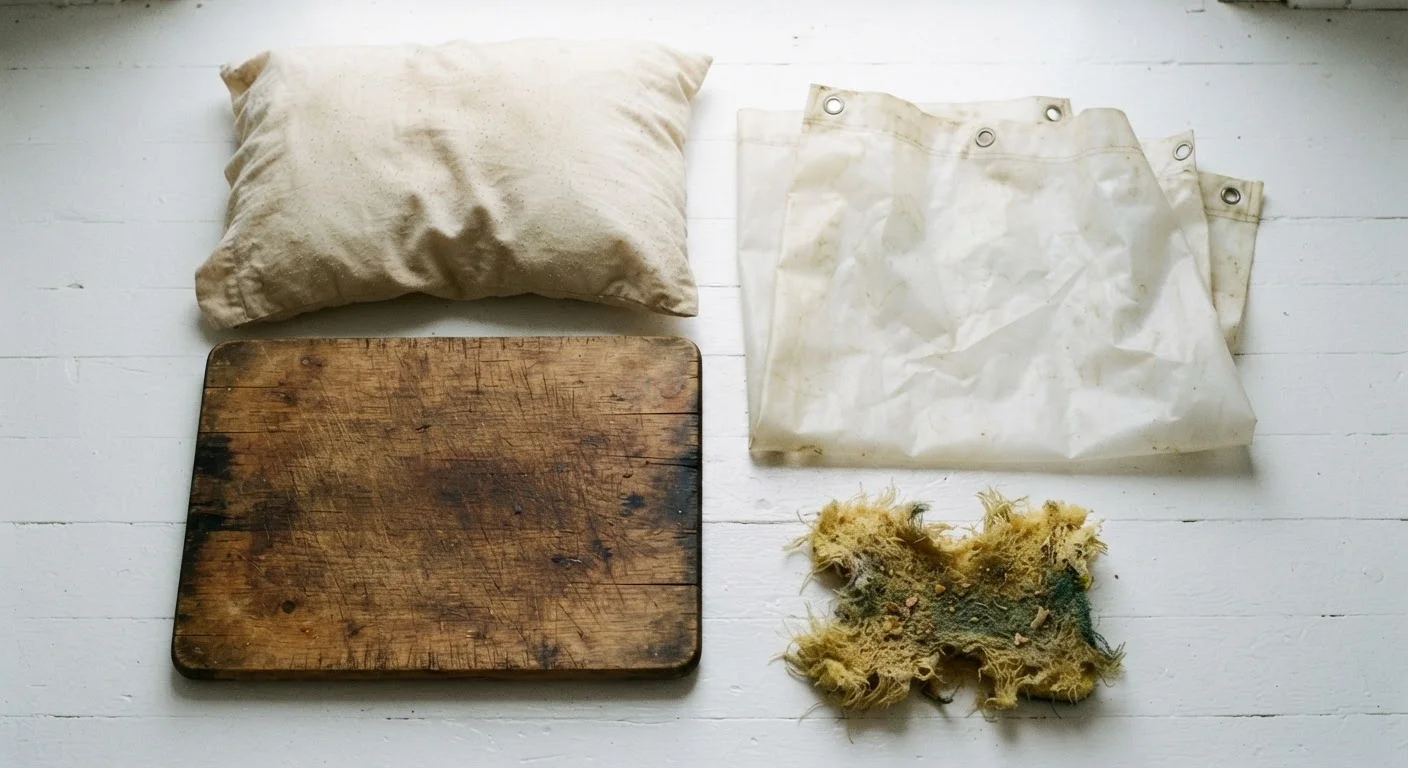
Why Household Items Age Faster Than We Notice
Most people replace home goods reactively — when something breaks, falls apart, or becomes obviously disgusting. The problem is that many common household items degrade in ways that aren't always visible: bacteria build up in crevices, fibers lose their structure, coatings break down quietly over time. By the time you notice the problem, the item has often been past its useful life for months or years.
Understanding realistic replacement timelines isn't about spending more. It's about making smarter decisions with what you already buy. For more on how small habits shape the total cost of your household, see our guide on habits that quietly undermine even careful shoppers.
Bed Pillows
Most sleep experts and bedding manufacturers suggest replacing standard bed pillows every one to two years. Pillows accumulate dead skin cells, dust mites, and moisture from sweat over time — and while pillow protectors and regular washing help, they don't fully offset structural breakdown. A simple test: fold the pillow in half and release it. If it doesn't spring back quickly, it's likely past its supportive life.
A pillow that won't spring back when folded has probably been overdue for replacement for a while.
Kitchen Sponges
Kitchen sponges are among the highest-bacteria-density objects in most homes. The moist, porous structure that makes them useful also makes them ideal environments for microbial growth. Most cleaning authorities recommend replacing them every one to two weeks under regular use — or sooner if they develop an odor. Microwaving or boiling a sponge can temporarily reduce bacterial load, but does not restore the sponge to safe long-term use.
Kitchen sponges should be replaced every one to two weeks, not every few months.
Plastic and Wooden Cutting Boards
Once a cutting board develops deep grooves and knife scars, bacteria can survive in those crevices even after washing. Plastic boards can go through the dishwasher, which helps — but heavily scarred boards of any material should be retired. Wooden boards are particularly susceptible to cracking if improperly dried or exposed to excess moisture. For more on caring for wood in the home, see caring for wooden surfaces without damage. General guidance suggests replacing boards when deep scoring becomes difficult to clean.
Deep grooves in a cutting board trap bacteria that washing alone can't always reach.
Non-Stick Cookware
Non-stick coatings are designed for convenience, not permanence. Once the surface begins to scratch, chip, or peel — which can happen within two to five years depending on use and care — the pan's effectiveness drops significantly. Scratched non-stick surfaces can also release coating particles into food. Using metal utensils, high heat settings, or abrasive scrubbers accelerates this breakdown. When the coating is visibly compromised, it's time to replace the pan rather than work around it.
Scratched non-stick coatings don't just cook unevenly — they may release particles into your food.
Shower Curtain Liners
Shower curtain liners — especially vinyl or PEVA types — are exposed to constant humidity, soap scum, and mildew. Most are genuinely disposable items, with a useful life of around six to twelve months under regular use. Pink or black mold spots near the bottom hem are the most obvious sign it's time to replace, but liners that have become stiff or persistently musty-smelling should also be swapped out. A fresh liner is one of the lower-cost swaps that makes a measurable difference in bathroom hygiene.
Shower curtain liners are disposable by design and typically need replacing every six to twelve months.
Bath Mats
Bath mats stay wet or damp repeatedly throughout their life, making them prone to mold and mildew growth on the underside — especially if airflow is limited. They should be washed weekly and replaced when the backing begins to crack or crumble, the fibers mat down permanently, or the mat stops drying properly between uses. Many households replace bath mats far less frequently than needed, simply because the underside deterioration isn't visible during normal use.
Bath mat deterioration usually starts on the underside, well before any visible surface wear.
Toothbrushes
Dental health organizations consistently recommend replacing toothbrushes every three to four months — or sooner if the bristles are visibly frayed. Frayed bristles are less effective at cleaning tooth surfaces and gum lines, meaning you may be spending two minutes brushing with diminishing results. The same replacement timeline applies to the heads of electric toothbrushes. It's a small, inexpensive swap that directly affects oral hygiene outcomes.
Frayed toothbrush bristles clean less effectively — three to four months is the recommended replacement window.
Building a Replacement Rhythm That Works for You
Rather than tracking every item individually, consider doing a seasonal home goods audit — a quick walk-through of your kitchen, bathroom, and bedrooms to assess condition. Noting purchase dates on a calendar or notes app when you buy a new pillow or pan takes seconds and saves the guesswork later.
A Simple Habit: Date Your Purchases
When you buy a new pillow, pan, or bath mat, write the month and year on a piece of masking tape and stick it to the item — or add a note in your phone. This eliminates the guesswork when you're trying to decide whether something is due for replacement. It takes ten seconds and pays off every time.
Replacing items on a predictable schedule also makes budgeting more straightforward. If you're working on household spending, the Budgeting Basics hub offers practical frameworks for tracking these kinds of recurring costs without letting them catch you off guard.
The goal isn't perfection — it's awareness. Knowing which items degrade fastest helps you prioritize where attention actually matters in your home.