
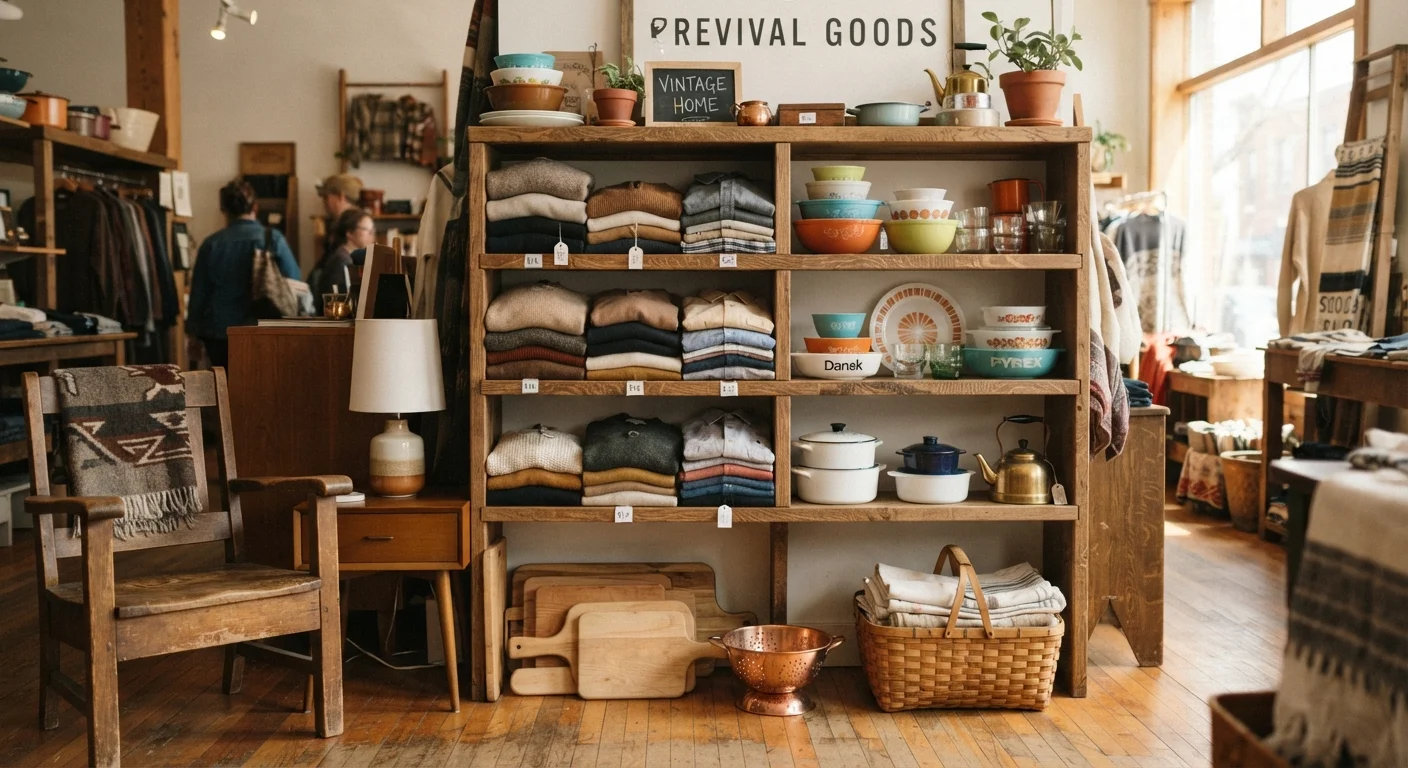
Why Secondhand Buying Rewards the Informed Shopper
Buying used isn't just a budget move — it's a purchasing strategy that, done right, can deliver genuine quality at a fraction of the new price. The challenge is that not all product categories age the same way. A solid oak dresser may outlast its original owner. A used helmet might have internal damage that no amount of visual inspection will reveal.
This guide breaks down the major secondhand categories by what typically holds up, what requires careful inspection before committing, and what's generally worth skipping altogether. Whether you're browsing estate sales, resale apps, or a local thrift shop, these category-by-category guidelines can help you shop with more confidence and fewer regrets. For a broader decision-making framework before any non-essential purchase, see our pre-purchase checklist.
Solid-Wood Furniture: Usually a Strong Buy
Furniture made from solid hardwood — oak, maple, walnut, cherry — is among the most reliable secondhand purchases available. These pieces were typically built to last decades and are often structurally sound long after their original owners move on.
What to inspect: Look for signs of water damage along the base and back panels (warping, white rings, soft spots). Check that drawers slide smoothly and doors hang level. Examine joints for looseness or prior repair attempts using mismatched wood filler. Avoid pieces with significant veneer peeling, as veneer furniture is far harder to refinish. A wobbly chair or table may still be worth buying if the joinery is otherwise intact — these are often fixable with wood glue and clamps.
What to skip: Particleboard or MDF furniture (common in flat-pack designs) doesn't hold up well to a second life and is difficult to repair once swollen or chipped.
Solid hardwood furniture is built to last decades — a used piece is often structurally sound.
Clothing and Outerwear: High Upside, With Caveats
Quality clothing — particularly wool coats, denim, leather goods, and well-made outerwear — is one of the highest-value secondhand categories. These items often retain structural integrity long after their original purchase, and natural fibers like wool and cotton tend to age better than synthetic blends.
What to inspect: Check seams, zippers, and button holes for stress or failure. Examine armpits and collars for permanent staining or fabric thinning. For outerwear, test any waterproofing layer by running a small amount of water across the surface. Smell matters — musty odors from storage can sometimes be resolved with airing or dry cleaning, but not always.
What to skip: Worn-out elastic waistbands, heavily pilled synthetic fabrics, and shoes with collapsed heel counters are difficult to restore to functional use. Our article on building a versatile wardrobe offers additional perspective on which clothing investments hold long-term value.
Natural-fiber clothing — wool, denim, leather — tends to age far better than synthetic alternatives.
Cast Iron and Stainless Cookware: Almost Always Worth It
Cast iron skillets, Dutch ovens, and stainless steel pots are among the most durable objects in any household. A well-seasoned cast iron pan may genuinely perform better after decades of use than a brand-new one.
What to inspect: For cast iron, look for cracks (deal-breakers), heavy pitting, or rust. Rust on cast iron is typically restorable through scrubbing and re-seasoning — don't be put off by surface rust alone. For stainless, check the base for significant warping (it won't sit flat on a burner) and look inside for deep scoring that could trap bacteria. Avoid non-stick cookware secondhand — the coating degrades over time and scratched or flaking non-stick surfaces are best replaced, not reused.
Surface rust on cast iron is usually fixable — cracks are the only true deal-breaker.
Books, Media, and Board Games: Generally Safe, Easy to Evaluate
Physical books, vinyl records, board games, and DVDs are low-risk secondhand purchases where the quality is largely visible at the point of sale. Pages either hold together or they don't; a record either plays cleanly or it doesn't.
What to inspect: For books, fan the pages to check for water damage (wavy pages, brown staining, mold smell). For board games, verify that all pieces and cards are included before buying — missing components can make a game unplayable. For vinyl, hold the record up to light at an angle to spot deep scratches; light surface marks are usually manageable.
What to skip: Water-damaged books with mold are rarely salvageable and can spread spores. Incomplete games without replacement parts available are a poor investment unless the missing piece is easy to substitute.
Board games and books are easy to evaluate in person — what you see is largely what you get.
Consumer Electronics: Proceed with More Caution
Used electronics can offer real savings, but the category requires closer scrutiny than most. Unlike furniture or cookware, electronics have internal components that degrade silently and may fail soon after purchase.
What to inspect: Power the device on before buying whenever possible. For laptops, check battery health (most operating systems display this in settings), screen for dead pixels or backlight bleed, and keyboard for sticky or non-responsive keys. For smartphones, verify that the device is not activation-locked to another account — this is a common issue with stolen devices. Check port functionality and speaker output. Ask about the device's repair and service history.
What to approach carefully: Older smart home devices may no longer receive security updates, creating potential vulnerabilities. High-end audio equipment benefits from in-person listening before purchase. When comparing the used electronics market to new, factor in the absence of a manufacturer warranty.
Always power on electronics before buying — silent internal failures won't be visible until after the sale.
What to Skip: Safety-Critical and Hygiene-Sensitive Items
Some secondhand categories carry risks that generally outweigh the savings, regardless of how good the deal appears.
- Bike helmets and sports helmets: Helmets are designed to absorb impact once. After a significant collision — even one that leaves no visible damage — the foam liner may be compromised. There's rarely a reliable way to verify a helmet's history.
- Car seats: Similar logic applies. Car seats have expiration dates, and a seat that has been in a crash may have structural damage that isn't visible. Regulatory guidance in the U.S. generally advises against buying used car seats from unknown sources.
- Mattresses: Hygiene concerns (allergens, dust mites, bed bugs, bodily fluids) are difficult to fully remediate. Even a professionally cleaned used mattress carries meaningful uncertainty.
- Anything with missing safety recall information: Used goods aren't subject to mandatory recall notices. If you're buying an appliance or baby product secondhand, check the Consumer Product Safety Commission (CPSC) recall database before purchasing.
Understanding which used-item purchases make sense is part of a broader approach to household spending — one that home goods decision-making can help structure over time.
Helmets, car seats, and mattresses carry risks that secondhand savings rarely justify.
Making Secondhand Work for Your Household
Secondhand shopping rewards patience and a willingness to look past surface imperfections. The goal isn't to accept lower quality — it's to recognize that many goods were built to last well beyond their first owner, and that some categories hold value while others depreciate for good reason.
When Buying Used Vehicles Specifically
Used cars are their own category with distinct considerations — mechanical history, title status, odometer accuracy, and more. If you're evaluating a used vehicle purchase, our new vs. used car trade-offs guide and the pre-purchase inspection checklist cover both the financial and mechanical factors to weigh before committing.
For more on managing your home goods budget strategically, the Home Goods Guide offers category-specific advice on selecting and maintaining essentials. And if you're thinking through bigger used-item purchases — like a vehicle — our used vehicle inspection checklist walks through what to examine before you commit.