
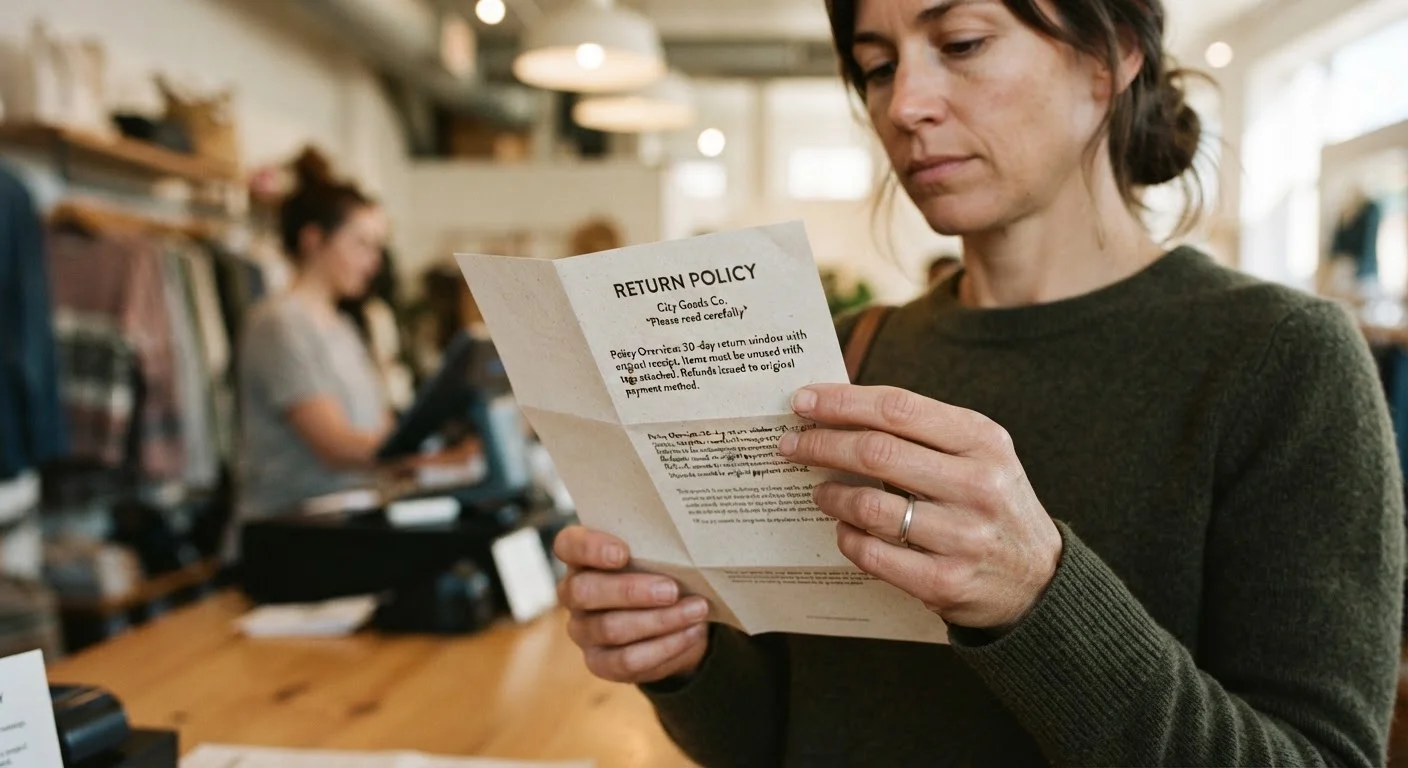
Why Return Policies Deserve Attention Before You Buy
Most shoppers glance at a return policy only after something goes wrong. By then, the terms are no longer hypothetical — they're binding. A return window may have already closed, the packaging may be gone, or the item may fall under an exclusion you didn't know existed.
Return policies are essentially contracts. Like any contract, the details matter far more than the headline. A store advertising "easy returns" may still impose a 14-day window, charge a restocking fee, or limit refunds to store credit. None of those conditions are deceptive on their own — but they can feel that way if you assumed otherwise.
This is especially true for higher-stakes purchases. Mattress return policies, for example, are notoriously complex — some require a "break-in period" before a return is even accepted, while others treat delivery fees as non-refundable. Knowing the rules in advance changes what you're agreeing to. And pairing this habit with a broader pre-purchase checklist makes every buying decision more deliberate.
What you will need
How to Read a Return Policy Step by Step
The steps below apply whether you're shopping in a physical store or online. The goal is to identify the specific terms that affect your situation before money changes hands.
Locate the Return Policy Before Checkout
For online purchases, look for a "Returns" or "Return Policy" link in the website footer — most retailers place it there. For in-store shopping, the policy is typically posted at the register or printed on the receipt. If you can't find it, ask a staff member directly before you pay.
Identify the Return Window
Find the exact number of days you have to make a return. Note whether the clock starts from the purchase date or the delivery date — these are not the same thing for shipped items. Also check whether the window differs by product category; electronics, clearance items, and seasonal goods often carry shorter windows than general merchandise.
Check Condition and Packaging Requirements
Look for any language about how the item must be presented for a return. Common requirements include: original packaging intact, all accessories included, tags still attached, and the item unused or unopened. Determine whether these requirements are realistic given how you plan to use or evaluate the product.
Look for Fees, Exclusions, and Refund Type
Identify whether any restocking fee applies and what percentage it represents. Determine whether the refund will go back to your original payment method or will be issued as store credit only. Finally, check the exclusions list — items explicitly marked as final sale, non-returnable, or ineligible for exchange.
Confirm What Proof of Purchase Is Required
Most returns require a receipt, order confirmation email, or the original payment card used. Some retailers accept a loyalty account lookup in place of a paper receipt. Understand what documentation is required and make a plan to retain it before you leave the store or close the confirmation email.
Online Returns Often Work Differently
Many retailers charge a return shipping fee for online orders or deduct it from your refund. Some offer free returns only if you drop the item off at a designated location rather than mailing it. Before buying online, factor in the potential cost and logistics of getting the item back if needed.
Terms That Commonly Catch Shoppers Off Guard
Even after reading a policy, certain phrases can be easy to underestimate. Here are the ones worth paying closest attention to:
- "Final sale" or "non-returnable": No exceptions. Once purchased, the item cannot be returned or exchanged regardless of condition.
- Restocking fees: A percentage — often 10–25% — deducted from your refund when you return certain items like electronics or furniture.
- Store credit only: You'll get the value back, but only as credit toward a future purchase at that store — not cash or a card refund.
- Channel restrictions: An item bought online may only be returnable by mail, or vice versa. Confirm whether in-store returns are accepted for online orders.
- Condition requirements: Terms like "unused," "unopened," or "in original condition" can be interpreted strictly. A product that has been tried on, tested, or assembled may be ineligible.
Reading fine print before checkout shares the same logic as reviewing any consumer document carefully — something covered in detail in our guide to reading a credit card agreement. The habits transfer directly.
Gift Purchases Deserve Extra Attention
If you're buying something as a gift, check whether the recipient can return or exchange it without the original payment method. Some retailers offer gift receipts that extend the return window or waive certain requirements — but this is never guaranteed. Ask at the time of purchase, not after the fact.