
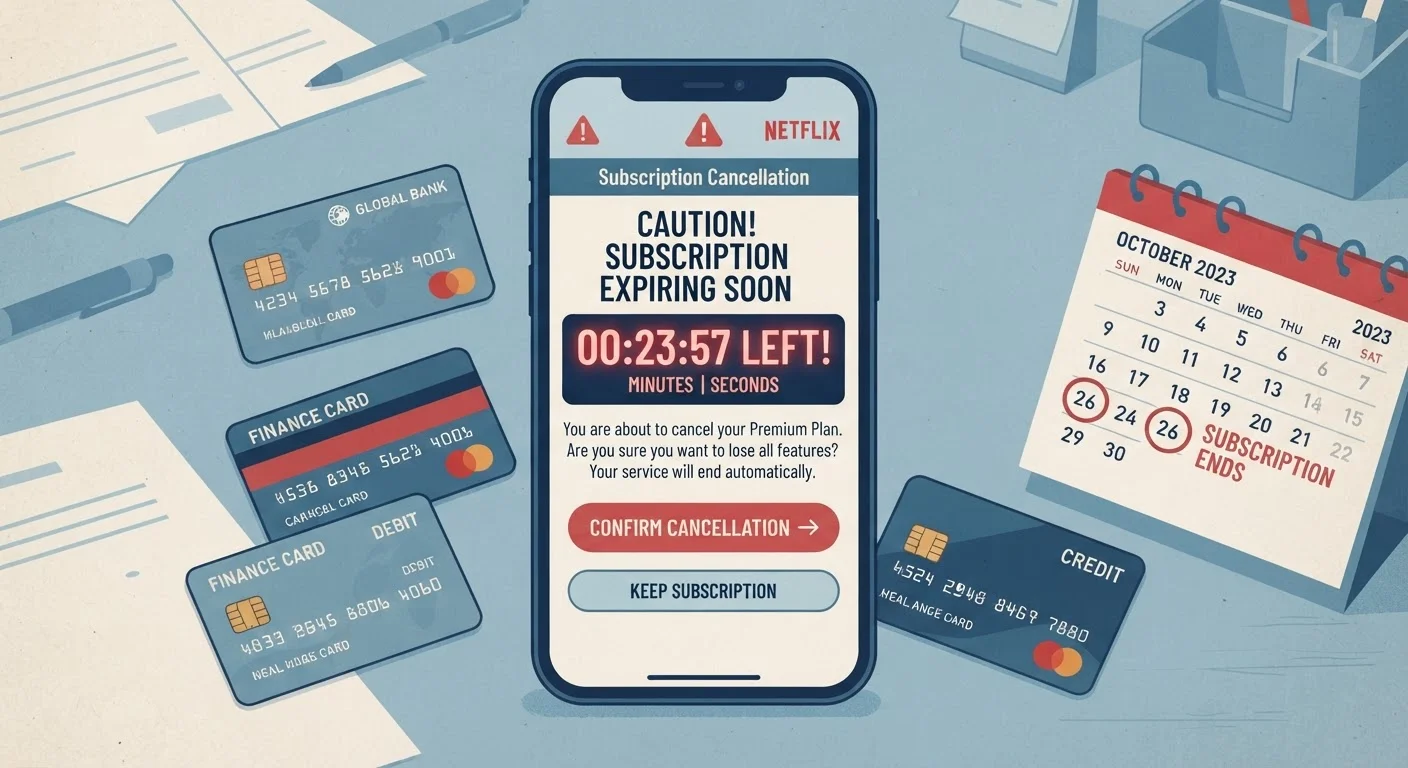
How Free Trials Are Built to Convert
A free trial is a marketing tool, not a gift. The business model depends on a percentage of trial users becoming paying subscribers — ideally without actively deciding to. This is why payment information is collected upfront, why the trial period is just short enough to create habit but too short to notice the billing date, and why cancellation flows are rarely straightforward.
Understanding that structure doesn't mean free trials have no value — they often do. It means approaching them the same way you'd approach any commitment with a future financial consequence: with a clear plan before you start.
74%
Consumers who forget they signed up for a trial
A survey by C+R Research found that nearly three-quarters of consumers have forgotten about at least one subscription they were paying for, often tracing back to a free trial.
$219/mo
Average monthly subscription spend per U.S. household
Research by West Monroe Partners found U.S. consumers significantly underestimate their total subscription spending, often by more than 100%.
Common Mistakes That Lead to Unwanted Charges
Most surprise subscription charges aren't the result of fraud — they're the result of small oversights at signup. The following mistakes account for the majority of cases where consumers end up paying for something they didn't intend to keep.
Signing up for a free trial without noting the exact end date.
Why it happens: Trial periods are often described vaguely as '7 days' or '30 days' without a specific calendar date shown at signup. Readers assume they'll remember.
Assuming the cancellation process is simple and quick.
Why it happens: Subscribers expect a single button; companies often require navigating multiple screens, contacting support, or waiting on hold — a tactic sometimes called a 'dark pattern.'
Using a primary debit card or bank account for free trial signups.
Why it happens: It's the card already on hand. But debit cards pull money directly from your account and can be harder to dispute than credit card charges.
Not reading the trial terms before entering payment information.
Why it happens: Long terms-of-service text feels low-stakes during a free signup. Readers scroll past it to reach the benefit.
Forgetting about active subscriptions when building a monthly budget.
Why it happens: Recurring charges that started as free trials become invisible line items after a few months, especially when they hit at irregular dates.
Auto-Renewal Is the Default, Not a Bonus
Subscription services are legally required in most U.S. states to disclose auto-renewal terms before you sign up — but disclosure doesn't mean prominent placement. The Federal Trade Commission has taken enforcement action against companies that obscure these terms. Always treat a free trial as a commitment that starts billing on a specific date unless you take action first.
What to Do If You've Already Been Charged
If a trial converted without your attention and you've been billed, act quickly. Cancel the subscription immediately through the service's account settings and document everything — screenshots of the cancellation confirmation, the charge on your statement, and any terms shown at original signup.
For credit card charges, you may be able to dispute the transaction with your card issuer if the merchant failed to clearly disclose the auto-renewal terms. Debit card disputes are generally harder to resolve, which is why using a debit card for trial signups adds risk. The FTC's rules on negative option marketing — which covers auto-renewal subscriptions — require clear disclosure, so knowing your rights matters.
Canceling Doesn't Always Mean Immediate Access Ends
Some services continue charging after a cancellation request if the process wasn't completed correctly — for example, clicking 'cancel' on a landing page rather than through your account settings. Always look for a cancellation confirmation email or screen as proof. If you don't receive one, follow up directly with the company before assuming the subscription is inactive.
Managing surprise charges is part of a broader habit of reviewing recurring financial commitments regularly. The same attentiveness applies to insurance policies, where reviewing coverage before your renewal date prevents a different kind of unwanted automatic continuation.