
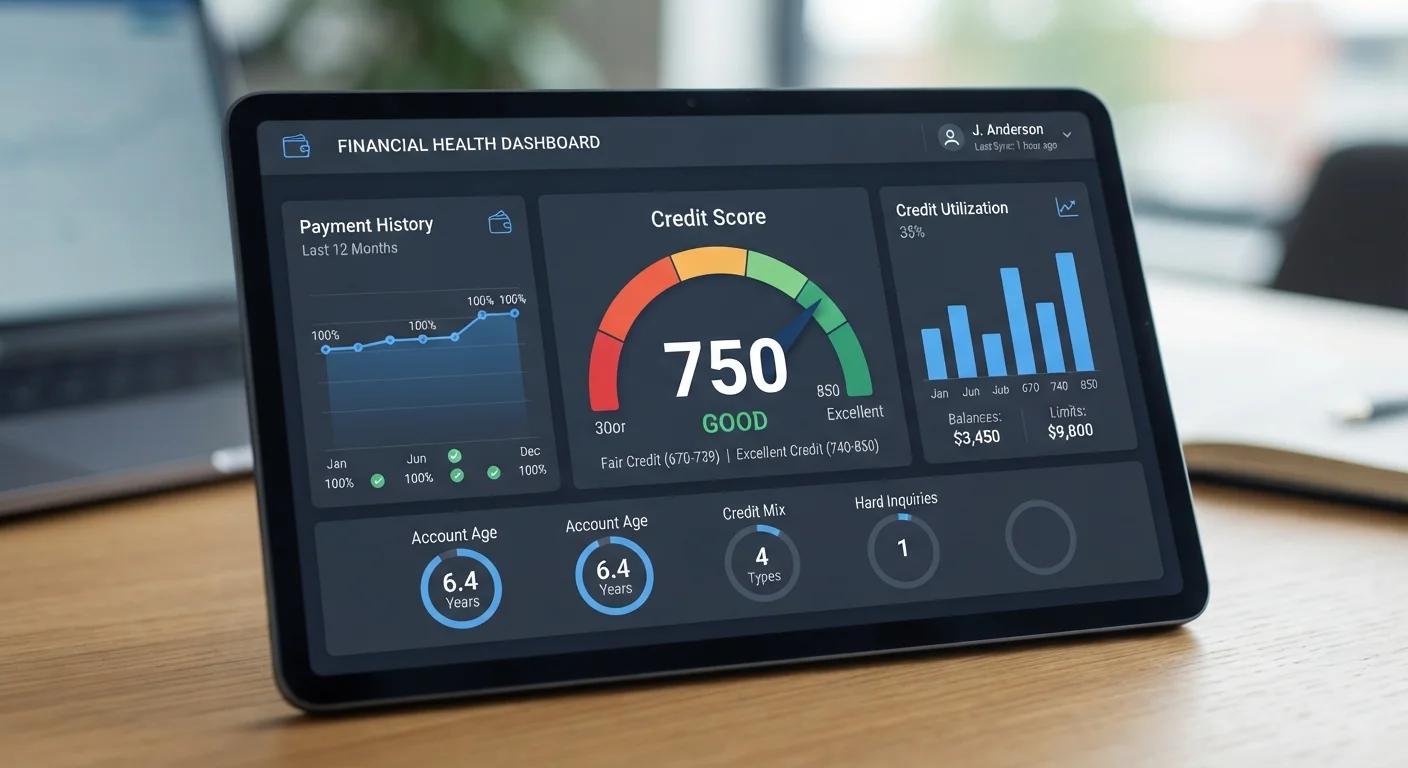
What the Score Ranges Actually Signal
The 300–850 scale may feel arbitrary, but each range carries a specific signal to lenders. Here's how the FICO model breaks down:
| Score Range | Category | What It Generally Means |
|---|---|---|
| 800–850 | Exceptional | Likely to qualify for the most favorable terms |
| 740–799 | Very Good | Above-average borrower; competitive rates typical |
| 670–739 | Good | Near or above the average U.S. consumer score |
| 580–669 | Fair | May face higher rates or stricter conditions |
| 300–579 | Poor | Limited access to traditional credit; secured products more common |
These categories aren't universal laws — each lender sets its own cutoffs and weighs other factors like income and existing debt. A score in the 'good' range at one institution may still result in a denial if the lender's internal model is stricter.
FICO and VantageScore Use the Same Scale, but Different Math
Both scoring models produce scores from 300 to 850, which can make it easy to assume they're equivalent. In practice, the two models weigh factors differently and define certain behaviors — like a recent late payment — with varying severity. A score from one model may not translate directly to the same risk tier in the other.
The Five Factors Behind Your Number
The FICO Score is built from five weighted categories. Understanding each one helps you see which behaviors move the needle most.
- Payment history (≈35%): Whether you pay on time. A single missed payment can have an outsized negative effect, particularly on a thin credit file.
- Credit utilization (≈30%): The percentage of your available revolving credit you're currently using. Lower is generally better — many financial educators suggest staying below 30%, though the optimal level varies. See how utilization is calculated for a deeper look.
- Length of credit history (≈15%): How long your accounts have been open, including the age of your oldest account, newest account, and average age across all accounts.
- Credit mix (≈10%): The variety of credit types you manage — revolving (credit cards), installment (auto loans, mortgages), and open accounts.
- New credit (≈10%): Recent hard inquiries and newly opened accounts. Opening several new accounts in a short period can suggest financial stress to lenders.
These percentages are approximate guidelines from FICO's published model descriptions and can shift slightly based on an individual's overall credit profile.
716
Average U.S. FICO Score
According to FICO's published data, the average American FICO Score has been in the 'good' range for several consecutive years, reflecting broad improvement in consumer credit behavior since the 2008 financial crisis.
35%
Weight of payment history in FICO Score
FICO's published model breakdown identifies payment history as the single largest factor, underscoring why consistent on-time payments are the most reliable path to score improvement.
1 in 5
Consumers with a credit report error
A Federal Trade Commission study found that roughly one in five consumers had an error on at least one of their three credit reports — errors that could affect their scores.
Why Your Score and Your Report Are Inseparable
Your credit score doesn't exist independently — it's calculated directly from the data in your credit report. If that report contains errors, your score reflects those errors too. Common problems include accounts that don't belong to you, incorrectly reported late payments, and balances that haven't been updated after payoff.
Before focusing solely on improving your score, it's worth auditing the underlying report. Our credit report audit guide provides a practical checklist for spotting errors, outdated entries, and potential signs of fraud. Under federal law, consumers are entitled to a free report from each of the three major bureaus annually at AnnualCreditReport.com.
Check All Three Reports, Not Just One
Because lenders report to bureaus independently, your credit report can look different at Equifax, Experian, and TransUnion. Reviewing all three helps you catch errors that might only appear at one bureau. Staggering your free annual reports — one every four months — lets you monitor your file year-round at no cost.
Understanding the terminology on your report is equally important. For definitions of terms like charge-off, delinquency, and utilization, the borrower's key terms reference is a useful companion.
This article is for general informational purposes only and does not constitute personalized financial or credit advice. Consult a qualified financial professional for guidance specific to your situation.