
Why a Room-by-Room Approach Matters
Bringing a pet home is exciting — and surprisingly easy to underestimate. Most people think about food, a bed, and maybe a collar. What often gets overlooked are the room-specific hazards and setup decisions that determine how smoothly those first days go. A dog who chews through a phone charger or a cat who knocks over a pot of toxic plants can turn a joyful homecoming into a stressful one fast.
This checklist walks you through each area of your home so nothing slips through the cracks. Work through it a few days before your pet arrives, not the morning of. If you're still weighing whether you're ready, our complete first-time pet ownership guide covers the bigger picture. And once your pet is home, pair this with our 30-day health checklist to stay on top of vet visits and wellness basics.
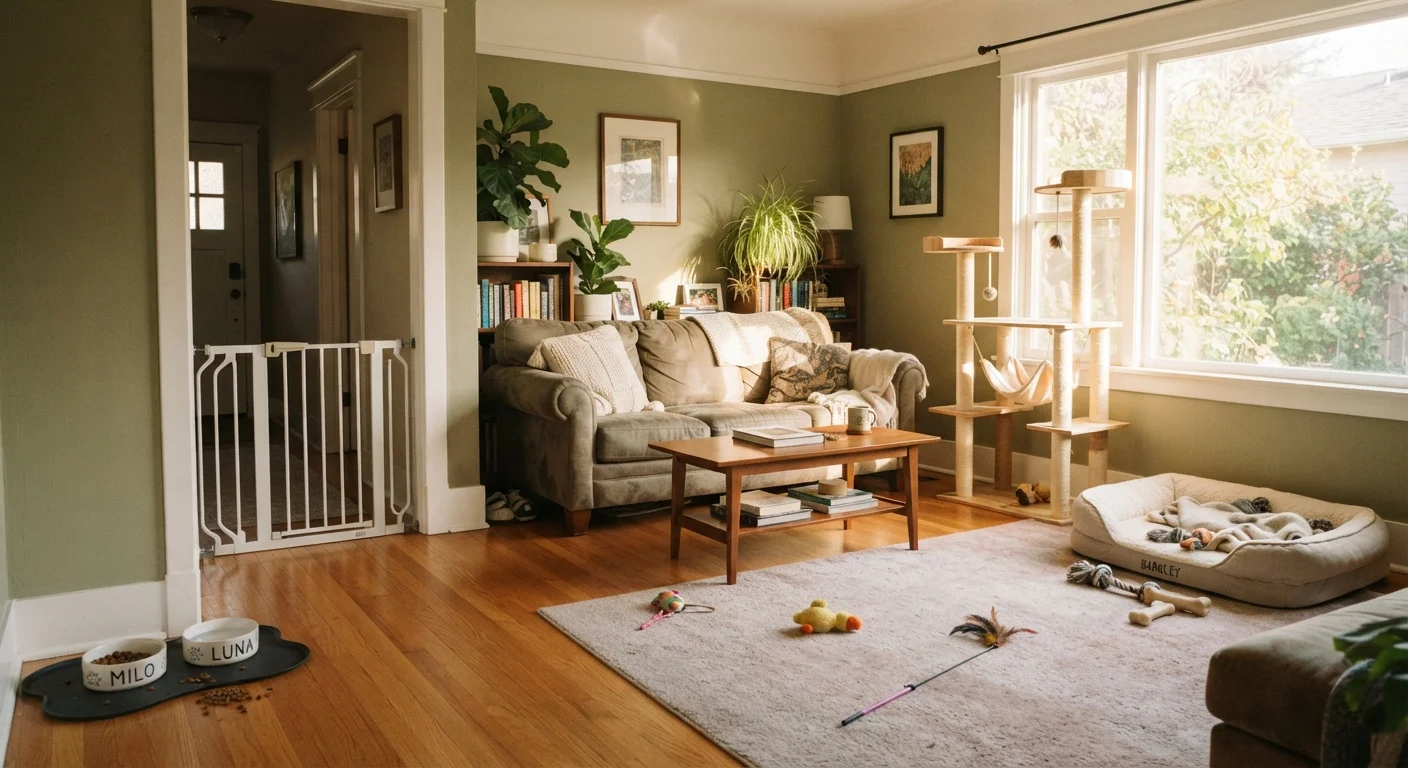
Baby gates or exercise pen
Block off rooms, staircases, or off-limits areas while your pet adjusts to the home.
Pet-safe cleaning spray
Clean up accidents without exposing your pet to harsh chemical residue.
Enzyme-based odor remover
Eliminate accident odors at the source so pets don't return to the same spots.
Cabinet locks or latches
Secure lower cabinets containing cleaning products, medications, or food.
Cord organizers or cable covers
Bundle and protect electrical cords from chewing or tangling.
Pet ID tag and collar
Ensure your pet can be identified and returned if it gets loose during the settling-in period.
Crate or carrier
Provide a safe, enclosed space for rest, travel, and initial confinement training.
ASPCA toxic plant list (printed or bookmarked)
Cross-reference every houseplant and outdoor plant against known pet toxins before arrival.
The Room-by-Room Checklist
Work through each group below, ticking off items as you go. Items marked must are non-negotiable safety steps. Should items are strongly recommended for most pets. Nice-to-have items improve comfort and long-term routines but can wait a week or two.
Living Room & Common Areas
Kitchen
Bathroom
Bedroom
Outdoor Space & Entry Points
Administrative & Vet Prep
Toxins Are the Number One Hidden Risk
Many common household and garden plants — including lilies, sago palms, and pothos — are highly toxic to cats and dogs. Before your pet arrives, cross-reference every plant in your home and yard against a current toxic species list from a veterinary authority such as the ASPCA Animal Poison Control Center. Do not assume a plant is safe because it has been in your home for years without incident. Remove or relocate any questionable plants before day one.
Pets interact with spaces in ways that aren't immediately obvious to humans. Get down to your pet's eye level — literally — in each room to spot dangling cords, small gaps behind appliances, or reachable shelves you might otherwise miss.
A Few Things to Know Before Arrival Day
Even with a fully prepped home, the first 24–48 hours can be overwhelming for a new animal. Keep the environment calm, limit visitors, and let your pet set the pace for exploring. Confine access to one or two rooms initially and expand gradually as your pet grows comfortable.
Don't Overwhelm Your Pet on Arrival Day
A new home is a flood of unfamiliar sights, sounds, and smells. Introducing too much space too quickly can trigger anxiety, hiding, or destructive behavior. Start your pet in one or two rooms, let it acclimate fully, then gradually open access to the rest of the home over days or weeks. Resist the urge to invite friends over on day one — socialization can wait until your pet has found its footing.
Planning ahead financially is just as important as the physical setup. Beyond the upfront gear costs, ongoing expenses often surprise new owners — our article on the real cost of owning a pet breaks down what to budget for beyond food and toys. For ongoing care fundamentals, the Pet Care Basics hub is a solid starting point.
This article is for general informational purposes only and does not constitute veterinary or professional advice. Consult a licensed veterinarian with any health concerns about your pet.