
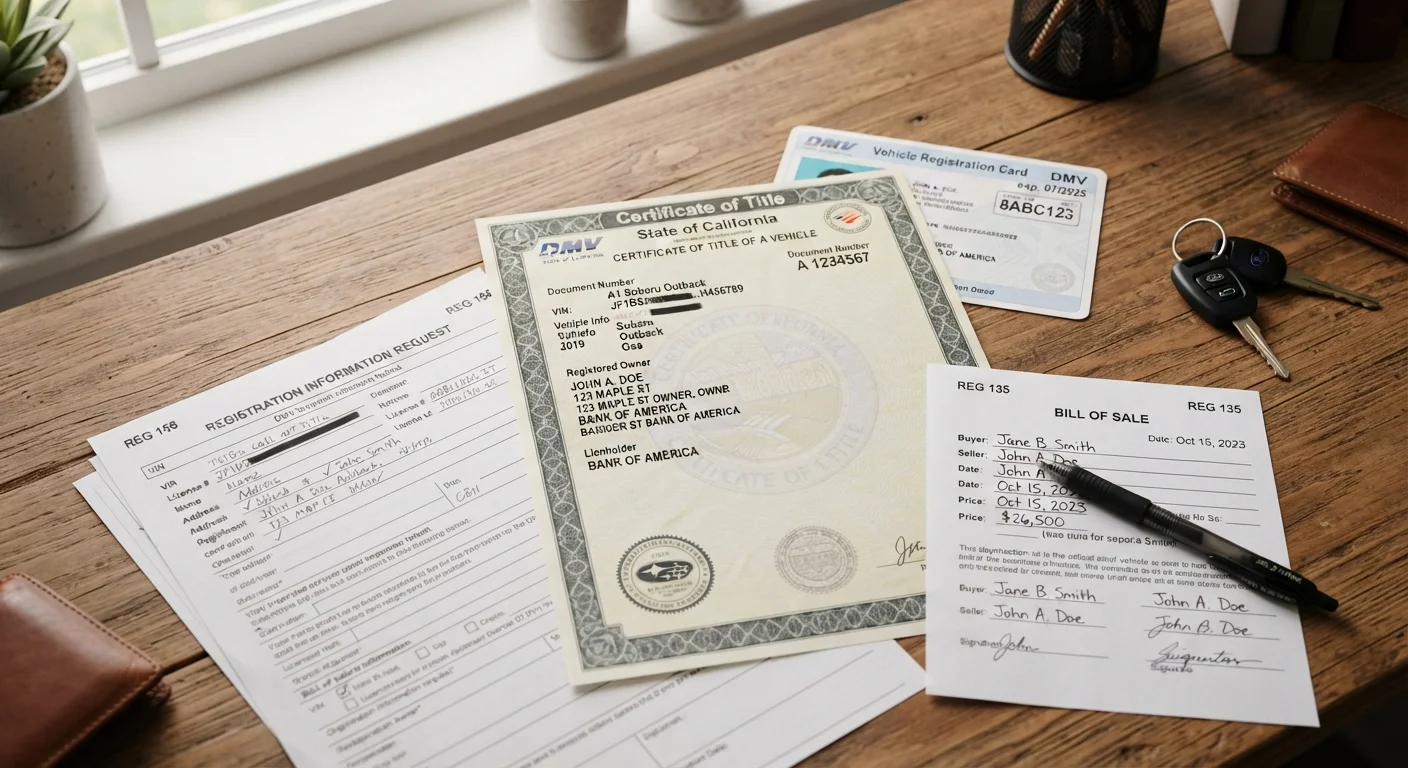
Three Documents, Three Different Jobs
When you own a vehicle, three key documents govern your legal relationship with it: the title, the registration, and - if you financed the purchase - a lien. Each serves a distinct purpose, and confusing them is one of the most common sources of frustration for car owners. Here's a plain-language breakdown of what each one means and why it matters.
| What a title proves | Legal ownership of the vehicle |
| What registration proves | Authorization to drive on public roads |
| Who holds the title with a lien | The lender, until the loan is paid off |
| Typical registration renewal period | Annually or biannually, varies by state |
| Where to apply for a duplicate title | Your state's DMV or equivalent agency |
| Residency deadline to re-register in a new state | Typically 30-90 days; check your state's DMV |
If you're brand new to car ownership, the practical walkthrough for first-time owners covers how registration and insurance fit into your overall setup as a new driver.
The Certificate of Title: Proof of Ownership
A certificate of title (commonly called the "title" or "pink slip" in some states) is the official document that establishes who legally owns a vehicle. It is issued by your state's department of motor vehicles (DMV) or equivalent agency and contains identifying information about both the vehicle and the owner.
Key details printed on a title typically include:
- Vehicle Identification Number (VIN)
- Year, make, and model
- Owner's legal name and address
- Odometer reading at the time of transfer
- Any lienholder information (if the car was financed)
When you buy or sell a vehicle privately, the seller must sign over (endorse) the title to the buyer. The buyer then submits it to the state to receive a new title in their name. Failing to transfer a title properly can create legal complications if the vehicle is involved in an accident, a violation, or a future sale.
Certificate of Title
An official government-issued document that identifies the legal owner of a vehicle. It includes the VIN, owner information, and any lienholder details, and must be transferred when ownership changes hands.
Vehicle Registration
A state-issued authorization permitting a vehicle to be operated on public roads for a defined period. Registration must be renewed periodically and typically requires proof of insurance.
Lien
A legal claim a lender holds on a vehicle used as collateral for a loan. The lien is recorded on the title and is released only after the loan is fully paid off.
Lienholder
The financial institution or lender whose name appears on a vehicle title because they provided financing for the purchase. They retain a legal interest in the vehicle until the debt is cleared.
Clear Title
A vehicle title with no outstanding liens, loans, or legal claims against it. A clear title is necessary to complete a straightforward private sale of a vehicle.
Salvage Title
A designation placed on a title when an insurance company has declared a vehicle a total loss due to damage, theft recovery, or flood. Salvage-titled vehicles may face restrictions on registration and insurance.
VIN
Vehicle Identification Number - a unique 17-character code assigned to every motor vehicle at the factory. It appears on the title, registration, dashboard, and door jamb, and is used to track ownership, recalls, and history.
Lien Release
A document provided by a lender confirming that a loan has been paid in full and their legal claim on the vehicle's title has been removed.
Titles can also carry special designations - such as salvage, rebuilt, or flood - that affect a vehicle's value and insurability. Always verify the title history before purchasing a used vehicle.
Vehicle Registration: Permission to Drive on Public Roads
Registration is different from a title. While the title proves ownership, registration is a state-issued authorization that permits a specific vehicle to operate on public roads. Registration must typically be renewed annually or biannually and is tied to a specific time period.
When you register a vehicle, the state issues:
- A registration card (keep it in your glove compartment)
- License plates (for new registrations)
- A registration sticker or decal for your plates
Registration fees vary significantly by state and are sometimes calculated based on the vehicle's weight, age, or value. Many states also require proof of valid insurance and a passing emissions inspection before renewing registration. Driving with an expired registration can result in fines, so it's worth setting a calendar reminder when your renewal is due.
For more on how auto insurance intersects with your registration requirements, see our guide to understanding your car insurance policy.
Liens: When a Lender Has a Stake in Your Car
If you financed your vehicle through a bank, credit union, or dealership, the lender typically places a lien on the title. A lien is a legal claim that gives the lender a security interest in the vehicle until the loan is fully repaid. In practical terms, this means:
- The lender's name appears on the title as a lienholder
- You cannot sell or transfer the vehicle without the lender's involvement
- If you default on the loan, the lender has the right to repossess the vehicle
Once you pay off your auto loan, the lender is required to release the lien. Depending on your state, they may send you a signed lien release letter, or the DMV may update the title electronically. Either way, you should follow up to ensure the lien is removed and you receive a clean title - sometimes called a clear title.
After Paying Off Your Auto Loan
Many drivers assume the lien is automatically removed once they make their final loan payment, but follow-up is often required. Contact your lender to confirm the lien release is filed with the state DMV. Some states handle this electronically, while others mail you a paper release. Keep your clean title stored safely - you'll need it for any future sale or transfer.
Understanding lien basics connects to broader borrowing concepts. Our reference on key terms every borrower should understand explains related ideas like collateral, default, and loan payoff in plain language.
Common Situations and What to Do
Knowing what these documents are is useful - but knowing when to act on them is what really matters. Here are a few scenarios drivers commonly encounter:
- Lost your title?
- Contact your state DMV to apply for a duplicate title. You'll typically need to complete a form and pay a small fee. If there's an active lien, the lender may need to be involved.
- Buying a used car privately?
- Always insist on a signed, clean title from the seller. Run the VIN through your state DMV or a vehicle history service to check for liens, accidents, or salvage designations before completing the purchase.
- Moving to a new state?
- Most states require you to re-title and re-register your vehicle within 30 to 90 days of establishing residency. Requirements vary, so check your new state's DMV website promptly.
- Paying off your loan?
- After your final payment, confirm that the lien release is processed and that you receive or can obtain a clean title. Keep this document in a secure location.
This article is for general informational purposes only. Rules governing vehicle titles, registration, and liens vary by state. Consult your local DMV or a qualified legal professional for guidance specific to your situation.