
Why Reading Your Policy Now Matters
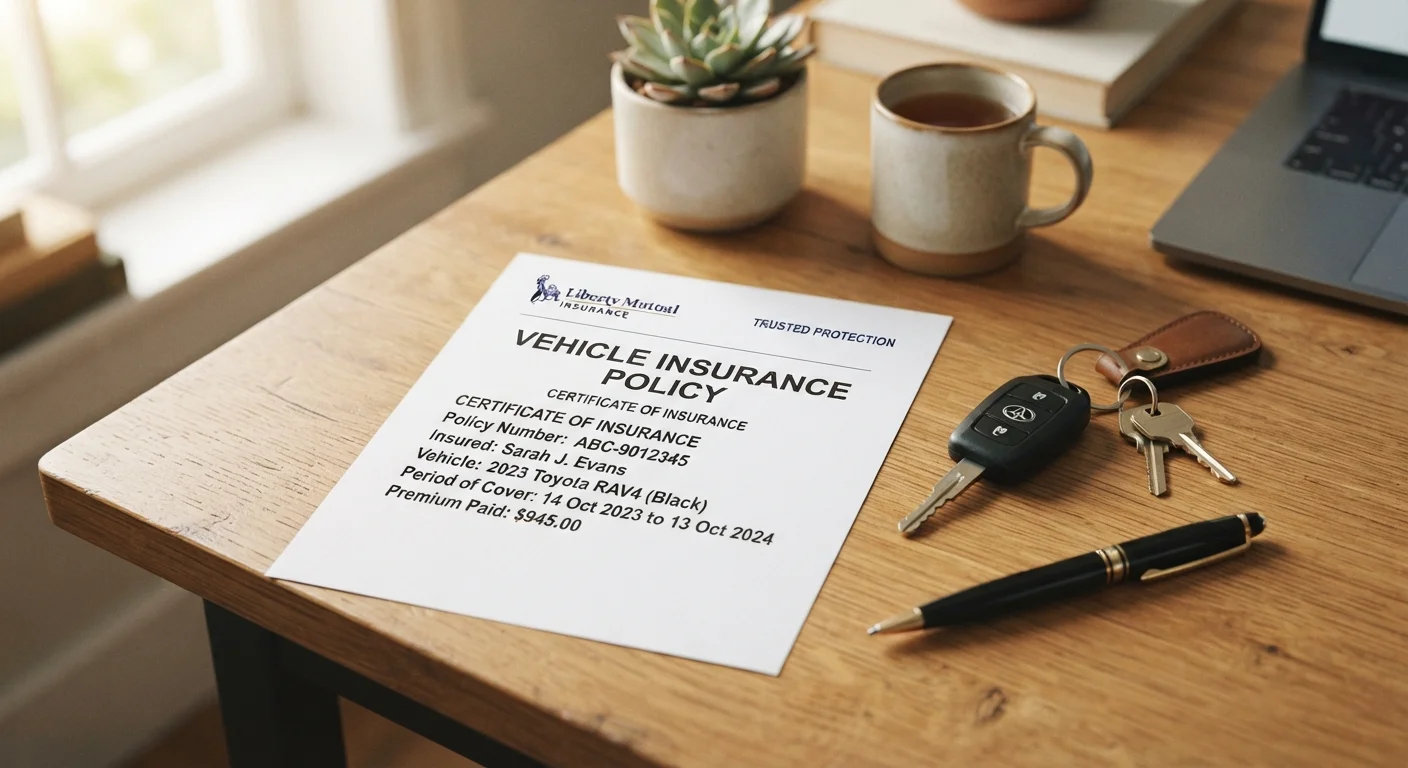
Most drivers only open their insurance documents when something has already gone wrong - after a collision, a theft, or a hailstorm. By then, misunderstanding a term or discovering a gap in coverage adds stress to an already difficult situation. Taking 30 minutes to review your policy while everything is calm is one of the most practical things you can do as a car owner.
Auto insurance is a legal contract. The insurer agrees to pay certain costs under certain conditions, and you agree to pay premiums and meet specific obligations. Neither side can benefit from terms the other party doesn't understand. If you're new to policies in general, the Insurance from Scratch starter guide is a useful starting point before diving into your own documents.
Store Your Policy Digitally
Download a copy of your full policy document - not just the ID card - to your phone or a cloud service you can access anywhere. If your car is stolen or destroyed in a disaster, you won't need to contact your insurer just to find out what you're covered for. Many insurers also have mobile apps that display your coverage details instantly.
The Core Coverage Types Explained
A standard personal auto policy bundles several distinct coverages, each serving a different purpose. Understanding what each one does - and does not - cover is the foundation of policy literacy.
Liability Coverage
Bodily injury liability pays for injuries you cause to other people in an accident you're responsible for. Property damage liability pays for damage you cause to someone else's vehicle or property. Both are required by law in almost every U.S. state, though minimum limits vary significantly by state. Those minimums are often far lower than real-world accident costs, so many drivers choose higher limits than the law requires.
Collision Coverage
Collision pays to repair or replace your own vehicle after it's damaged in an accident with another car or object - regardless of who caused the crash. This coverage is typically optional unless your lender or leasing company requires it.
Comprehensive Coverage
Comprehensive covers damage to your vehicle from causes other than a collision: theft, vandalism, fire, flooding, falling objects, and most weather events. Like collision, it's optional unless a lender requires it. For a quick reference on these and other terms, the auto insurance coverage glossary covers every term you'll encounter on your declarations page.
Uninsured and Underinsured Motorist Coverage
This coverage steps in when the at-fault driver has no insurance or insufficient coverage to pay for your injuries or vehicle damage. Many states require it; others make it optional. Given that a meaningful share of drivers on U.S. roads are uninsured, this coverage often fills a critical gap.
Medical Payments and Personal Injury Protection
MedPay covers medical expenses for you and your passengers regardless of fault. PIP is a broader version required in no-fault states; it can also cover lost wages and other expenses beyond medical bills.
~13%
U.S. drivers estimated to be uninsured
According to the Insurance Research Council, roughly one in eight drivers on U.S. roads carries no auto insurance.
50
Different state minimum liability requirements
Every U.S. state sets its own minimum liability limits, meaning what's legally sufficient in one state may be inadequate in another.
Deductibles and Coverage Limits
Two numbers shape how much your insurer pays on any claim: your deductible and your coverage limit.
Your deductible is the amount you pay out of pocket before your insurer covers the rest. A $500 deductible on a $3,000 repair means you pay $500 and your insurer pays $2,500. Higher deductibles generally lower your premium, but they increase your financial exposure when a claim occurs. For a deeper look at how deductibles interact with other cost-sharing mechanisms, see the explanation of deductibles, copays, and coinsurance.
Coverage limits cap how much the insurer will pay. Liability limits are often written as three numbers - for example, 100/300/100 - meaning $100,000 per person for bodily injury, $300,000 per accident for bodily injury, and $100,000 for property damage. If a claim exceeds your limit, you're responsible for the remainder.
When choosing your deductible, ask yourself whether you could comfortably pay that amount tomorrow without financial strain. If the answer is no, a lower deductible - even at a higher premium - may be the more practical choice.
A deductible you can't actually afford defeats the purpose of coverage; you need to be able to access the benefit when a loss occurs.
Review your liability limits against your net worth, not just the state minimum. If you're responsible for a serious accident, a judgment can exceed your policy limit - and your personal assets can be pursued for the remainder.
State minimums are floors, not recommendations. Higher liability limits are inexpensive relative to the financial risk they address.
What Your Policy Likely Excludes
Exclusions are the clauses that define what your insurer will not pay for, and they're easy to overlook in the fine print. Common auto policy exclusions include:
- Intentional damage - damage you cause deliberately is never covered.
- Commercial use - using a personal vehicle for rideshare driving, delivery, or other commercial purposes often voids standard coverage unless you have a commercial or rideshare endorsement.
- Mechanical breakdown - wear and tear, engine failure, and mechanical issues are not covered by insurance; they fall under warranty or out-of-pocket repair. See our guide on extended warranties for cars if this gap concerns you.
- Unlisted drivers - some policies exclude household members who aren't listed on the policy.
- Racing or track use - damage sustained on a race track is typically excluded.
For a thorough look at how exclusion language works across policy types, the fine print behind insurance exclusions and limitations explains how to identify gaps before you file a claim.
Rideshare and Delivery Drivers: Check Your Coverage
Standard personal auto policies typically exclude coverage when your vehicle is being used for a commercial purpose - including driving for a rideshare or delivery platform. If you drive for any app-based service, even occasionally, confirm with your insurer whether a separate endorsement or a commercial policy is required. A claim filed while you were working without proper coverage may be denied entirely.
How to Read Your Declarations Page
The declarations page - often called the "dec page" - is a one- or two-page summary at the front of your policy. It lists your name, vehicle information, policy period, coverages, limits, deductibles, and premium. Think of it as a snapshot of everything your policy contains.
When you receive a new or renewed policy, check the dec page first to verify that your vehicle information is correct, your selected coverages are listed, and the limits match what you intended to purchase. Errors do occur, and catching them early is far easier than disputing them after a claim. For a detailed walkthrough of each section, see reading an insurance declarations page without getting lost.
If any term on the page is unfamiliar, the insurance terminology reference offers plain-language definitions for common policy language.
Your ID Card Is Not Your Policy
The insurance card you keep in your glove box confirms you have active coverage, but it doesn't contain the details of what that coverage includes. Your full policy document - including the declarations page, insuring agreement, exclusions, and conditions - is the authoritative source. Request a complete copy from your insurer if you don't have one on file.
Keeping Your Policy Current
Your coverage needs change over time. Paying off a car loan, adding a teen driver, moving to a new state, or changing how much you drive can all affect whether your current policy still fits your situation. A policy that made sense two years ago may leave you over- or under-insured today.
Set a reminder to review your policy before each renewal date. The annual insurance coverage review checklist walks through exactly what to verify before your policy auto-renews. If you've added a vehicle, check whether your new car is correctly listed; if you've paid off a lien, confirm whether you still need the same collision and comprehensive limits your lender previously required.
Some insurers also offer telematics programs - app- or device-based tools that monitor your driving habits and may adjust your premium accordingly. Understanding what data these programs collect is worth knowing before you opt in; our coverage of what vehicle telematics actually collects explains the details.
This article is for general informational purposes only and does not constitute personalized insurance, financial, or legal advice. Coverage terms, exclusions, and requirements vary by state and by insurer. Read your actual policy documents carefully and consult a licensed insurance agent or adviser for guidance specific to your situation.