
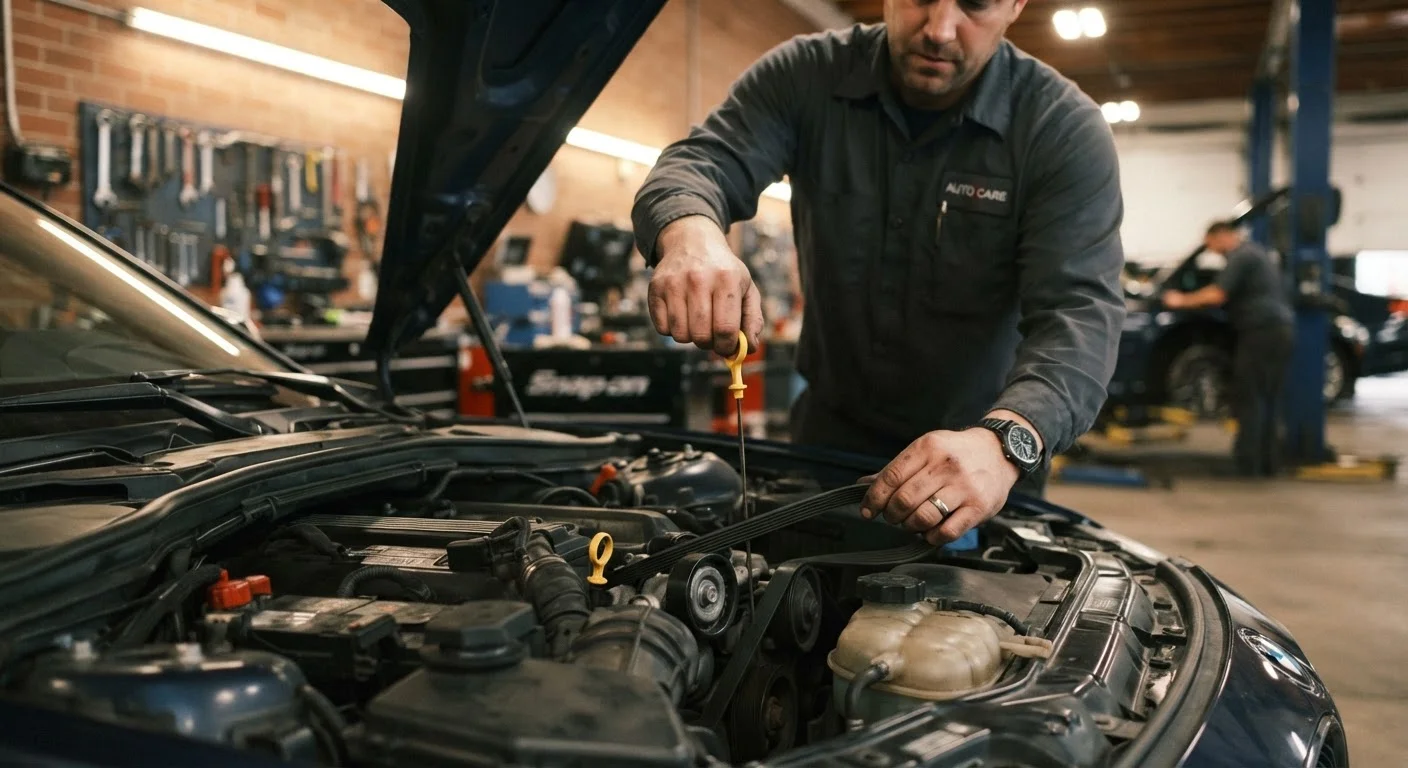
The Maintenance Tasks That Slip Through the Cracks
Oil changes and tire pressure checks get most of the attention - and rightly so. But a longer list of maintenance tasks quietly slides past drivers until a warning light appears or something stops working. These overlooked items rarely announce themselves early; they degrade gradually until the cost of ignoring them becomes impossible to ignore.
If you're new to car ownership, the practical walkthrough for new owners is a good foundation before diving into the specifics below. And if you've ever wondered whether some of what you've heard about car care is actually true, common car maintenance myths are worth examining separately.
The following tasks are among the most consistently skipped - not because they're difficult, but because they're invisible until they're not.
Cabin Air Filter Replacement
The cabin air filter cleans the air that flows through your heating, ventilation, and air conditioning (HVAC) system before it reaches the passenger compartment. Over time it traps dust, pollen, and debris - and a clogged filter restricts airflow, strains the blower motor, and can worsen air quality inside the cabin.
Most manufacturers recommend replacing it every 15,000 to 25,000 miles, though the interval varies. Check your owner's manual. On many vehicles, the filter sits behind the glove box and is accessible without tools - but if you're uncertain, a shop can handle it quickly during a routine visit.
A clogged cabin filter quietly strains your HVAC system while degrading the air you breathe inside your car.
Brake Fluid Check and Flush
Brake fluid is hygroscopic, meaning it absorbs moisture from the air over time. As water content rises, the fluid's boiling point drops - which can lead to brake fade under hard use and accelerates corrosion inside the braking system's metal components.
Many drivers never think about brake fluid until braking performance feels off. A general guideline is to have it inspected every two years or per the manufacturer's schedule. Flushing and replacing it is a task best left to a qualified mechanic, as the braking system is critical to vehicle safety.
Brake fluid degrades invisibly - its moisture absorption lowers the boiling point and can compromise stopping power.
Tire Rotation
Front and rear tires wear at different rates depending on your vehicle's drivetrain and weight distribution. Without regular rotation, tires wear unevenly, shortening their usable life and potentially affecting handling and fuel efficiency.
The standard recommendation is to rotate tires every 5,000 to 7,500 miles, though some manufacturers specify different intervals. Many drivers simply pair rotation with oil changes to keep the schedule simple. Skipping rotations doesn't just cost you tire life - uneven wear can stress suspension components over time.
Skipping tire rotation doesn't just shorten tire life - it can quietly wear down suspension components too.
Coolant System Service
Engine coolant (also called antifreeze) regulates operating temperature and prevents corrosion inside the cooling system. Coolant degrades chemically over time, losing its ability to protect metal surfaces and maintain the correct freezing and boiling points.
Service intervals vary widely - some manufacturers specify every 30,000 miles; others recommend longer-life formulas good for 100,000 miles or more. Using the wrong type or mixing formulas can cause problems, so always reference your owner's manual or ask a mechanic. A neglected cooling system is a common contributor to overheating, which can cause significant engine damage.
Degraded coolant loses its corrosion protection long before it looks wrong - cooling system neglect is a leading cause of overheating.
Wiper Blade Replacement
Wiper blades are one of the cheapest maintenance items on a car and one of the most neglected. Rubber deteriorates from UV exposure, temperature swings, and regular use - leading to streaking, skipping, or reduced clearing ability exactly when visibility matters most.
A common guideline is to replace blades every six to twelve months, or whenever clearing performance noticeably drops. This is a straightforward task most drivers can do themselves. Don't forget the rear wiper if your vehicle has one - it's often overlooked entirely.
Wiper blades fail gradually - by the time they streak badly, you've likely been driving with reduced visibility for months.
Battery Terminal Inspection
Corrosion on battery terminals - the white or bluish-green buildup that forms around the posts - can impede the electrical connection and cause slow starts, intermittent electrical issues, or complete failure to start. A periodic visual inspection takes seconds and can head off problems before they strand you.
Terminals can usually be cleaned with a wire brush and a baking soda solution, but if the battery itself is more than three to four years old, having its charge and health tested by a mechanic is a worthwhile precaution, particularly before winter.
Corroded battery terminals are easy to miss and even easier to prevent - a quick inspection can save a frustrating breakdown.
What Skipping These Tasks Actually Costs
None of the tasks above are glamorous. Most are inexpensive and take little time when addressed on schedule. What makes them consequential is the compound effect of delay - a neglected brake flush stresses calipers, worn coolant corrodes the radiator, and an ignored battery terminal leads to a failed start at the worst moment.
Your Owner's Manual Is the Starting Point
Maintenance intervals vary significantly by vehicle make, model, and driving conditions. The manufacturer's recommendations in your owner's manual are the authoritative source for your specific car. Severe-duty driving - frequent short trips, dusty conditions, towing, or stop-and-go traffic - often calls for shorter intervals than the standard schedule.
Track Maintenance With a Simple Log
Keep a small notebook in your glovebox or use a free app to record the date, mileage, and what was serviced at each visit. This record helps you spot overdue tasks at a glance, supports warranty claims if needed, and can add transparency if you sell the vehicle. A consistent log is one of the simplest habits that separates well-maintained cars from neglected ones.
The pattern is consistent: deferred maintenance rarely stays contained. Deferred repairs tend to escalate quickly precisely because one neglected system places strain on adjacent ones. If you're aiming to keep a vehicle running reliably well beyond the 100,000-mile mark, high-mileage car care strategies outlines which systems need closer attention as odometers climb.
When in doubt about any maintenance task - especially those involving brakes, steering, or the cooling system - consult a qualified mechanic rather than deferring the decision. The cost of a professional inspection is almost always lower than the cost of the repair it prevents.