
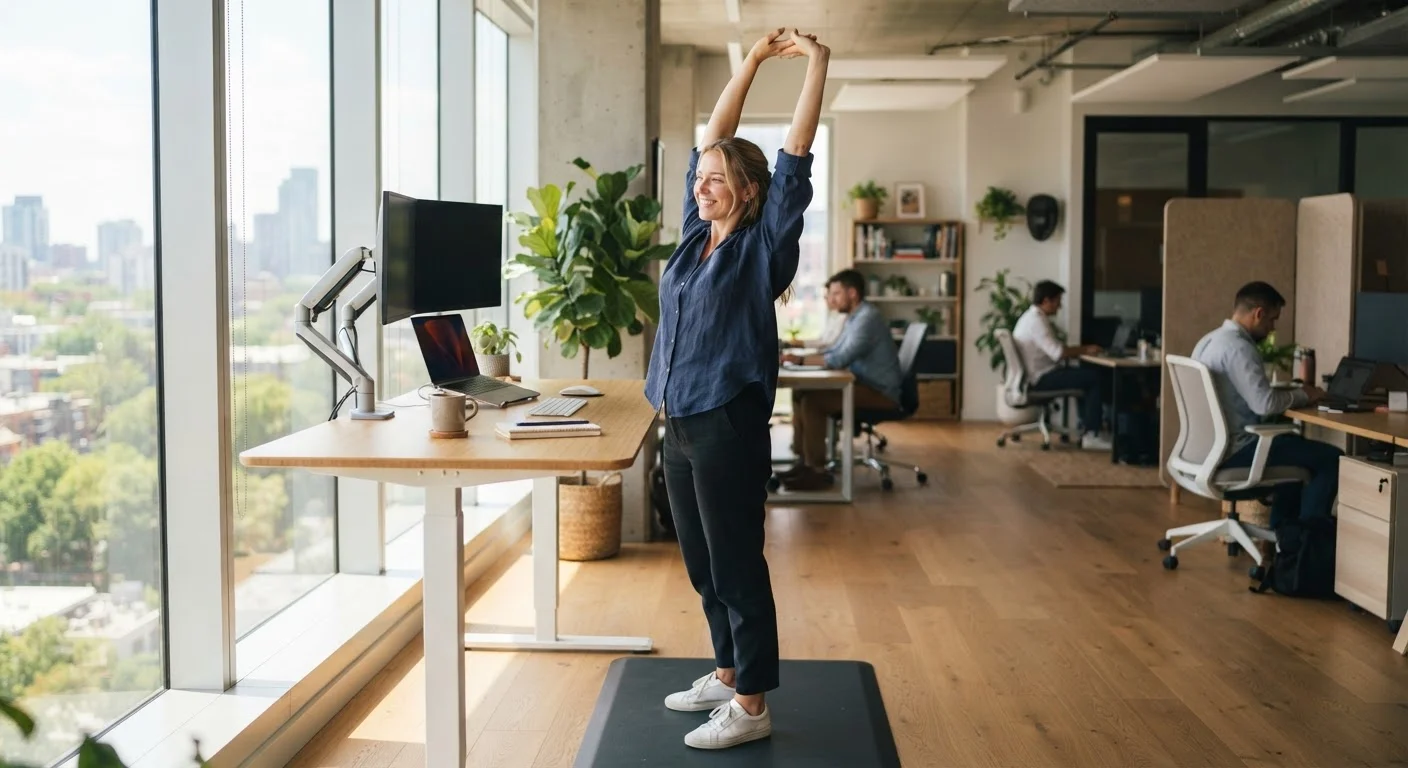
Why Desk Workers Need a Different Approach to Movement
Spending six to ten hours seated each day creates physiological challenges that a single evening workout may not fully offset. Research published in prominent public health journals suggests that prolonged, uninterrupted sitting is independently associated with increased cardiovascular and metabolic risk - separate from overall weekly exercise levels. This doesn't mean a desk job is a health sentence, but it does mean that when and how often you move matters, not just the total volume.
The goal isn't to turn your office into a gym. It's to redistribute movement more evenly across the day, reducing long stretches of stillness that your body wasn't designed to sustain. If you're just beginning to build activity habits, our guide for people returning to movement offers a helpful starting point.
Set a movement reminder every 45-60 minutes during your workday.
Uninterrupted sitting for more than an hour is where the most significant physiological effects accumulate. Frequent, brief breaks help maintain circulation and reduce muscular tension in the hips, lower back, and shoulders. A simple phone or computer alarm requires no extra tools and builds the habit automatically.
Replace at least one seated meeting per day with a walking meeting.
Walking meetings convert idle meeting time into low-intensity aerobic movement without adding any time to your day. They also tend to improve focus and reduce the tendency for meetings to run long. One-on-one check-ins and brainstorming calls are ideal candidates.
Use a sit-stand desk or a stable elevated surface to alternate posture throughout the day.
Postural variety reduces the load on the lumbar spine and activates different muscle groups compared to sustained sitting. Even without a dedicated sit-stand desk, a firm box or stack of books can raise a laptop to a standing height temporarily. The goal is alternation, not standing all day.
Incorporate brief stretching sequences targeting the hips, chest, and neck during natural work pauses.
Desk posture chronically shortens hip flexors, tightens the chest, and strains the neck and upper trapezius muscles. Targeted stretching during pauses - not requiring a separate session - helps counteract these patterns over time. Pairing stretches with existing transitions (returning from the bathroom, finishing a document) improves consistency.
Take the long route - stairs, far bathrooms, distant parking - as a deliberate daily policy.
Non-exercise activity thermogenesis (NEAT), the energy expended through everyday movement that isn't formal exercise, accounts for a significant portion of daily caloric expenditure and cardiovascular stimulation. Deliberately choosing longer paths builds this up without any dedicated workout time.
End your workday with a 10-minute walk as a consistent transition ritual.
A short end-of-day walk serves two purposes: it adds meaningful movement volume and creates a psychological boundary between work and personal time, which research on occupational stress suggests can support mood and mental decompression. It also requires no equipment and is weather-adaptable.
Quick Wins You Can Start Today
The most effective movement strategy is the one you'll actually sustain. Start with low-friction changes that don't require equipment, scheduling overhauls, or significant time investment. Even modest adjustments, applied consistently, can meaningfully shift how your body feels by late afternoon.
For broader ideas on staying active outside structured workouts, see how everyday Americans build movement into daily life.
Making Movement a Sustainable Part of Your Workday
Habit formation research consistently shows that attaching new behaviors to existing routines - sometimes called habit stacking - dramatically improves follow-through. Instead of relying on willpower, anchor movement cues to things already in your schedule: stand up every time you take a phone call, do a few shoulder rolls before opening your inbox, or take a two-minute walk after every meeting.
Movement Breaks Don't Require Long Gaps
Research generally supports movement intervals as short as two to five minutes in duration when taken regularly throughout the day. You don't need to leave your floor or change clothes - a brief walk to the water cooler, a set of calf raises, or a standing stretch at your desk all count. The emphasis is on frequency and consistency, not duration or intensity.
Mental clarity is another underappreciated benefit. Movement increases cerebral blood flow and has been linked in multiple studies to improved focus and reduced afternoon energy slumps. Structuring your day thoughtfully supports both physical and emotional wellbeing - explore daily structure strategies for emotional stability for complementary guidance.
If you're ready to build on in-office habits with a more structured weekly plan, building a realistic weekly exercise schedule can help you take the next step without overcomplicating things.
This article is for general informational purposes only and does not constitute medical advice. If you have existing health conditions or concerns about starting a new movement routine, please consult a qualified healthcare professional.