
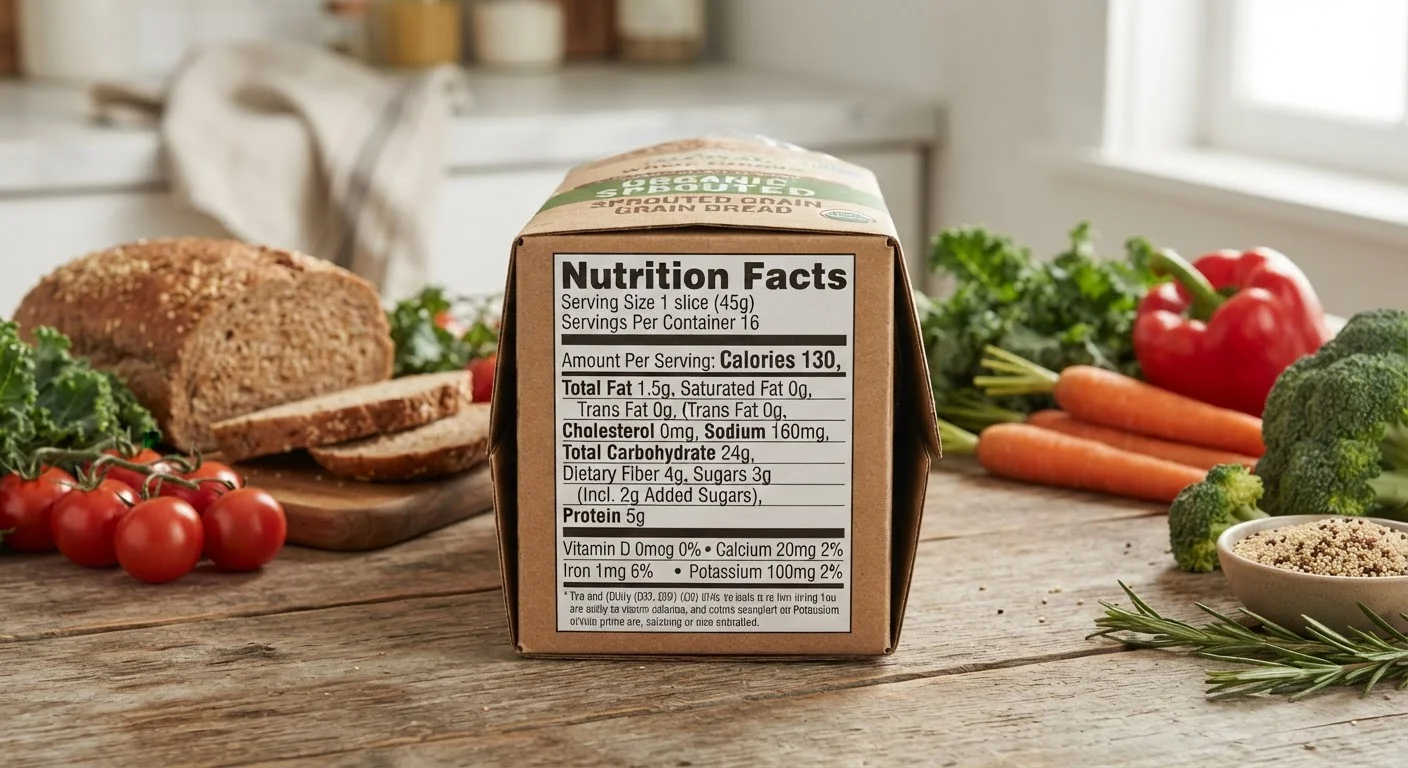
Why the Nutrition Facts Panel Exists
The Nutrition Facts panel has been required on most packaged foods in the United States since the early 1990s and was significantly updated by the FDA in 2020. Its purpose is straightforward: give consumers consistent, standardized information so they can compare foods and understand what they're eating. Whether you scan it quickly or study it closely, knowing what each line represents transforms it from a wall of numbers into a genuinely useful tool.
This guide walks through every section of the panel in order, from top to bottom, explaining what each figure means and how to put it to practical use. For a deeper understanding of what these nutrients actually do inside your body, see our guide on macronutrients.
| Label Update Year | 2020 (FDA redesign) (U.S. Food and Drug Administration) |
| Calorie Reference Diet | 2,000 calories per day (Used for calculating %DV on all panels) |
| Required Micronutrients (current) | Vitamin D, Calcium, Iron, Potassium (FDA Nutrition Labeling regulations) |
| Low %DV threshold | 5% DV or less (FDA general guidance) |
| High %DV threshold | 20% DV or more (FDA general guidance) |
Serving Size and Calories: The Foundation of Everything Else
Serving Size appears at the very top and is arguably the most important line on the panel. All the numbers below it — calories, nutrients, daily values — apply to that specific serving amount, not necessarily the whole package. The 2020 update revised many serving sizes to better reflect how much people actually eat in a single sitting, so they're closer to real-world portions than they once were.
Servings Per Container tells you how many of those portions are in the package. If a bag of chips lists 7 servings and you eat half the bag, you're consuming roughly 3.5 times the nutrient values listed.
Calories measure the total energy provided by one serving. Calorie needs vary considerably based on age, sex, activity level, and other health factors — there's no universal daily target that fits everyone. The panel uses 2,000 calories as a reference point for calculating percent daily values, which is discussed below.
Serving Size
The standardized amount the FDA uses as the basis for all nutrient values on the panel. It reflects a typical eating portion but may not match how much you personally consume.
Percent Daily Value (%DV)
The share of a day's recommended intake provided by one serving of a food, based on a 2,000-calorie reference diet. Use it to quickly gauge whether a food is high or low in a given nutrient.
Added Sugars
Sugars incorporated into a food during processing or preparation, distinct from sugars naturally present in ingredients like fruit or milk. Listed separately on the panel since 2020.
Saturated Fat
A type of fat found primarily in animal-based foods and some plant oils. High intake is associated with elevated LDL cholesterol in many individuals, though effects vary.
Dietary Fiber
The indigestible portion of plant foods that supports digestive health and is linked to various positive health outcomes. Most Americans fall short of recommended intake.
Trans Fat
An industrially produced fat largely removed from the U.S. food supply due to cardiovascular health concerns. Any nonzero amount on a label warrants attention.
The Nutrient Lines: What to Watch and Why
Total Fat, Saturated Fat, and Trans Fat appear next. Total fat includes all fat types. Saturated fat — found mostly in animal products and some tropical oils — is worth monitoring because high intake is associated with elevated LDL cholesterol in many people, though individual responses vary. Trans fat (listed separately) is largely phased out of the U.S. food supply due to health concerns; any amount above zero is worth noting.
Cholesterol is listed in milligrams. Dietary cholesterol's effect on blood cholesterol levels is more nuanced than once thought, and current guidance focuses less on strict numeric limits. Consult a healthcare provider about what's appropriate for your situation.
Sodium is measured in milligrams per serving. Most Americans consume more than is generally recommended. For a fuller picture of the relationship between sodium intake and health outcomes, see the nuances behind sodium and blood pressure.
Total Carbohydrate is broken into dietary fiber and total sugars. Dietary Fiber supports digestive health and is often under-consumed. Total Sugars includes naturally occurring sugars (from fruit or dairy) plus any added sugars.
Added Sugars — a line introduced in the 2020 update — is particularly useful. It isolates sugars added during processing, separate from those naturally present. Health authorities generally recommend limiting added sugar intake, so this line makes it easier to identify foods that are sweetened significantly during manufacturing.
Protein is listed in grams. No percent daily value is required for most foods because protein needs differ substantially by age and individual circumstances.
70%+
U.S. adults who read nutrition labels
According to FDA consumer surveys, a majority of Americans report using the Nutrition Facts panel when making food decisions.
17g
Average daily fiber gap per American
Most U.S. adults consume roughly half the generally recommended daily fiber intake, per USDA dietary data.
3,400mg
Average daily sodium intake in the U.S.
The CDC reports that average American sodium consumption substantially exceeds the 2,300mg daily reference on nutrition labels.
Micronutrients and Percent Daily Values Explained
Below the macronutrients, the panel lists key vitamins and minerals. Since 2020, the required micronutrients are Vitamin D, Calcium, Iron, and Potassium — nutrients commonly under-consumed by Americans. Vitamins A and C, which were previously required, are now optional.
Percent Daily Value (%DV) is the column running down the right side of the panel. It tells you what share of a day's recommended intake one serving provides, based on a 2,000-calorie reference diet. A quick rule of thumb: 5% DV or less is generally considered low for a nutrient; 20% DV or more is considered high. Use %DV to compare products at a glance — a cereal with 20% DV for iron offers significantly more than one with 4%.
Note that %DV is a reference tool, not a precise prescription. Your actual needs may be higher or lower depending on your health status, age, and other factors. A registered dietitian or physician can help you understand what targets make sense for you specifically.
This article is for general informational and educational purposes only and does not constitute medical or dietary advice. Always consult a qualified healthcare professional before making significant changes to your diet or if you have specific health conditions.