
Why Documentation Can Make or Break a Claim
When you file an insurance claim, you're essentially asking your insurer to verify that a covered loss occurred, that you were the one who suffered it, and that the amount you're claiming is accurate. The adjuster assigned to your case wasn't there when the pipe burst or the car was hit. Your documentation is the evidence that fills that gap.
Without it, claims can be delayed, reduced, or denied — not necessarily out of bad faith, but because the insurer simply can't confirm the facts. That's why building a thorough paper trail isn't just helpful; it's one of the most practical things you can do to protect your own interests. See what happens after you file a claim to understand exactly how adjusters use this information.
Immediately After the Loss
Property and Belongings
Repair and Expense Records
Communication and Claims Records
Storage and Organisation
What to Gather and How to Organise It
The checklist above covers the essential categories. Here's how to put them into practice without getting overwhelmed.
Go digital and physical
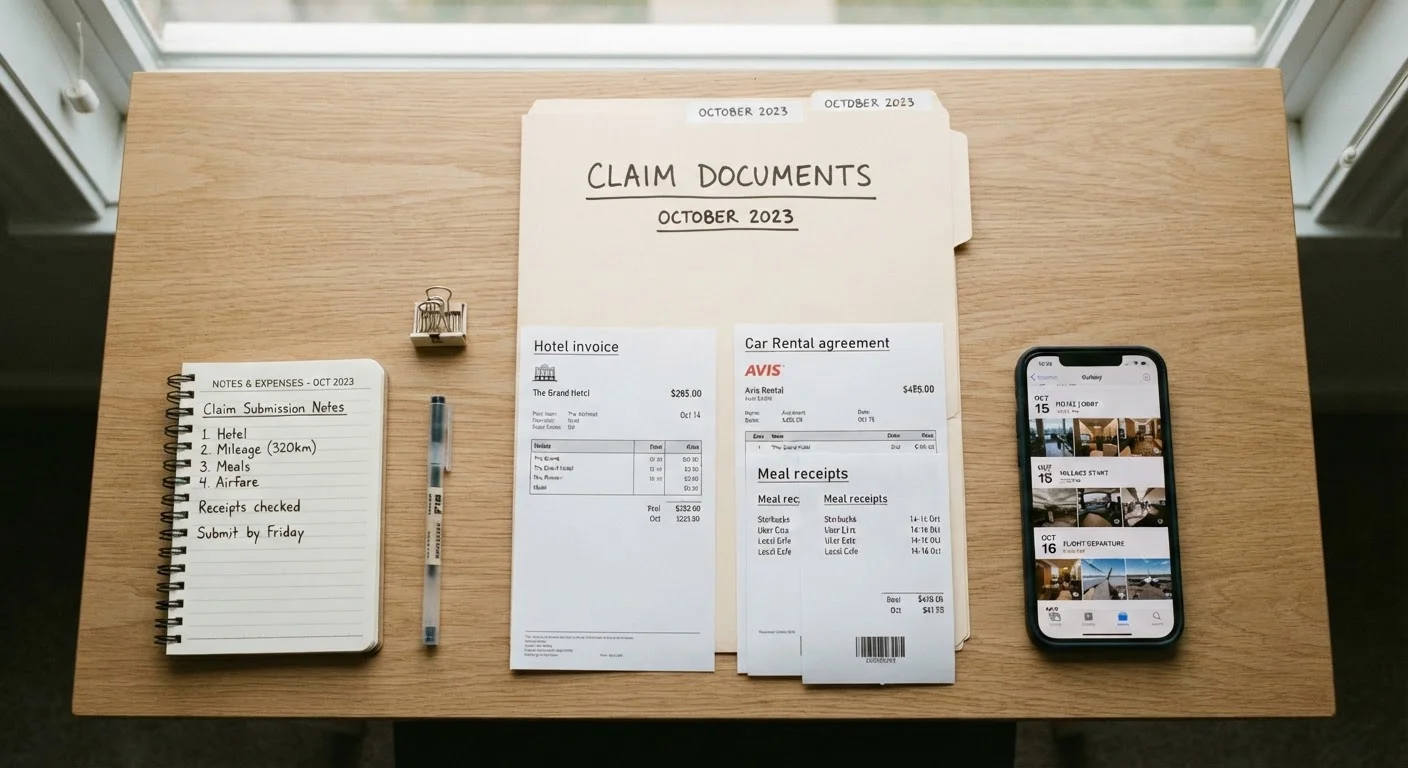
Store photos and scanned receipts in a cloud folder labelled with your claim number, and keep a physical backup in a dedicated folder. If your home is damaged, don't assume your documents stored inside are safe — back up to the cloud immediately after an incident.
Write things down in real time
Memory fades quickly, especially after a stressful event. A simple running log — even notes in your phone — documenting who you spoke with, when, what was said, and any reference numbers can be invaluable if a dispute arises later. This matters especially if you're deciding between filing on your own or through an agent, since your level of direct communication with the insurer will differ.
Don't discard anything until the claim closes
Keep hotel receipts, contractor estimates, temporary repair invoices, and even rideshare receipts if your vehicle was unusable. Many policies cover additional living expenses or loss-of-use costs — but only if you can document them.
Don't Make Permanent Repairs Before Documenting
It's natural to want to fix damage quickly, but making permanent repairs before your adjuster has seen the damage — or before you've documented it thoroughly — can complicate your claim. Most policies require you to prevent further damage (such as covering a broken window), but major repairs should wait until the loss is documented and, where required, inspected. Check your policy language or ask your adjuster before proceeding.
Throwing Away Damaged Items Can Hurt Your Claim
Disposing of damaged property before an adjuster has reviewed it may reduce or void your ability to claim for those items. Photograph everything first, and ask your adjuster whether an inspection is needed before removal. If items are a health or safety hazard, document them extensively before disposal and notify your insurer immediately.
If your claim is denied or underpaid, a complete paper trail becomes your primary tool for appeal. The appeals process relies heavily on documented evidence you've gathered from day one.
This article provides general information about insurance claims documentation and is not legal or financial advice. Coverage terms, requirements, and outcomes vary by insurer, policy, and state. Read your policy documents carefully and consult a licensed insurance professional for guidance specific to your situation.