
What 'Minimum Coverage' Actually Means
Every state requires drivers to carry at least a baseline level of auto insurance — commonly referred to as minimum coverage. In most states, this means liability-only protection: coverage that pays for injury and property damage you cause to others when you're at fault. It does not cover damage to your own vehicle or your own medical bills.
State minimums are usually expressed as split limits — for example, 25/50/25 — meaning $25,000 per injured person, $50,000 per accident for bodily injury, and $25,000 for property damage. To understand exactly how those numbers work in practice, see our guide to liability limit structures.
What minimum coverage does not include matters just as much as what it does. Collision, comprehensive, uninsured motorist, and medical payments coverage are all optional add-ons — none are built into a state-minimum policy unless you specifically add them. For plain-language definitions of these terms, the auto insurance coverage glossary is a useful reference.
The Advantages: Why Drivers Choose Minimum Coverage
Carrying only what the state requires isn't reckless by default. For some drivers in some situations, it's a reasonable and informed financial decision.
Significantly lower monthly or annual premiums
Liability-only policies cost less than full-coverage policies because they exclude collision and comprehensive. For budget-constrained drivers, the savings can make coverage affordable when it otherwise might not be.
Meets legal requirements to drive
Carrying at least the state minimum keeps you legally licensed to drive and avoids penalties such as fines, license suspension, or registration revocation.
Rational choice for low-value vehicles
When a car's market value is low, the maximum payout from collision coverage may not justify the added premium — particularly once a deductible is factored in.
Protects others when you are at fault
Liability coverage still fulfills its core purpose: paying for injuries and property damage you cause to other people in an accident where you're responsible.
The premium difference between minimum liability and a fuller policy can be substantial — sometimes hundreds of dollars per year. For someone driving an older car worth $3,000, paying for collision coverage (which would only pay out up to the vehicle's actual cash value anyway) may not pencil out. How actual cash value works helps explain why vehicle age affects this calculation.
The Disadvantages: Where Minimum Limits Fall Short
The risk side of minimum coverage is where most drivers underestimate their exposure. State minimums were often set years or decades ago and haven't kept pace with rising medical costs, vehicle prices, or repair labor rates.
State minimums often lag behind real accident costs
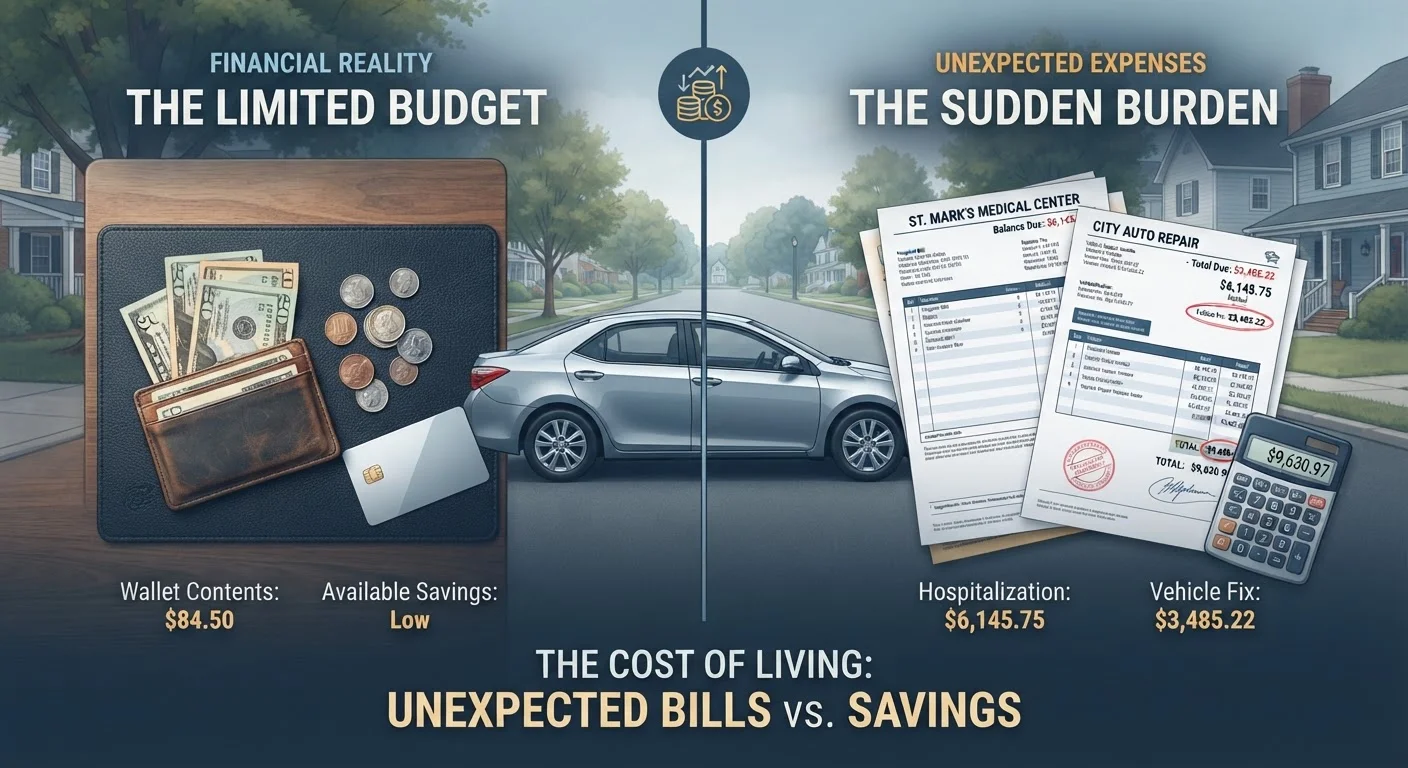
A serious collision involving hospitalization, surgery, or multiple injured parties can produce costs well above typical state liability limits, leaving you personally responsible for the difference.
No coverage for damage to your own vehicle
Minimum liability policies do not include collision or comprehensive coverage. If your car is damaged in an at-fault accident, stolen, or damaged by weather, you pay out of pocket.
No protection against uninsured drivers
Uninsured motorist coverage is separate and optional. Without it, if an uninsured driver causes an accident that damages your vehicle or injures you, you may have no insurer to turn to.
Personal assets can be at risk after a large judgment
If a court awards damages beyond your liability limits, the at-fault driver — you — may be personally liable for the remainder, which can affect savings, wages, or other assets depending on state law.
No medical payments coverage for your own injuries
Minimum-coverage policies don't include medical payments (MedPay) or personal injury protection (PIP) unless added or required by state law, leaving your own accident-related medical costs uncovered by your auto policy.
The Uninsured Driver Gap
Even drivers who are never at fault face exposure. If an uninsured driver hits you and you don't carry uninsured motorist coverage — which is separate from liability — your own insurer may not cover your vehicle repairs or medical bills. This is one of the more commonly overlooked gaps in a minimum-only policy. See how policy exclusions work for more on what standard policies leave out.
Even drivers who are never at fault face exposure. If an uninsured driver hits you and you don't carry uninsured motorist coverage — which is separate from liability — your own insurer may not cover your vehicle repairs or medical bills. This is one of the more commonly overlooked gaps in a minimum-only policy. See how policy exclusions work for more on what standard policies leave out.
Thinking Through Your Own Situation
The right level of coverage isn't universal — it depends on factors specific to you. A few questions worth working through:
- What is your vehicle worth? If its market value is low, skipping collision and comprehensive may be financially sound. If it's newer or financed, your lender will almost certainly require both.
- What assets could be at risk? Liability judgments that exceed your policy limits can, in some cases, be pursued against personal assets like savings or wages. Drivers with more to lose generally benefit from higher limits.
- Do you have health insurance? If your own medical costs from an accident would be covered elsewhere, the absence of medical payments coverage in your auto policy is less of a gap.
Before settling on a coverage level, it's worth reading through how a full policy is structured. Our article on understanding your car insurance policy walks through each section you're likely to see on a declarations page.
1 in 7
Drivers on U.S. roads estimated to be uninsured
According to the Insurance Research Council, roughly one in seven drivers lacks auto insurance, increasing exposure for those without uninsured motorist coverage.
$25,000
Common state minimum for bodily injury per person
Many states set their per-person bodily injury minimum at $25,000 — a figure that can be exceeded by a single emergency room visit following a serious accident.
This article provides general information about auto insurance concepts and is not personalized insurance or financial advice. Coverage terms, limits, and availability vary by state and insurer. Consult a licensed insurance agent or adviser for guidance specific to your situation.