
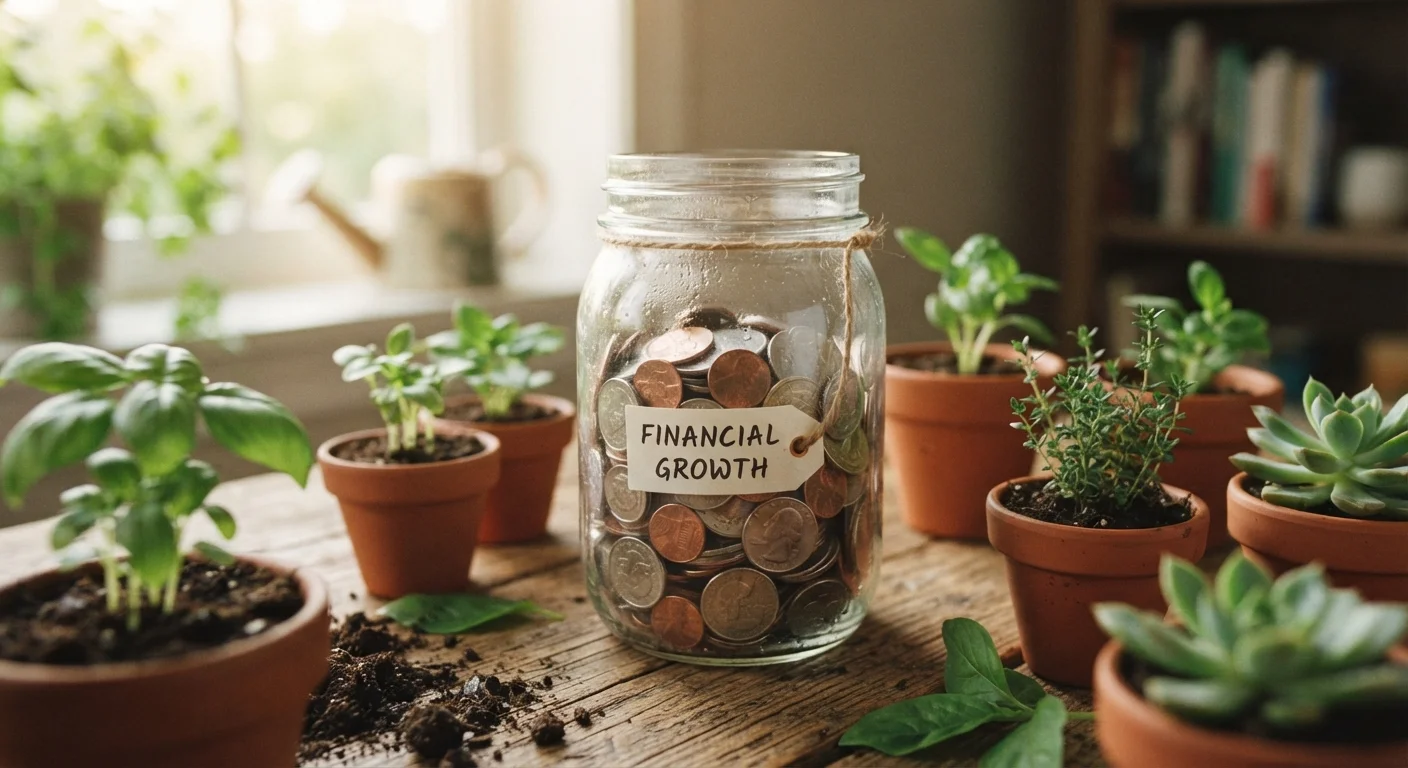
Simple Interest vs. Compound Interest: The Core Difference
Understanding compound interest starts with knowing what it replaces. Simple interest is calculated exclusively on the original amount — the principal. If you deposit $1,000 at 5% simple interest annually, you earn exactly $50 per year, every year, regardless of how long your money sits there.
Compound interest changes the calculation. After the first year, you earn $50 on your $1,000. But in year two, you earn interest on $1,050 — the principal plus the interest already earned. That gap widens every year. By year 30, the compounded account has grown far larger than the simple-interest version, with no additional deposits required.
This is why compound interest is often described as money working for itself. The longer the period, the more pronounced the difference becomes — a dynamic that directly affects saving, investing, and borrowing decisions.
Compounding Works in Both Directions
The mechanics of compound interest apply equally to assets and liabilities. The same frequency and time variables that grow a savings balance also grow an unpaid loan or credit card balance. Recognizing this symmetry is central to making informed decisions about both saving and borrowing.
How Compounding Frequency Affects Growth
Interest can compound at different intervals: daily, monthly, quarterly, or annually. The frequency matters because more compounding periods mean interest is added to the balance — and begins earning its own interest — sooner.
Consider two accounts with identical rates. One compounds annually; the other compounds monthly. Over a short term, the difference is small. Over 20 or 30 years, monthly compounding produces a noticeably higher balance. Daily compounding (common in many savings accounts) yields slightly more still.
72
Years to double money at 1% interest (Rule of 72)
The Rule of 72 is a widely used educational shortcut illustrating how interest rate and time interact in compound growth.
~12 yrs
Approximate doubling time at 6% annual compound interest
Using the Rule of 72 (72 ÷ 6), a 6% annual compound rate doubles the principal in roughly 12 years, illustrating the long-term power of moderate returns.
Daily
Most common compounding frequency for credit cards
Most major U.S. credit card issuers calculate interest daily based on the average daily balance, making unpaid balances grow faster than annually compounded debt.
When comparing savings vehicles, the number typically disclosed is the APY (Annual Percentage Yield), which already accounts for compounding frequency. That makes APY a more useful comparison figure than a stated annual rate alone. You can review how different account structures handle this in our overview of common savings account types.
Why Time Is the Most Powerful Variable
In the compound interest formula, time is an exponent — meaning its influence grows nonlinearly. An extra decade of compounding doesn't just add 10 more years of growth; it multiplies the effect of every preceding year.
This is why financial educators consistently emphasize starting early, even with small amounts. A person who begins setting aside money at 25 and stops at 35 — contributing for only 10 years — can end up with more at retirement than someone who starts at 35 and contributes steadily for 30 years, depending on the assumed return. The early mover's money simply has more time to compound.
Consistency Helps Compounding Work Harder
Regular, automated contributions — even small ones — give each deposit its own compounding runway. Setting up automatic transfers ensures contributions happen consistently without relying on willpower. Our guide to automating savings walks through how to set this up practically.
If you're weighing the cost of waiting, our article on delayed saving and long-term accumulation illustrates this dynamic with general examples. And if getting started feels out of reach, investing on a small income outlines practical first steps.
The Other Side: Compound Interest and Debt
Compound interest is not only a wealth-building tool — it's also the engine behind growing debt balances. When you carry a balance on a credit card, interest typically compounds daily based on your average daily balance. Even modest balances can grow faster than expected when only minimum payments are made, because a large portion of each payment covers interest rather than principal.
The same principle that helps savings accounts grow quietly works against borrowers who don't pay down balances aggressively. Understanding this symmetry helps frame both saving and debt-management decisions more clearly. For a closer look, see how interest compounds on credit card debt.
“Compound interest is the eighth wonder of the world. He who understands it, earns it; he who doesn't, pays it.”
— Attributed to Albert Einstein, Quote widely cited in personal finance education; original attribution is debated by historians
Building a budget that creates room for consistent saving can help you take advantage of compounding on the asset side while limiting damage on the debt side. The Budgeting Basics hub offers practical frameworks for getting there.
This article is for general informational and educational purposes only and does not constitute personalized financial advice. Consult a qualified financial professional before making decisions about saving, investing, or debt management.