
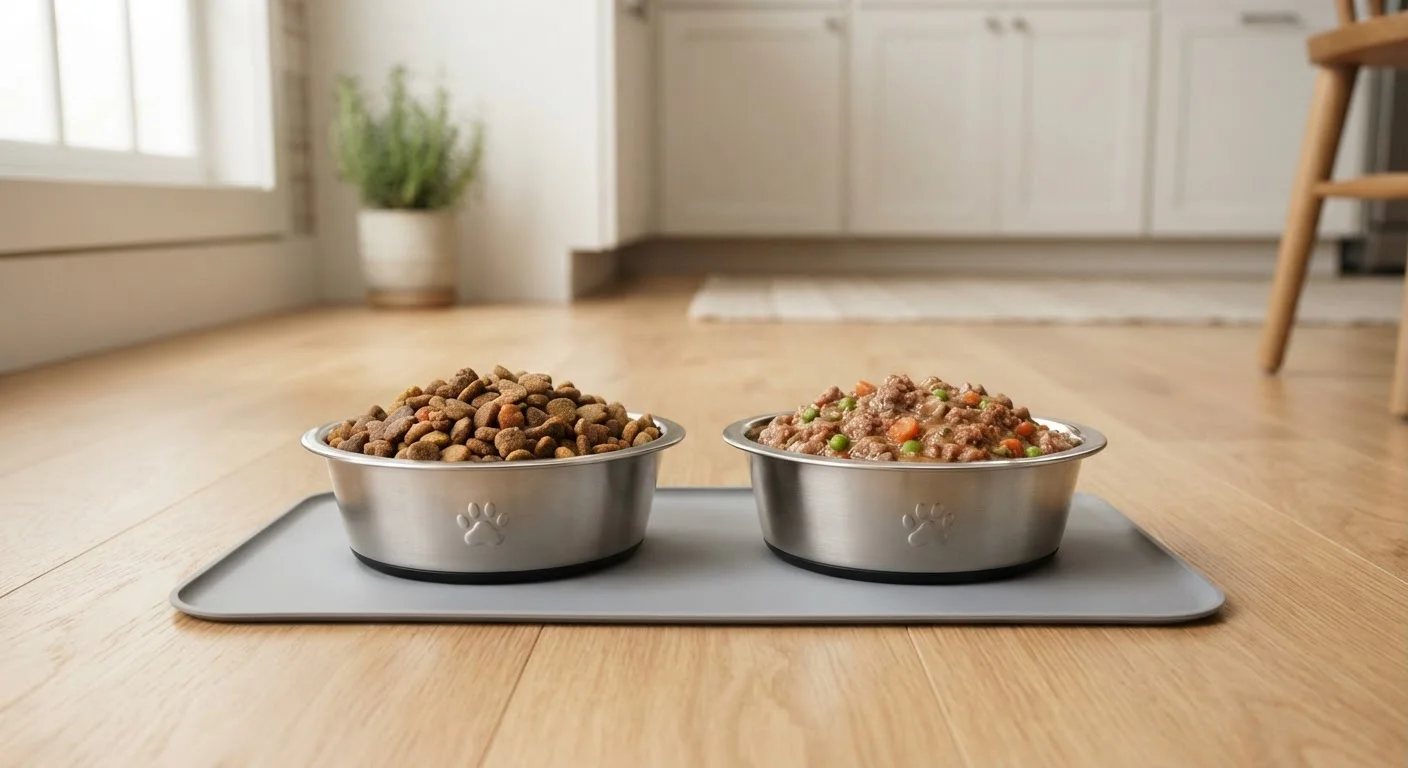
What Actually Separates Kibble from Wet Food
At the most basic level, the difference between dry kibble and wet food is moisture content. Kibble typically contains around 8–12% water, while wet food sits at 70–80% water. That gap has a cascading effect on everything from caloric density to how the food is stored, priced, and digested.
Kibble is made through a process called extrusion — ingredients are cooked under high heat and pressure, then shaped and dried. Wet food is generally cooked at lower temperatures in sealed cans or pouches, preserving a higher proportion of moisture and, in some cases, a different nutrient profile. Neither method is inherently superior; both can produce nutritionally complete diets.
For a deeper look at how these manufacturing differences show up on packaging, see our guide on reading a pet food label — particularly the sections on moisture-adjusted nutrient comparisons.
| Criterion | Dry Kibble | Wet Food |
|---|---|---|
| Moisture content | ~8–12% | ~70–80% |
| Caloric density | Higher per gram | Lower per gram |
| Cost per serving | Generally lower | Generally higher |
| Shelf life (opened) | Weeks in sealed container | 24–48 hours refrigerated |
| Hydration support | Minimal | Significant |
| Dental health effect | Mild plaque reduction via chewing | No mechanical dental benefit |
| Palatability | Moderate | High (strong aroma, soft texture) |
| Storage convenience | Room temperature, easy | Requires refrigeration after opening |
Nutrition, Hydration, and Health Considerations
Because kibble is calorie-dense, smaller portions go further — which makes portion control straightforward but also means overfeeding is easier than it looks. Wet food, with its high water content, tends to feel more filling per calorie, which can be helpful for pets managing their weight.
Hydration is where wet food holds a clear functional advantage, particularly for cats. Cats evolved as desert animals with a naturally low thirst drive. Many cats don't drink enough water when fed exclusively dry food, which can contribute to urinary tract issues over time. Wet food addresses this passively by delivering fluid with every meal.
70–80%
Average moisture content in wet pet food
Compared to roughly 10% in dry kibble, making wet food a meaningful daily hydration source for cats and dogs.
~50%
Of cats fed dry-only diets may not drink enough water
Veterinary nutrition guidance frequently notes that cats have a low innate thirst drive, increasing urinary health risks on dry-only diets.
Dry kibble's firmer texture requires more chewing, which can slow the accumulation of plaque and tartar — though this should not replace tooth brushing or professional dental cleanings. Wet food's soft consistency does not provide this mechanical benefit.
It's worth noting that nutritional balance depends on far more than the food's format. Life stage, species, activity level, and underlying health conditions all factor in. Our explainer on what a balanced diet really means for pets covers these variables in detail.
Cost, Convenience, and Practical Trade-Offs
Kibble wins on practicality for most households. An open bag of dry food can stay fresh for weeks when stored in an airtight container, and it requires no refrigeration. Wet food, once opened, must be refrigerated and used within 24–48 hours, which limits how much you can prepare in advance and adds some waste risk.
On cost, dry food is typically less expensive per meal — sometimes significantly so. A pet fed exclusively wet food will generally cost more to feed than one on kibble, particularly for larger dogs where portion sizes are substantial.
A Note on 'Complete and Balanced' Labels
Both kibble and wet food can carry an AAFCO (Association of American Feed Control Officials) 'complete and balanced' designation, which means the formula meets established minimum nutritional standards for a specific life stage. This label applies regardless of food format — so format alone does not determine nutritional adequacy. Always check that the life stage listed on the label matches your pet's current needs.
Some owners opt for a mixed feeding approach: dry kibble as the base diet with wet food served as a topper or occasional alternative. This can offer a middle ground between hydration support, palatability, and budget. If you're considering this, ask your veterinarian about appropriate portion ratios to avoid unintentional overfeeding.
Understanding your pet's individual needs — not just food format preferences — is the real foundation of good nutrition. For a broader look at how feeding decisions connect to species-specific demands, our guide on matching a pet's lifestyle demands to your own is a useful starting point.
This article is for general informational and educational purposes only. Always consult a licensed veterinarian before making significant changes to your pet's diet, especially if your pet has existing health conditions.