
Why Weight Is a Medical Issue, Not Just a Look
It's easy to see a round, cuddly pet and assume extra weight is harmless — even endearing. But veterinary medicine is clear: obesity in dogs and cats is a disease state with documented, measurable health consequences. It's not a cosmetic concern or a judgment on the owner. It's a condition that shortens lives and reduces comfort.
Excess body fat functions like active tissue. It produces inflammatory compounds that stress joints, disrupt hormone regulation, and place additional demand on the heart and lungs. An overweight pet isn't just carrying more pounds — its body is under more physiological strain around the clock. If you've noticed subtle behavioral shifts in your pet, these could be early signals worth discussing with your vet.
~59%
U.S. dogs classified as overweight or obese
According to the Association for Pet Obesity Prevention's annual surveys, the majority of American dogs are above their ideal weight.
~61%
U.S. cats classified as overweight or obese
The Association for Pet Obesity Prevention consistently finds cats have higher obesity rates than dogs in the United States.
~2 years
Median lifespan reduction linked to obesity
A long-term Labrador Retriever study found lean dogs lived nearly two years longer than their overweight littermates.
What the Science Links to Excess Weight
Research in veterinary medicine has established meaningful associations between obesity and a range of serious conditions:
- Osteoarthritis: Extra weight accelerates cartilage breakdown and increases mechanical stress on joints. This is one of the most common and most painful consequences of long-term obesity in dogs.
- Type 2 Diabetes: In cats especially, obesity is a leading risk factor for insulin resistance. Many diabetic cats can achieve remission with significant weight loss — though this requires close veterinary management.
- Respiratory Compromise: Fat deposits around the chest wall and airway make breathing harder, worsening conditions like brachycephalic syndrome in flat-faced breeds.
- Reduced Lifespan: A landmark long-term study in Labrador Retrievers found that dogs fed to maintain a lean body condition lived a median of nearly two years longer than their heavier counterparts.
These aren't minor inconveniences. They represent years of reduced mobility, chronic pain, and costly medical management. And unlike some risk factors, weight is one pet owners can meaningfully influence.
“Obesity is the most common preventable disease in dogs and cats. It's not simply an aesthetic concern — it's a significant welfare issue that affects pain levels, mobility, and longevity.”
— Ernie Ward, Veterinarian and founder of the Association for Pet Obesity Prevention
How Vets Actually Assess Weight
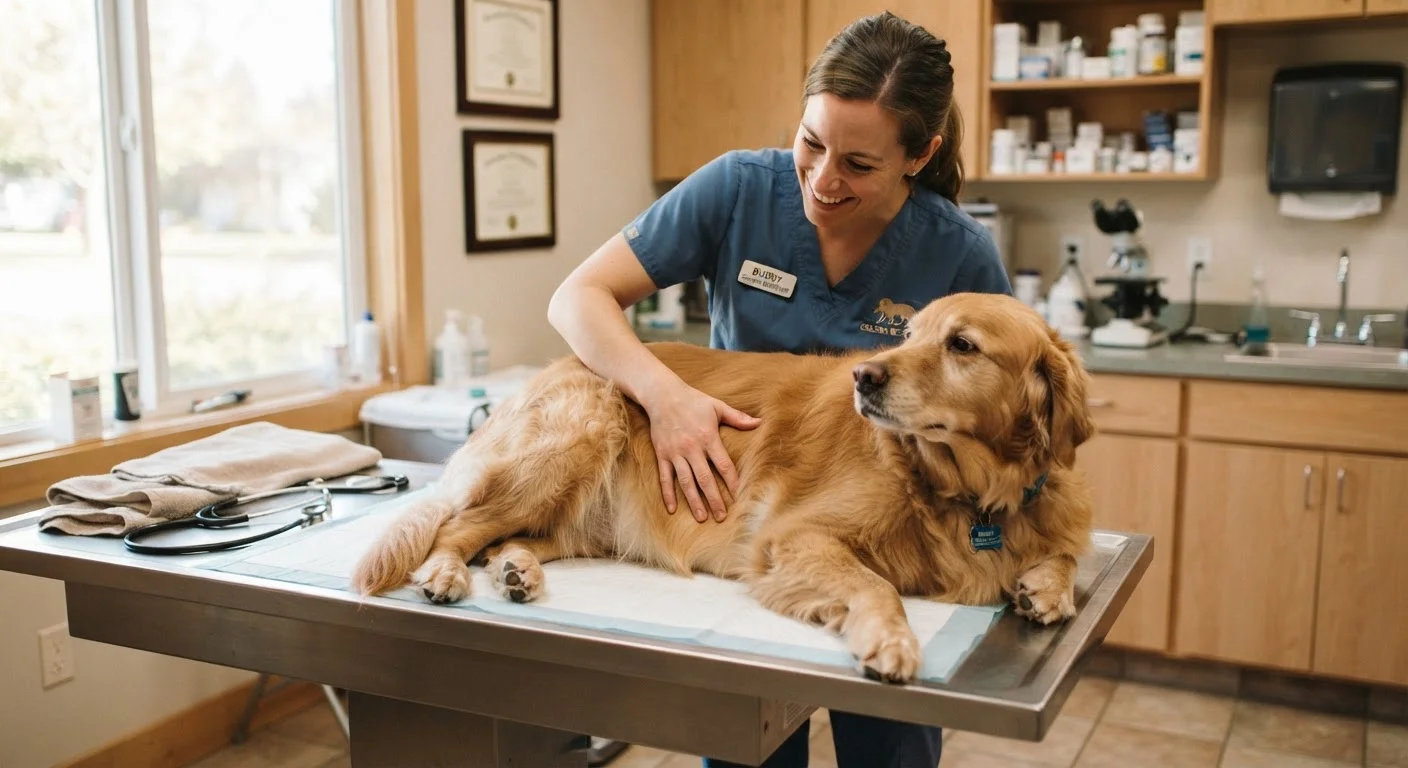
A number on a scale means little without context. A 12-pound Chihuahua mix and a 12-pound miniature Dachshund have very different ideal weights. This is why veterinarians rely on a Body Condition Score (BCS) — a hands-on, standardized evaluation of fat deposits and muscle mass relative to the animal's frame.
On the most common 9-point scale, a score of 4 to 5 is considered ideal. Pets scoring 7 or above are classified as obese. Key assessment points include:
- Whether ribs can be felt with light pressure (but not seen)
- Presence of a visible waist when viewed from above
- An abdominal tuck when viewed from the side
This system allows vets to track meaningful progress even when the scale barely moves — muscle gain during weight loss can offset fat loss numerically. Ask your vet to walk you through your pet's BCS at your next visit so you have a concrete benchmark to work toward.
Ask for the BCS Number at Every Visit
Most vets will assess body condition during wellness exams, but not all will share the score unprompted. Simply ask: 'What's my pet's BCS today, and what's the target?' Having a specific number gives you a trackable goal rather than vague guidance to 'lose a little weight.' Recording it at each visit lets you see trends over time.
Common Contributing Factors — and How to Address Them
Weight gain in pets rarely has a single cause, but a few patterns come up repeatedly:
- Overfeeding treats and table scraps: Well-intentioned feeding habits are one of the most common drivers. Some everyday habits that seem loving can quietly work against your pet's health.
- Free-feeding dry food: Leaving food out all day removes natural meal boundaries and makes calorie control nearly impossible.
- Insufficient exercise: Indoor-only cats and dogs with limited outdoor time burn fewer calories. Low-impact activities like leash walks and structured play can make a meaningful difference.
- Age and reproductive status: Neutered pets and senior animals have lower metabolic rates, meaning they need fewer calories than their younger or intact counterparts. Learn how aging changes a pet's health needs to better anticipate these shifts.
If your pet is gaining weight despite modest food intake, your vet may want to rule out conditions like hypothyroidism (in dogs) or hyperadrenocorticism before assuming the fix is simply eating less. Addressing the root cause always comes first.
This article is for general informational purposes only and is not a substitute for professional veterinary advice. Always consult a licensed veterinarian for guidance tailored to your pet's individual health needs.