
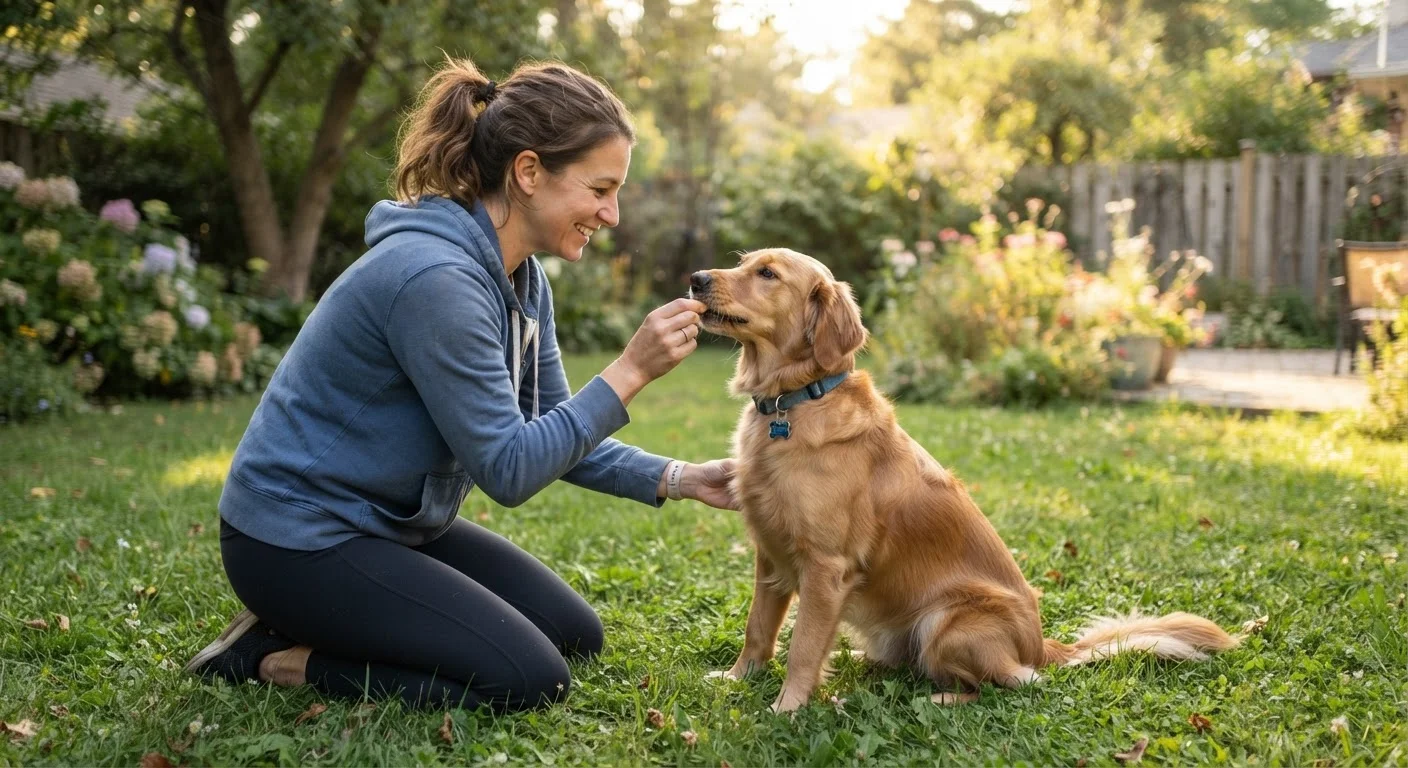
Why Home Training Works — When Done Consistently
Professional trainers are valuable, but they're not required for teaching a dog the basics. The most important variable in dog training isn't expertise — it's consistency. Dogs learn through repetition, clear feedback, and predictable consequences. A dedicated owner who trains for 10 minutes every day will almost always outperform sporadic formal classes.
The methods in this guide are grounded in positive reinforcement — rewarding the behaviors you want rather than punishing the ones you don't. This approach is well-supported by animal behavior research and recommended by veterinary organizations. It's also more enjoyable for both you and your dog, which means you're more likely to stick with it.
Training also deepens your relationship with your dog. Each session is communication — you're learning to read each other. Pair this with a consistent daily routine and you'll see behavioral improvements extend beyond the training session itself.
What you will need
High-value training treats
Used to mark and reward correct behavior immediately after it occurs.
Clicker (optional marker tool)
Provides a precise, consistent audio marker the moment a desired behavior happens.
Standard 4–6 foot leash
Used for leash manners training and controlled recall practice.
Long training line (15–30 feet)
Allows safe off-leash recall practice in open outdoor spaces.
Treat pouch
Keeps treats accessible so you can reward quickly without fumbling.
The Core Commands and How to Teach Them
The four skills covered in the steps below — sit, stay, come, and loose-leash walking — form the practical foundation of a well-behaved dog. Master these and you'll have the tools to manage most real-world situations safely.
Establish your reward system and marker
Before teaching any command, decide how you'll communicate "that's right" to your dog. The most reliable approach is marker training: a distinct sound — either the click of a clicker or a short verbal cue like "yes" — delivered the exact moment your dog does what you want, followed immediately by a treat.
Practice the timing: click or say "yes," then deliver the treat within 1–2 seconds. Your dog doesn't need to understand why yet — you're building the association. Spend one or two short sessions just doing this before you introduce any commands.
Teach "sit" using luring
Hold a treat just above your dog's nose and slowly move it back over their head. As their nose follows the treat upward, their hindquarters will naturally lower. The moment their bottom touches the ground, mark and reward.
After 5–10 successful repetitions with the lure, introduce the word "sit" just before you begin the hand movement. Gradually fade the lure by pretending to hold a treat in your hand, then rewarding from your other hand or a treat pouch once they comply.
Build "stay" in small increments
Ask your dog to sit. Say "stay" once, then pause for just 1–2 seconds before marking and rewarding. Gradually increase the time — aim for a few extra seconds per session rather than jumping ahead. Once your dog can hold a 10-second stay, begin adding small amounts of distance by taking one step back before returning to reward.
The three variables in stay training are duration, distance, and distraction. Work on them one at a time. Increasing all three at once is the most common reason stay breaks down.
Train a reliable recall ("come")
Recall is potentially the most important safety command your dog can learn. Start indoors: crouch down, say your dog's name followed by "come" in a bright, upbeat tone, and reward enthusiastically when they reach you. Make arriving at you the best thing that happens in their day — treats, praise, and play.
Gradually move practice to more distracting environments. A long training line (15–30 feet) lets you practice in the backyard or a park while keeping your dog safe. Never scold a dog that comes to you, even if they were slow — doing so poisons the recall cue.
Practice loose-leash walking
Leash pulling is one of the most frustrating dog behaviors — and one of the most fixable. The core principle: a tight leash means you stop walking; a loose leash means you keep going. The moment your dog hits the end of the leash and creates tension, stop completely. Wait. The second the leash goes slack, mark and resume walking.
This requires patience early on — you may barely make it to the end of your driveway in the first few sessions. That's normal. You can also reward your dog periodically for walking beside you with loose leash, reinforcing that staying near you is worth their while.
Generalize skills to new environments
A dog that sits perfectly in your kitchen may seem to forget everything the moment you're at the park. This is normal — dogs don't automatically transfer learned behaviors to new contexts. Plan to re-teach each command at a lower level of difficulty in each new environment.
Start with fewer distractions, shorter durations, and higher-value rewards when practicing somewhere new. As your dog succeeds, gradually raise the difficulty. This process — called generalization — is what separates a dog that knows a trick from one that has genuinely reliable obedience.
Punishment-Based Methods Can Backfire
Yelling, leash jerking, or physical corrections can cause fear, anxiety, and even aggression in dogs. Veterinary and animal behavior organizations broadly advise against aversive techniques. If your dog is showing aggressive behavior — growling, snapping, or biting — consult a certified professional behaviorist rather than attempting to correct it at home.
Pair Training With Your Daily Routine
The easiest way to build a consistent training habit is to attach it to something you already do — right before meals, after your morning coffee, or before a walk. A structured daily routine benefits both your dog's learning and their overall sense of security.
Treat Calories Add Up Quickly
Training treats should be small — pea-sized is ideal. If you're doing multiple sessions a day, account for treat calories within your dog's daily food intake to avoid unintentional overfeeding. See our guide on habits that can quietly harm your pet's health for more on how good intentions can backfire.
What to Expect and When to Ask for Help
Progress in dog training is rarely linear. Most dogs will have sessions that feel like breakthroughs followed by days that seem like regression. This is normal — learning consolidates over time, not in a straight line. Puppies generally pick up new behaviors quickly but have shorter attention spans and lower impulse control. Adult dogs may take longer to unlearn existing habits but can focus for longer periods.
If your dog has mastered the basics and you want to go further — or if you're seeing behaviors like aggression, severe separation anxiety, or compulsive behaviors — a certified professional trainer or veterinary behaviorist is the appropriate next step. These situations go beyond obedience and often require individual assessment.
You might also find that pairing training with other positive home-care habits reinforces your dog's overall trust and calm. Our guide on grooming at home without stressing your pet covers how to extend that same patient, reward-based approach to handling and care routines.
This article is for general informational and educational purposes only. It is not a substitute for professional veterinary or animal behavior advice. If your dog is displaying concerning behaviors, consult a licensed veterinarian or certified applied animal behaviorist.