
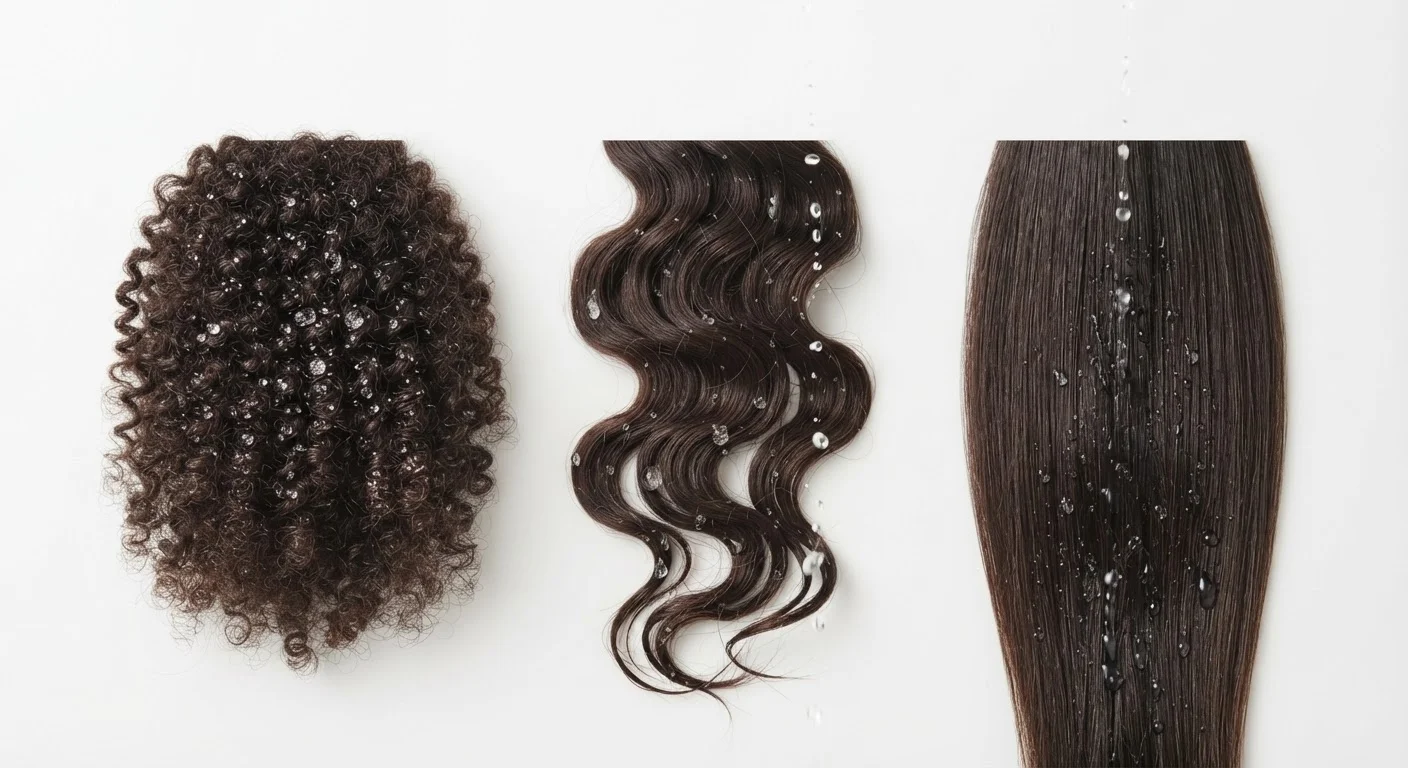
The Cuticle Is the Key
Every hair strand is wrapped in an outer layer called the cuticle — a sleeve of overlapping, tile-like cells that protect the inner structure of your hair. Think of those cells like shingles on a roof. When they lie flat and overlap snugly, the roof does its job well. When they're lifted, cracked, or missing pieces, water gets in and out with very little resistance.
Porosity is essentially a measure of how "tight" or "open" that cuticle structure is. It's not a flaw — it's a characteristic, and understanding it is one of the most practical things you can do for your hair-care routine. Just as knowing your skin type changes which products actually perform for your face, knowing your porosity changes which hair products actually perform for your strands.
Porosity Varies Along the Strand
It's common for hair to have different porosity levels from root to tip. Roots tend to have lower, more intact porosity since they're newer growth, while ends — especially on longer hair — have experienced years of styling and environmental stress. This is one reason why applying different products or amounts to your ends versus your roots often makes practical sense.
Low, Normal, and High: What Each Means
Low porosity means your cuticle scales are tightly closed. Moisture has a hard time getting in — but once it does, it stays put. The catch? Products tend to sit on top of the hair rather than absorbing, which leads to that frustrating buildup feeling even with lightweight formulas. Water also takes longer to fully saturate low-porosity strands, which is why this hair type can feel dry even after a deep conditioning session.
Normal (medium) porosity is the middle ground — cuticles that allow moisture in and hold it reasonably well without excessive buildup or rapid loss. This type tends to be the most forgiving with product choices.
High porosity means the cuticle is raised or has gaps, allowing moisture to rush in quickly — and escape just as fast. High-porosity hair often feels dry shortly after washing, absorbs products almost immediately, and may be prone to frizz in humidity. It can be genetic (common in very curly and coily textures) or the result of cumulative damage from heat styling, chemical services, or even hard water.
~90%
Hair porosity variation explained by cuticle structure
Research in hair fiber science consistently attributes most porosity differences to the integrity and layering of the cuticle, rather than the inner cortex.
3 layers
Structural layers of a single hair strand
Each strand is composed of the cuticle (outer), cortex (middle), and medulla (inner core) — with porosity primarily governed by the outermost cuticle layer.
How Porosity Shapes Your Product Choices
This is where understanding porosity pays off at the product level. For low-porosity hair, heavy creams and thick butters are usually counterproductive — they coat the cuticle rather than penetrate it. Water-based formulas, lightweight leave-ins, and humectants like glycerin or aloe vera tend to work better. Applying products to freshly washed, damp hair and using a little gentle heat (a warm towel or hooded dryer) can help ingredients actually get inside the strand.
For high-porosity hair, the goal flips: seal moisture in rather than just adding more of it. Heavier oils and butters used as a finishing step help close the cuticle temporarily and slow moisture loss. Periodic protein treatments can fill in structural gaps. It also helps to avoid routines that aggressively strip or lift the cuticle further — which is why certain washing habits matter more than people realize.
Try the LOC or LCO Method for High Porosity
The LOC method — Liquid, Oil, Cream — is a layering technique popular in the curly hair community that works particularly well for high-porosity types. Applying a water-based product first, then an oil to seal, then a cream to lock everything in, helps trap moisture before it escapes. Some people with very high porosity find reversing the oil and cream steps (LCO) works better — experiment to find what your hair responds to.
For normal-porosity hair, the priority is maintenance — avoiding damage that can push porosity higher over time, and using a balanced mix of moisture and protein to keep things stable.
What Changes Your Porosity — and What to Do About It
Porosity isn't entirely fixed. While your genetic baseline plays a significant role, external factors shift it constantly. Chemical services — coloring, bleaching, relaxing, perming — deliberately alter the cuticle to allow the chemistry to work, and the process raises porosity as a side effect. Heat tools, when used frequently or at high temperatures, do the same thing gradually. Even prolonged sun exposure contributes to cuticle degradation over time.
This is one reason porosity can differ along the length of a single strand: your roots are newer and closer to your natural baseline, while your ends have endured years of styling and environmental exposure. Treating your ends more gently — using richer products there and trimming regularly — acknowledges this reality rather than fighting it.
Understanding porosity also puts beauty labels into better perspective. A product marketed as intensely moisturizing may do very little for low-porosity hair that literally can't absorb it — which is a formulation mismatch, not a product failure. If you've wondered why a product that works beautifully for someone else does nothing for you, porosity is often part of the answer. For a broader look at how to decode what's actually on your labels, see what beauty label claims actually mean.