
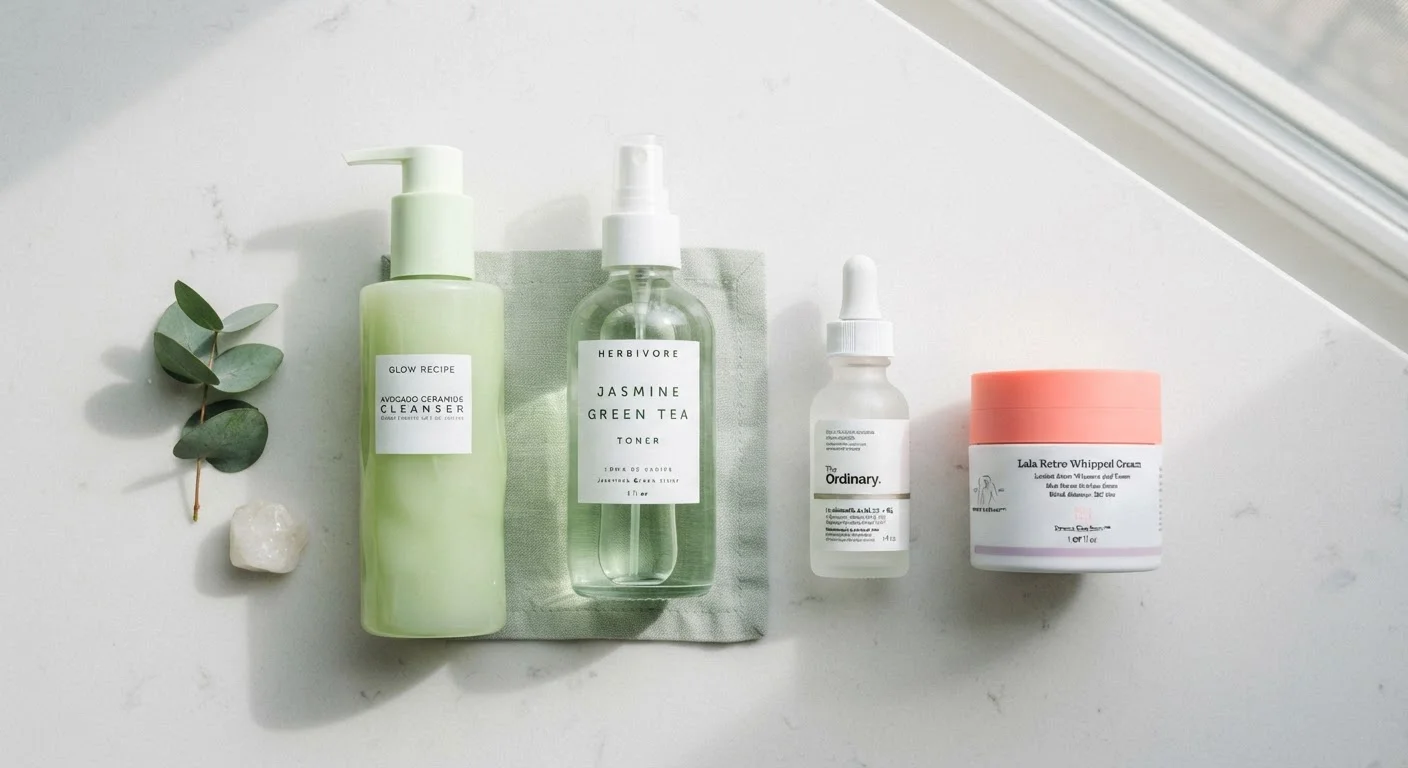
The Four Skin Types — and What Sets Each One Apart
Most dermatologists and estheticians organize skin into four core categories. Each reflects a different pattern of oil production, moisture retention, and sensitivity.
- Oily skin produces excess sebum (the skin's natural oil), often resulting in a shiny or greasy appearance, enlarged pores, and a tendency toward breakouts. The upside: oily skin tends to stay supple longer and may show signs of aging more slowly.
- Dry skin underproduces oil, which can leave it feeling tight, rough, or flaky. It's more prone to irritation, fine lines appearing more prominent, and reactions to harsh ingredients or cold weather.
- Combination skin is exactly what it sounds like — oily in some areas (typically the forehead, nose, and chin, known as the T-zone) and normal to dry in others (usually the cheeks). This is actually the most common skin type, which means many products are formulated with it in mind.
- Sensitive skin reacts easily to ingredients, environmental changes, or friction. Signs include redness, stinging, itching, or frequent flare-ups. Sensitivity can coexist with any of the other types — you can have oily-sensitive or dry-sensitive skin.
It's also worth noting that normal skin is sometimes listed as a fifth type — it refers to skin that's well-balanced, neither too oily nor too dry, with minimal sensitivity. If that sounds like you, consider yourself fortunate and focus on maintaining what's already working.
Skin Type vs. Skin Condition
Skin type refers to your skin's baseline, largely genetic behavior. Skin conditions — like acne, rosacea, eczema, or hyperpigmentation — are separate concerns that can affect any skin type. Addressing a condition usually requires guidance from a dermatologist and may involve treatments beyond a standard over-the-counter routine.
Why Skin Type Actually Matters for Your Routine
Knowing your skin type isn't about putting yourself in a box — it's about understanding the logic behind product choices. The same ingredient can be a game-changer for one person and a problem for another, purely based on skin type.
For example, rich, occlusive moisturizers (ones that form a protective barrier on the skin) are often excellent for dry skin but can feel suffocating and pore-clogging for oily types. Conversely, foaming cleansers that work well for oily skin may be far too stripping for dry or sensitive skin.
Reassess Your Skin Type Seasonally
Your skin doesn't behave the same way in January as it does in July. Cold, dry winter air can make naturally oily skin feel balanced — or push dry skin into uncomfortable territory. Checking in with your skin at the start of each new season helps you adjust your routine before problems arise rather than after.
Exfoliation is another area where type matters enormously. Chemical exfoliants like AHAs (alpha hydroxy acids) and BHAs (beta hydroxy acids) work differently on different skin types — BHAs, being oil-soluble, tend to suit oily and acne-prone skin particularly well. Learn more in our guide to chemical exfoliants vs. physical scrubs.
Understanding your skin type also helps you decode product labels. Terms like "non-comedogenic" (meaning formulated to avoid clogging pores) matter far more if you have oily or acne-prone skin than if your skin is dry. Our article on what beauty label claims actually mean breaks those terms down clearly.
~50%
Adults who self-report combination skin
Combination skin is widely considered the most prevalent type among adults, according to general dermatological practice guidelines.
40%
People who report skin sensitivity
Research published in dermatology literature suggests roughly 40% of adults identify as having sensitive or reactive skin, though self-reported rates vary by study.
Building a Routine Around Your Type
Once you know your type, your routine decisions get a lot simpler. Here's a practical framework:
- Oily skin
- Look for gel or foam cleansers, lightweight oil-free moisturizers, and ingredients like niacinamide (which can help regulate oil production) and salicylic acid for breakout-prone areas. Avoid heavy creams and overly rich facial oils.
- Dry skin
- Prioritize cream cleansers, thick moisturizers with ingredients like ceramides and hyaluronic acid, and gentle formulas across the board. Avoid alcohol-forward toners or harsh scrubs that further compromise the skin barrier.
- Combination skin
- You may find it helpful to use different products on different zones, or to look for balanced formulas described as suitable for combination skin. A gel moisturizer applied more lightly to the T-zone and more generously on dry patches is a common approach.
- Sensitive skin
- Fragrance-free and minimal-ingredient formulas are generally safer starting points. Introduce new products one at a time so you can identify what's causing a reaction if one occurs. Patch testing on your inner arm before applying a new product to your face is a smart habit.
For a deeper dive into the active ingredients worth knowing regardless of skin type, see ingredients worth understanding before you buy another skincare product.
This article is for informational purposes only and does not constitute medical or dermatological advice. If you have persistent skin concerns, consult a licensed dermatologist or healthcare provider.