
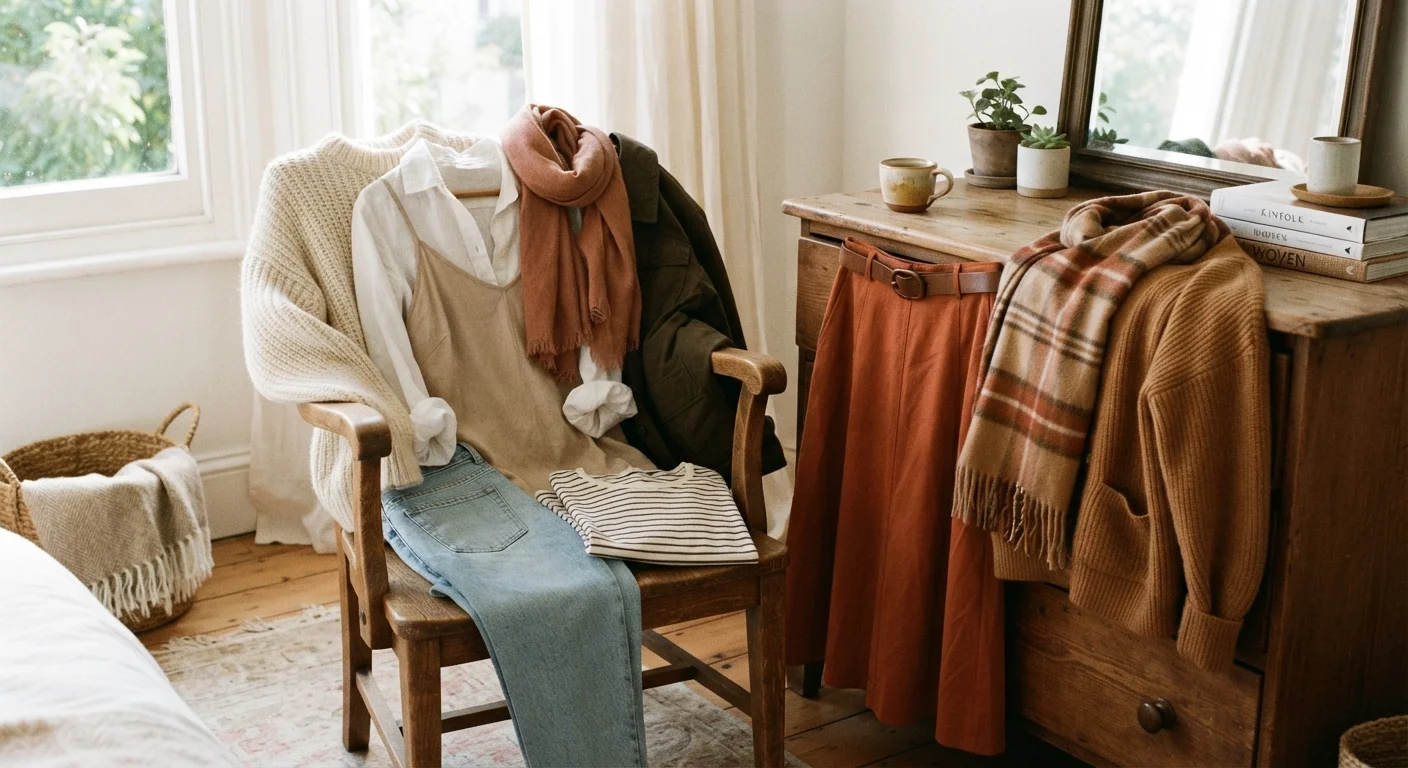
Why Seasonal Wardrobes Don't Have to Mean Seasonal Shopping
The idea that your wardrobe needs a complete overhaul every few months is persistent — and largely unnecessary. For most people, the clothes already hanging in their closet can carry them through seasonal shifts with a bit of strategic thinking. The real skill isn't owning more; it's understanding what you already have and how to use it differently.
This matters beyond convenience. Wardrobe turnover is one of the more common ways people overspend on clothing without improving how they actually dress. Pieces bought in haste at the start of a season often underperform and get replaced again the following year. A more intentional approach — rooted in what you own — tends to produce better results with less financial pressure. For more on the relationship between closet size and outfit satisfaction, this piece on wardrobe pitfalls is worth reading.
Resist the Seasonal Reset Impulse
Retailers are designed to convince you that each season requires an entirely new wardrobe — it doesn't. The pressure to 'refresh' your closet every few months is largely a marketing construct. Most functional wardrobes already contain more seasonal versatility than their owners realize, and recognizing this is the first step toward dressing smarter without overspending.
The steps below walk through how to build seasonal flexibility from the inside out: starting with what's already there, understanding how fabric and layering work together, and making only the additions that genuinely solve a problem.
Fabric steamer or iron
Refreshes clothes that have been stored, removing wrinkles before bringing them back into rotation.
Breathable garment bags
Protects off-season items from dust and moisture without trapping humidity that damages fabric.
Closet dividers or seasonal bins
Keeps transition-friendly pieces accessible while storing deep-season items out of the way.
A full-length mirror
Essential for evaluating whether layered outfits work visually before committing to a combination.
Step-by-Step: Transitioning Your Wardrobe Without Starting Over
These steps work for any seasonal shift — summer to fall, winter to spring, or the awkward middle weeks when temperatures swing dramatically day to day. Work through them in order, and you'll likely find that your closet is more capable than you thought.
What you will need
Audit what you already own before anything else
Before you consider buying anything new, pull out every piece in your closet and assess it honestly. Sort items into three groups: things you wear regularly, things you never reach for, and things you've forgotten about. That third category is where seasonal versatility often hides.
Pay attention to which items have broad temperature range — a silk blouse works in summer alone but also under a structured jacket in fall. Our wardrobe audit guide walks through this process in detail if you want a structured framework.
Learn which fabrics carry across seasons
Fabric is the most overlooked factor in seasonal dressing. The same silhouette in two different materials can feel like completely different clothes. Here's a general breakdown:
- Cotton and linen: Breathable for warm months, but a heavier cotton weave layers well into cooler weather.
- Wool and wool-blends: Traditionally fall and winter, but lightweight merino is genuinely comfortable across a wide range of temperatures.
- Denim: A reliable year-round fabric — light washes in warmer months, darker weights in cooler ones.
- Silk and rayon: Tend to read as warm-weather fabrics but work as layering pieces under blazers or cardigans.
Understanding fiber content lets you make smarter use of what you already own rather than defaulting to seasonal shopping cycles.
Build a layering system with what you have
Layering is the engine of seasonal dressing. The goal is a system with three functional tiers: a base layer close to the body, a mid layer for insulation or structure, and an outer layer for weather protection or polish.
Many people already own pieces for all three tiers — they simply haven't thought of them that way. A fitted tee becomes a base; a button-down shirt or lightweight sweater is a mid layer; a blazer, denim jacket, or trench coat serves as the outer layer. The outfit formula approach can help you identify which combinations feel natural to repeat.
Identify your transition gaps
After auditing your closet and mapping your layering system, note where you genuinely come up short. Common transition gaps include: no lightweight outer layer for mild days, no long-sleeve base layers for layering under short-sleeve items, or nothing that bridges casual and polished across seasons.
These gaps — not trend-driven impulse buys — are what justify intentional additions. The wardrobe staples guide covers which types of pieces tend to fill gaps most efficiently without adding clutter.
Make a few targeted additions if needed
If genuine gaps exist, address them with intention rather than impulse. A single versatile mid-weight layer — a cardigan, a utility jacket, a lightweight blazer — can resolve multiple seasonal transition problems at once.
When shopping for additions, prioritize pieces that work with at least three items already in your closet. If you can't mentally style a new piece multiple ways before buying it, it's likely to become a dead-end purchase. For broader context on how purchasing decisions fit into your overall style strategy, the everyday style playbook offers a useful end-to-end framework. If budget is a consideration, buying secondhand is worth exploring for transitional pieces like denim jackets and cardigans.
Rotate and store strategically
Seasonal storage isn't just about making physical space — it's about keeping your most-useful pieces visible and reachable. Clothes you can see are clothes you wear. Deep-season items (heavy wool coats in June, swimwear in January) can move to secondary storage; transition pieces should stay front and center.
Store off-season clothing in breathable bags rather than plastic bins where possible, especially natural fibers that need airflow. Give stored pieces a quick refresh with a steamer when you bring them back out — it extends garment life and makes the transition feel intentional rather than hurried.
Build Around a Shared Color Story
When your wardrobe shares a consistent palette — even loosely — pieces from different seasons mix together naturally. You don't need a rigid capsule approach to achieve this. Simply gravitating toward colors you consistently love means a summer linen shirt can layer under a fall blazer without looking forced. See our guide to neutral palettes for a deeper look at how color choices shape outfit flexibility.
Don't Pack Away Clothes Too Early
Seasonal transitions are rarely clean cutoffs — temperatures swing unpredictably, especially in spring and fall. Storing summer or winter items too early can leave you scrambling when the weather reverses. Keep a small, accessible transition zone in your closet with pieces that work across a broader temperature range.
Once you've worked through these steps, the process becomes faster each season. You're not building a new wardrobe — you're learning to read the one you already have. If you find yourself wanting to go deeper on personal style as a whole, this look at how style evolves puts seasonal dressing in a broader, longer-term context.