
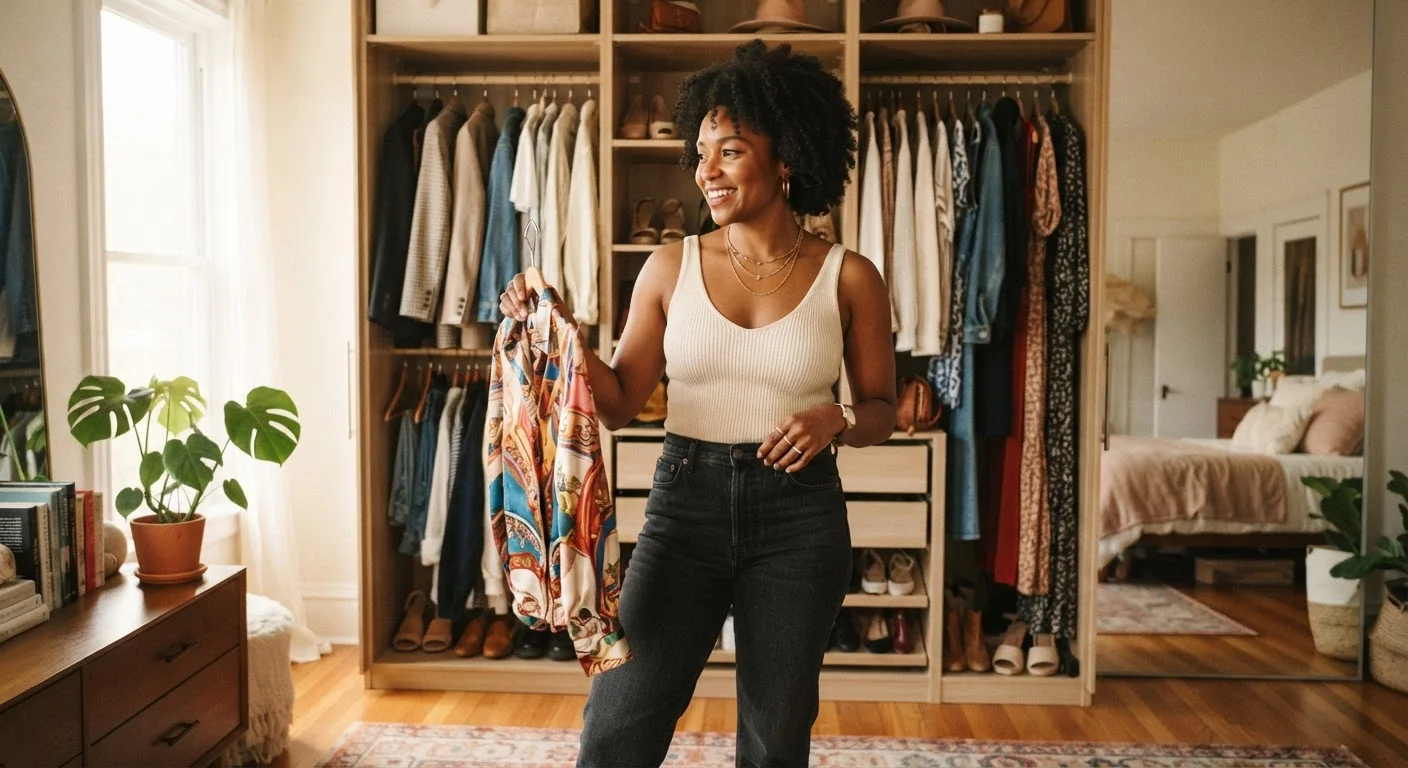
Style Confidence Isn't About Looking Like Someone Else
There's a persistent myth in fashion that dressing confidently requires a complete reinvention — new silhouettes, a curated aesthetic pulled from a magazine, or clothes that feel nothing like you. In reality, the most effective style choices are the ones that feel like a truer version of yourself, not a departure from it.
Psychological research on self-presentation consistently suggests that when what we wear aligns with how we see ourselves, we experience greater ease and comfort in social and professional situations. That ease reads as confidence to others. The goal, then, isn't to dress like someone confident — it's to dress in a way that lets your own confidence surface naturally.
If your current wardrobe feels off, it's worth exploring whether the gap is about quality, fit, or identity — not just aesthetics. See our guide to rebuilding alignment between identity and style for a deeper look at that disconnect.
“Clothing is a language, and like any language, it's most powerful when it's authentic to the speaker.”
— Dawnn Karen, Fashion psychologist and author of 'Dress Your Best Life'
Best Practices for Dressing With Intention
These approaches aren't rules — they're frameworks you can adapt to your own life, body, and preferences. Pick what resonates and leave what doesn't.
Identify three words that describe how you want to feel when you get dressed.
Without a personal compass, wardrobe decisions get driven by trends, sales, or others' opinions — none of which necessarily reflect you. Naming your own intention creates a filter that makes choices simpler and more consistent.
Prioritize fit above all other style considerations.
Clothes that fit well signal intentionality and look polished regardless of price or trend. Ill-fitting garments — whether too large or too snug — can undermine even a well-chosen outfit.
Build color choices around what already energizes you, not what's currently on trend.
Color has a documented effect on mood and perception, but the most effective palette is personal — grounded in the shades you naturally reach for and that others respond to positively when you wear them.
Edit regularly rather than adding constantly.
A smaller wardrobe of pieces you genuinely like is easier to dress from — and more likely to reflect who you actually are — than a large, unfocused collection. Regular editing keeps your wardrobe current with your identity, which evolves over time.
Use one signature element to anchor your personal style.
A consistent signature — a collar style, a preferred silhouette, a particular texture — gives your wardrobe continuity and makes getting dressed easier. It also signals identity, which is what style confidence is really built on.
Quick Wins You Can Try Today
You don't need a wardrobe overhaul to start dressing more intentionally. These small actions can shift how your clothes feel almost immediately.
For guidance on expressing your look across different contexts without losing your thread, the role occasion dressing plays in personal style is worth exploring.
What the Data Says About Clothing and Self-Perception
The connection between clothing and psychology isn't anecdotal. Research in the field of enclothed cognition — a term coined by researchers Hajo Adam and Adam D. Galinsky — suggests that the symbolic meaning of clothing, combined with the physical experience of wearing it, influences how people think and perform. While findings are still being explored and nuanced by follow-up research, the general principle that clothing affects mindset has substantial support.
96%
Of people report clothing affects their mood
A survey conducted by the American Psychological Association found that the vast majority of respondents felt their clothing choices influenced how they felt throughout the day.
2x
Performance boost linked to 'power dressing' in lab settings
Research published in Social Psychological and Personality Science found that wearing more formal clothing was associated with increased abstract thinking and a sense of personal power in experimental conditions.
This doesn't mean expensive or trend-forward clothes will make you feel better. What seems to matter most is whether the clothing matches how you want to feel — a direct argument for dressing from your own identity rather than someone else's template. Explore how body-type dressing advice misses the bigger picture for more on this.
Style Is a Practice, Not a Destination
Your personal style will shift as your life, preferences, and circumstances change — and that's completely normal. Rather than aiming for a fixed 'perfect wardrobe,' think of dressing intentionally as an ongoing practice. Small, consistent choices add up to a closet that feels genuinely yours. For wardrobe continuity across changing seasons, our seasonal dressing guide can help.