
Where Body-Type Advice Came From — and Where It Falls Short
The idea that dressing well means dressing for your body type has been repeated so often it feels like fact. Fashion magazines, style guides, and well-meaning friends have all pushed the same framework: identify your shape, then follow a specific set of dos and don'ts designed to make you look "balanced." The problem? That framework was built on a narrow idea of what balanced even means — and on the assumption that everyone shares the same aesthetic goal.
Body-shape categories (pear, apple, hourglass, rectangle, and so on) are a simplification tool, not a scientific classification. Real bodies don't map neatly onto geometric labels, and the rules attached to those labels were largely developed to guide readers toward a single silhouette considered universally desirable at a particular moment in fashion history. That silhouette has changed repeatedly over the decades, which should tell you something about how stable those rules really are.
None of this means fit guidance is useless — far from it. Understanding how cut and proportion interact with your body can genuinely help you dress more intentionally. But that's a different conversation from being told to hide certain features or emphasize others to conform to an ideal. See our breakdown of what body-shape advice gets right and wrong for a more nuanced look at separating useful fit knowledge from outdated prescriptions.
Myth
Certain body shapes should avoid specific silhouettes — like wide-leg pants if you're short, or horizontal stripes if you're curvy.
Fact
These rules are aesthetic preferences, not universal laws. Many people wear "forbidden" silhouettes confidently and effectively.
The "avoid if" rules in style advice are typically rooted in one goal: creating the optical illusion of a long, narrow frame. That's a valid preference for some people, but it's not the only measure of a well-dressed look. Wide-leg trousers can be beautifully proportioned on shorter frames when styled thoughtfully. Horizontal stripes are worn across all body types without inherent visual disaster. Whether a silhouette works depends far more on the specific cut, fabric, and how the whole outfit is composed than on a blanket categorical rule.
Myth
Dressing to 'flatter' your body means minimizing some features and maximizing others.
Fact
Flattering is subjective, and it doesn't have to mean concealment. It can simply mean wearing what makes you feel good.
The language of "flattering" in traditional style advice almost always means one thing: making the body appear closer to an hourglass silhouette. But that's a single aesthetic value, not an objective standard. Some people actively want to emphasize features that conventional advice says to downplay. Others prioritize comfort, practicality, or cultural expression over optical illusion entirely. Redefining "flattering" as "what makes me feel capable, comfortable, and like myself" opens up far more useful styling territory than a diagram ever could.
Myth
If you dress correctly for your shape, you'll automatically look put-together.
Fact
Shape-based rules alone don't produce polished outfits. Fit, color, occasion, and personal cohesion all matter just as much.
You can follow every body-type rule precisely and still walk out in an outfit that feels off — because shape categorization addresses only one variable. Clothing that technically suits your "shape" but fits poorly at the shoulders, clashes in color, or reads as inappropriate for the setting won't feel or look polished. A genuinely well-assembled outfit accounts for fit accuracy, fabric quality, color coherence, and situational context simultaneously. Shape is just one input among several, and arguably not the most important one.
Myth
Body-type dressing rules are neutral style guidance — they're just about proportion, not body image.
Fact
Research in fashion psychology suggests that prescriptive appearance rules can affect how people relate to and feel about their bodies.
The framing of body-type rules — "disguise," "correct," "minimize" — carries implicit value judgments about which body features are desirable. Fashion psychology researchers have noted that repeated exposure to prescriptive appearance standards can influence self-perception and body satisfaction, though individual responses vary widely. This doesn't mean proportion-based styling knowledge is harmful in itself; it means the way that guidance is framed and the assumptions embedded in it deserve scrutiny. Guidance that helps you understand fit and proportion is useful. Guidance that tells you your natural shape is a problem to be solved is worth questioning.
What Actually Makes an Outfit Work
If body-type rules aren't the full answer, what is? The honest answer is that several factors combine to make clothing feel and look right — and most of them have nothing to do with geometric categories.
70%
Consumers who prioritize comfort over trend alignment
A widely cited consumer survey by McKinsey & Company found that comfort and fit consistently rank among the top purchase drivers for clothing shoppers across age groups.
1 in 3
Adults who feel clothing rules have made them feel excluded
Fashion industry research and body-image studies have repeatedly found that prescriptive style rules leave a significant portion of consumers feeling that mainstream fashion was not designed for them.
Fit is consistently one of the most impactful variables. Clothes that are proportioned well for your actual measurements — regardless of your shape category — almost always read more polished than technically "correct" pieces that don't physically fit. Our guide on fit versus style digs into why fit so consistently outweighs other considerations.
Occasion and context shape how an outfit lands just as powerfully. A perfectly proportioned ensemble can feel completely off if it doesn't suit the setting. For help thinking through that layer of dressing, occasion dressing and personal style offers a practical framework for holding both identity and context at once.
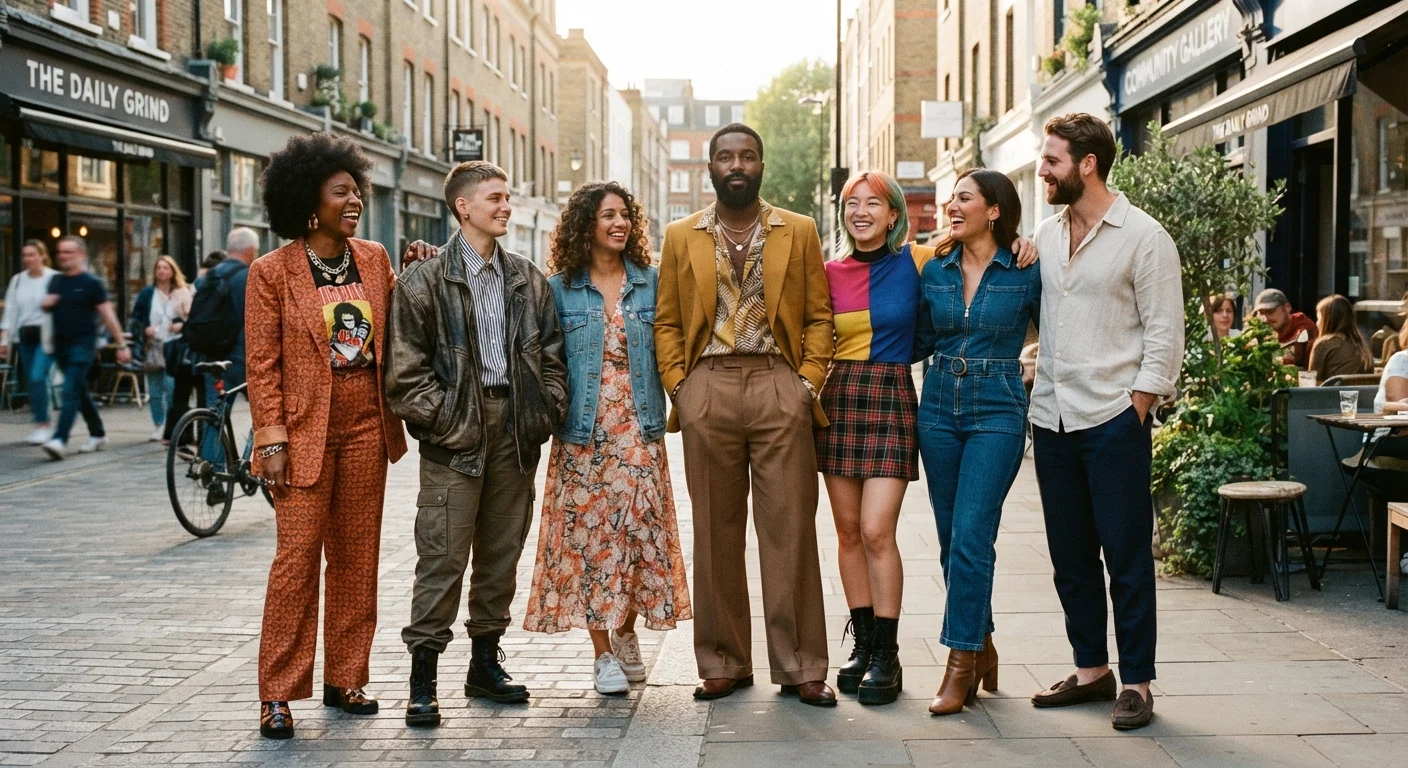
Personal identity may be the most underrated factor of all. When clothing reflects who you genuinely are — your aesthetic preferences, your values, your mood — it tends to read as confident and intentional even when it breaks every conventional rule. That's not a vague concept; it's something you can build deliberately. Dressing for confidence without changing who you are is a good starting point for making that shift.
When Style Advice Crosses Into Body Image Territory
Style guidance that uses language like "disguise," "correct," or "hide" your body is making value judgments, not neutral observations. If prescriptive dressing rules are causing distress or reinforcing negative feelings about your body, that's worth paying attention to. This article is for general style information only — if body image concerns are significantly affecting your wellbeing, speaking with a qualified mental health professional is a worthwhile step.
The goal of this kind of dressing isn't rebellion for its own sake. It's about making choices that serve you — not a silhouette standard designed for someone else. Explore more practical, identity-forward guidance in our Everyday Fashion hub.