
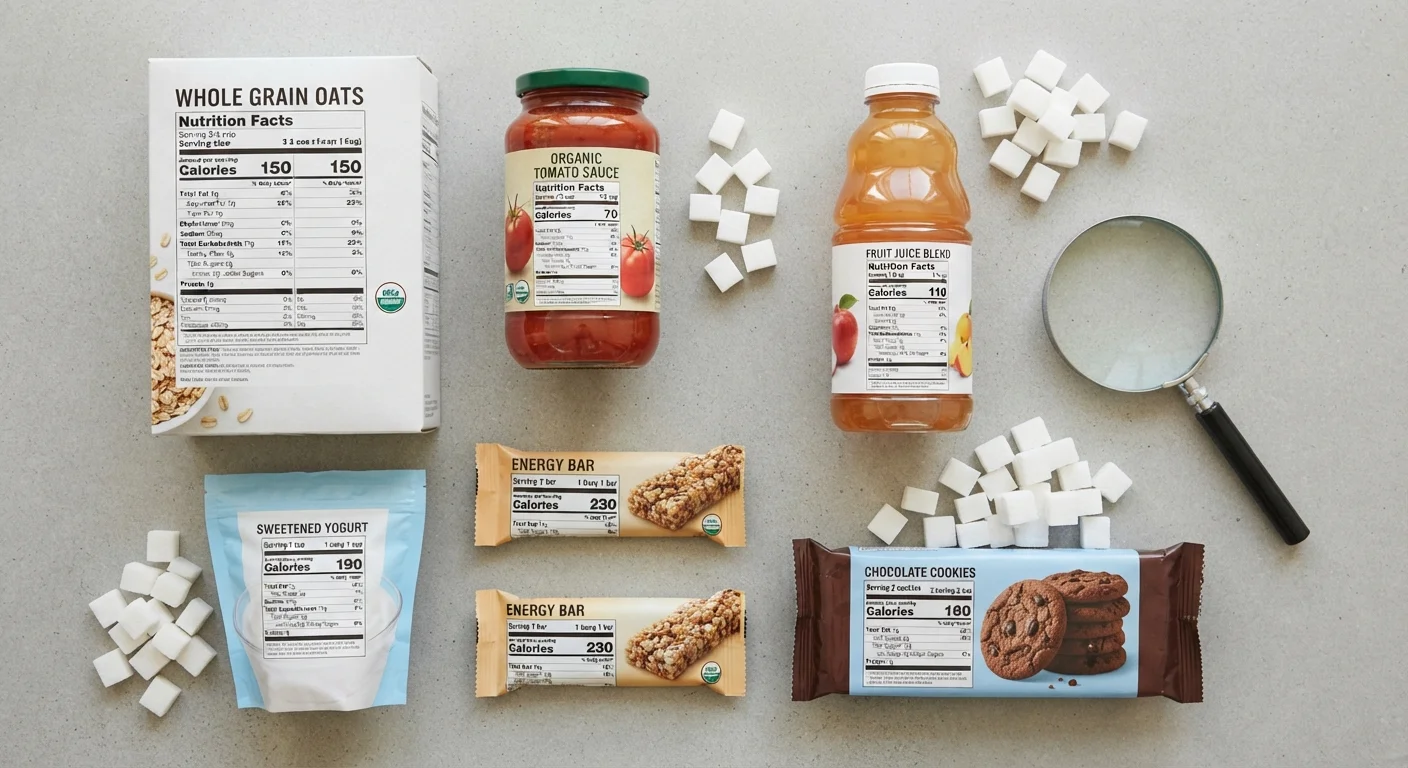
Why Added Sugar Is Worth Tracking Separately
Not all sugars in food work the same way nutritionally. The sugar in a whole apple arrives packaged with fiber, water, and micronutrients that moderate how quickly it enters the bloodstream. Added sugar — meaning any sugar or caloric sweetener incorporated during processing or preparation — delivers calories without those accompanying nutrients. That distinction matters because research consistently associates high added sugar intake with increased risk of dental cavities, weight gain, elevated triglycerides, and other metabolic concerns, according to bodies including the American Heart Association and the World Health Organization. This article provides general nutrition education; for guidance tailored to your health situation, consult a registered dietitian or your healthcare provider.
What you will need
The practical challenge is identification. Food manufacturers are not required to highlight added sugars prominently, and the ingredient list can obscure them behind unfamiliar names. The steps below give you a repeatable method for spotting added sugar wherever it hides. For a broader orientation to every element of a food label, our complete nutrition label guide is a useful starting point.
Step-by-Step: How to Find Added Sugar on Any Label
Find the 'Added Sugars' line on the Nutrition Facts panel
On any FDA-regulated food label, look for the Nutrition Facts panel — typically on the back or side of the package. Under Total Sugars, you will find a indented line that reads Added Sugars with a gram amount and a % Daily Value. This line was added to US labels in 2020 and is your single most reliable data point. It separates sugars the manufacturer added from sugars naturally present in ingredients like fruit or milk.
Check the serving size before comparing products
All numbers on the panel — including added sugars — are calculated per serving, not per package. A container may hold two or three servings, so a figure that looks modest can double or triple with realistic consumption. Always note the serving size at the very top of the panel and adjust your math accordingly. Our guide to decoding every line of a nutrition label walks through exactly how to do this math.
Scan the ingredient list for sugar aliases
Ingredients are listed in descending order by weight. Search the list for any of the most common added sugar names:
- Sucrose, glucose, fructose, dextrose, maltose, lactose
- High-fructose corn syrup, corn syrup, corn syrup solids
- Cane juice, evaporated cane juice, cane sugar, raw cane sugar
- Honey, agave nectar, maple syrup, molasses, treacle
- Brown rice syrup, malt syrup, barley malt, tapioca syrup
- Fruit juice concentrate, dried fruit juice
- Invert sugar, turbinado sugar, coconut sugar, palm sugar
If any of these appear in the first three ingredients, the product is likely high in added sugar relative to its other nutrients.
Know which food categories hide sugar most often
Beyond obvious sweets, added sugar is routinely found in:
- Flavored yogurts — many contain 15–20g of added sugar per serving
- Breakfast cereals — even whole-grain varieties can carry significant added sugars
- Bread and baked goods — sugar improves texture, browning, and shelf life
- Salad dressings and condiments — ketchup, barbecue sauce, and low-fat dressings are common culprits
- Pasta sauces — jarred tomato sauces frequently include added sugar to balance acidity
- Protein bars and granola bars — often marketed as healthy despite high sugar content
- Plant-based milks — flavored or sweetened varieties can rival soda in added sugar
Apply the daily guideline as a practical benchmark
The Dietary Guidelines for Americans recommend that added sugars account for less than 10% of total daily calorie intake. For someone eating roughly 2,000 calories per day, that translates to about 50 grams — or 12 teaspoons. The American Heart Association suggests even lower limits for many adults. Use the % Daily Value on labels as a quick reference: 5% or less per serving is generally considered low; 20% or more is high. Tracking a single day's worth of labels against this benchmark can be eye-opening.
What to Look For at a Glance
When short on time, use this two-second rule: check the Added Sugars % Daily Value and glance at the first three ingredients. If added sugar is above 10% DV per serving or a sugar alias is in the top three ingredients, the product warrants closer scrutiny before making it a daily staple.
Once you've built the habit of checking labels, consider doing a broader audit of your regular grocery purchases. Our weekly grocery list audit offers a structured checklist for identifying nutritional gaps across your whole shopping routine — including places where added sugar may have gone unnoticed for years.
"Natural" Doesn't Mean Sugar-Free
Terms like "naturally sweetened," "made with honey," or "no refined sugar" have no standardized regulatory definition in the US. A product sweetened exclusively with agave nectar or fruit juice concentrate still contributes added sugars — and those grams will appear on the Nutrition Facts panel regardless of the marketing language on the front of the package.
This article is for general informational and educational purposes only and is not a substitute for professional medical or dietary advice. Always consult a qualified healthcare provider or registered dietitian regarding your personal nutrition needs.