
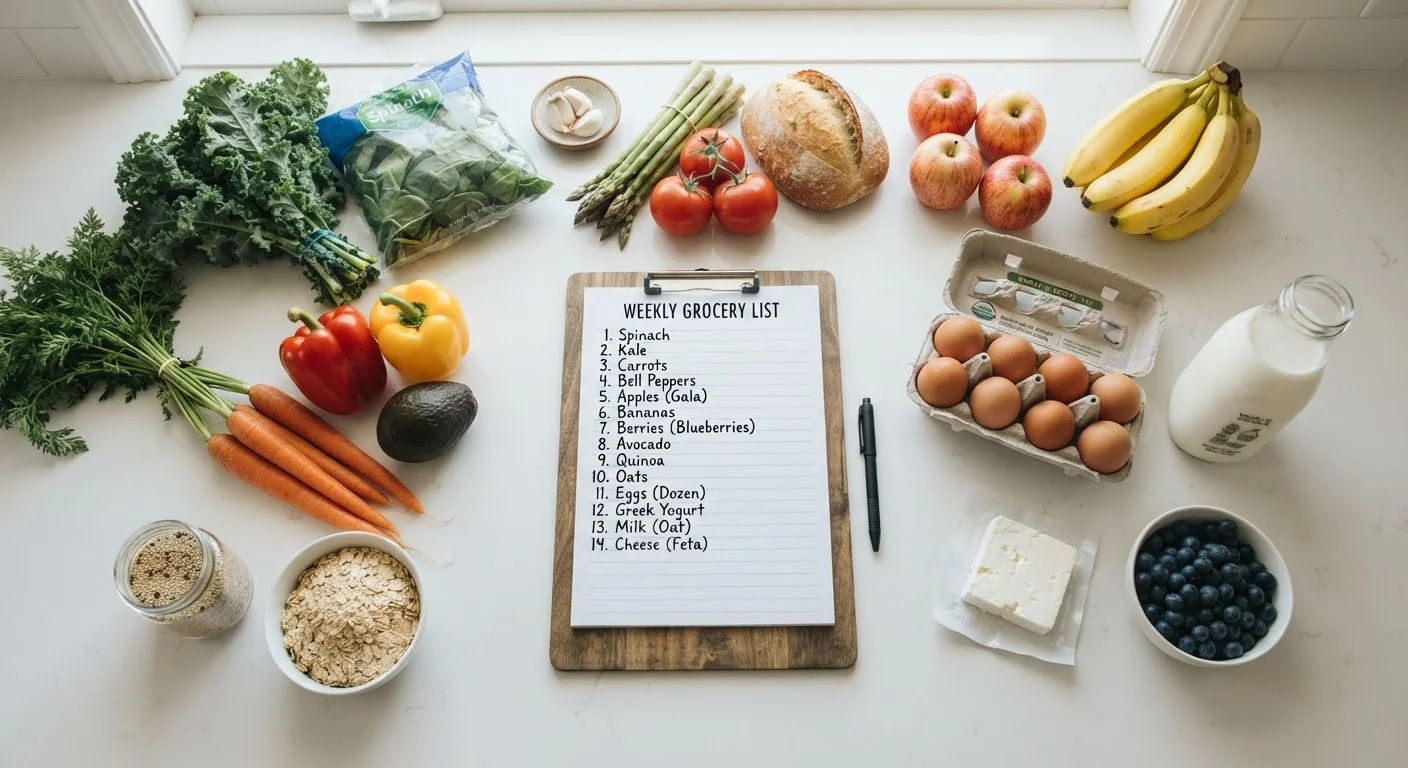
Why Your Grocery List Is Worth a Second Look
Most Americans shop from habit. The same items land in the cart week after week, which creates consistency — but also entrenches any nutritional blind spots you started with. A grocery list audit is simply a structured way to examine those patterns before they calcify into months or years of unintentional dietary gaps.
This isn't about perfection or strict dieting. It's about building awareness. Just as shopping without a plan costs more than you think, going to the store without nutritional awareness can quietly undermine your health goals over time. This checklist gives you a repeatable framework — ideally reviewed once a week before your main shopping trip — to catch common omissions and make targeted improvements.
Think of it the same way you might approach a wardrobe audit: reviewing what's already there, identifying what's missing, and making deliberate choices rather than automatic ones.
Current grocery list (paper or digital)
The primary document being audited — your existing list or last week's receipt.
Nutrition Facts label decoder
Use the FDA's official Nutrition Facts label guide to correctly interpret serving sizes, daily value percentages, and ingredient order.
Meal planning template
A simple weekly meal plan helps ensure your grocery list reflects the actual variety of meals you intend to prepare.
Produce seasonality chart
Referencing seasonal produce helps you choose vegetables and fruits that are both nutritionally fresh and typically lower in cost.
How to Use This Checklist
Pull up your current grocery list — digital or paper — or think back to what you bought last week. Work through each group below, checking whether that category is represented. If a group is missing entirely, that's a gap worth addressing. If it's present, ask whether the specific items within it are adding nutritional diversity or mostly repeating the same narrow choices.
You don't need to overhaul your list in one sitting. Prioritize the "must" items first, then layer in "should" and "nice to have" improvements across subsequent weeks. For readers also managing a tight food budget, the practical guide to shopping on a tight budget pairs well with this audit.
This Checklist Is General Education, Not Medical Advice
Nutritional needs vary significantly based on age, sex, activity level, health status, and other individual factors. The guidance here reflects general public health principles and is intended to raise awareness, not prescribe a specific diet. Always consult a registered dietitian or qualified healthcare professional for personalized nutrition recommendations, particularly if you are managing a chronic health condition.
This checklist is general nutrition education and is not a substitute for personalized dietary advice. If you have a medical condition, food allergy, or specific health concern, consult a registered dietitian or your healthcare provider before making dietary changes.
Fruits & Vegetables
Protein Sources
Whole Grains & Fiber
Dairy or Fortified Alternatives
Healthy Fats
Label & Ingredient Review
Reading Labels During Your Audit
Beyond food groups, nutritional gaps can hide in the ingredient lists of products you already buy. Two of the most commonly overlooked contributors to poor diet quality are added sugars and sodium. Both tend to accumulate invisibly across packaged staples like bread, sauces, condiments, and canned soups.
For a deeper look at how to decode ingredient labels, learn how added sugar hides in everyday foods — it goes by dozens of names and appears in many products people consider savory or neutral.
Don't Chase Supplements Before Food Sources
Nutritional gaps identified through a grocery audit should first be addressed through whole foods, not supplements. Many vitamins and minerals are better absorbed when consumed as part of food rather than in isolated supplement form. If you suspect a significant deficiency, speak with a healthcare provider before adding supplements to your routine — some can interact with medications or be harmful in high doses.
Once you've completed your audit, note two or three specific changes to carry into next week's list. Tracking your list week-over-week — even informally — can help you confirm whether gaps are being filled or whether the same categories keep getting skipped. For a broader view of intentional household spending, the Smart Shopping Tips hub offers complementary strategies.
This article is for informational purposes only and does not constitute medical or dietary advice. Consult a qualified healthcare professional or registered dietitian for guidance specific to your health needs.