
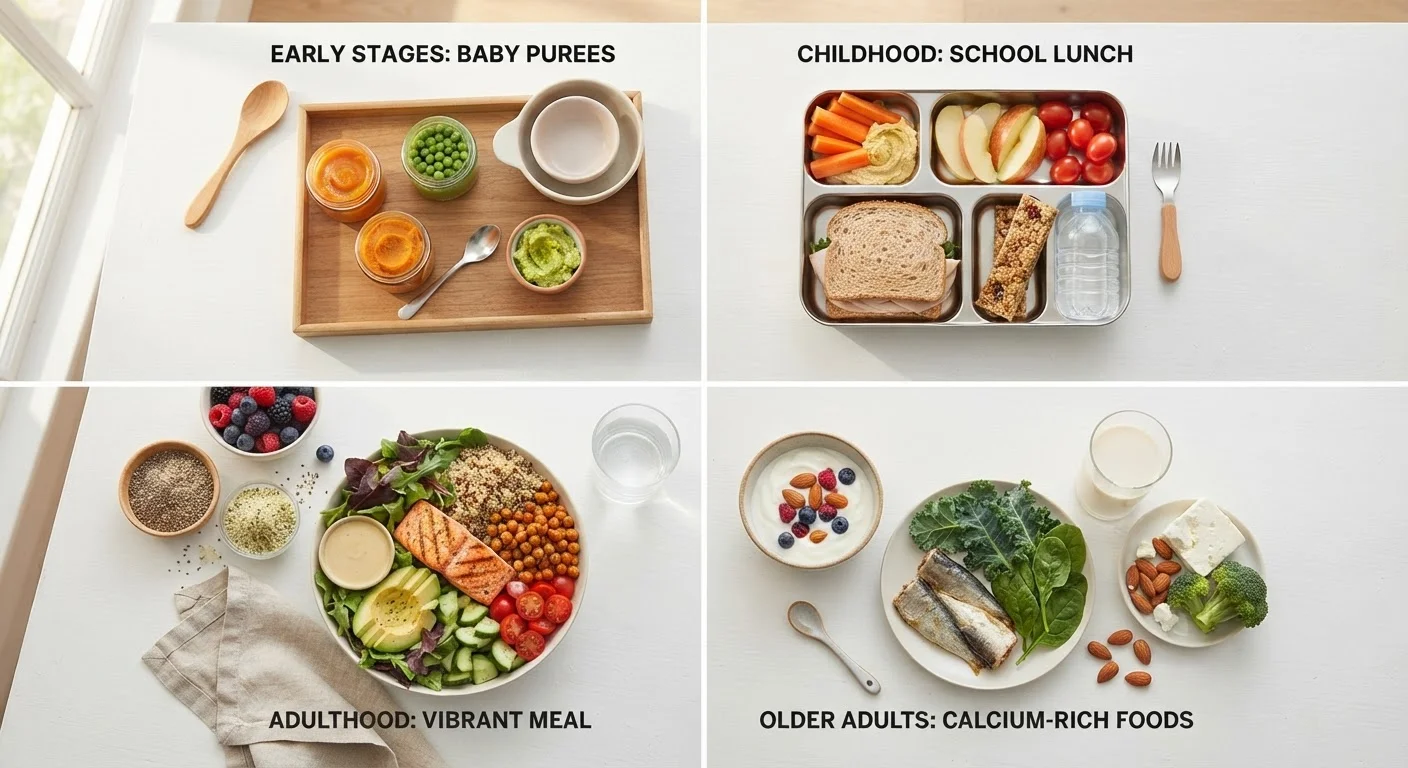
Why Nutrition Needs Change With Age
The human body is not a static machine. From infancy through older adulthood, it undergoes continuous physiological changes — shifts in metabolism, hormone levels, organ function, and body composition — that directly alter what nutrients it needs and in what amounts. Understanding these shifts helps individuals and families make more intentional food choices at every stage of life.
Three core drivers explain why nutritional requirements evolve:
- Growth and development: Children and adolescents require proportionally more of certain nutrients per pound of body weight than adults.
- Metabolic rate: Resting metabolism tends to decline gradually with age, reducing overall calorie needs even as some micronutrient requirements remain high or increase.
- Absorption efficiency: The gut's ability to absorb nutrients like vitamin B12, calcium, and iron can diminish over time, particularly in older adults.
Nutrition science also recognizes that chronic disease risk is shaped over decades. Eating patterns established in childhood can influence cardiovascular health, bone density, and metabolic function well into later life, as explored in research on global dietary patterns and longevity.
~9%
Muscle mass lost per decade after age 30
According to Harvard Medical School, adults can lose approximately 3–5% of muscle mass per decade beginning in their thirties without resistance exercise.
~90%
Americans not meeting vegetable intake recommendations
Dietary Guidelines for Americans data indicate the vast majority of U.S. adults and children fall short of recommended vegetable consumption.
1,300 mg
Daily calcium recommended for adolescents (14–18)
The National Institutes of Health Office of Dietary Supplements lists 1,300 mg as the Recommended Dietary Allowance for teenagers, higher than for most adults.
Early Childhood (Ages 1–5): Building the Foundation
The toddler and preschool years are characterized by rapid brain development, bone formation, and the establishment of food preferences. Despite relatively small stomachs, young children need nutrient-dense foods across a broad spectrum.
Priority Nutrients in Early Childhood
- Iron: Crucial for cognitive development and oxygen transport. After the first year, breast milk or formula no longer covers needs sufficiently, making iron-rich foods like beans, fortified cereals, and lean meats essential.
- Calcium and Vitamin D: Together these support bone mineralization during a period of rapid skeletal growth. Dairy, fortified plant milks, and sunlight exposure (in appropriate amounts) contribute to both.
- Healthy fats: The brain is roughly 60% fat by dry weight. Omega-3 fatty acids — found in fatty fish, walnuts, and flaxseed — support neural development.
Making New Foods Less Stressful for Toddlers
Serve a new food alongside at least one familiar, accepted food so the plate doesn't feel threatening. Aim for 10–15 exposures before concluding a child dislikes a food — acceptance often follows repeated, relaxed encounters. Avoid using dessert as a reward for eating vegetables, as this can inadvertently elevate the perceived value of sweets.
Food neophobia (fear of new foods) is developmentally normal in toddlers. Repeated, low-pressure exposure to a variety of whole foods — without forcing — is the evidence-supported approach to broadening dietary acceptance over time.
This content is general nutrition information. Always consult your child's pediatrician or a registered dietitian for guidance tailored to your child's specific needs.
School Age and Adolescence (Ages 6–18): Growth and Development
The school years bring steadier (though still significant) growth, while adolescence introduces puberty-driven surges in calorie and nutrient demand. This is the life stage during which calorie needs are often at their highest relative to body size.
Key Nutritional Considerations
- Calcium: Peak bone mass is largely established by the early twenties. Adolescents require more calcium than adults — adequate intake during these years may reduce fracture risk later in life, according to established guidelines from the National Institutes of Health.
- Iron: Adolescent girls face increased iron needs following the onset of menstruation. Iron-deficiency anemia remains common in this group and can affect concentration, energy, and athletic performance.
- Protein: Supporting muscle growth during growth spurts requires adequate protein intake across each day, not just at one meal.
Encourage teens to spread protein intake across all three meals rather than concentrating it at dinner. Muscle protein synthesis responds better to distributed intake throughout the day.
Research in sports nutrition has consistently shown that spacing protein across meals optimizes muscle building compared to consuming the same total amount in one or two sittings.
For adults over 60, aim to pair vitamin D sources with meals containing healthy fat — D is fat-soluble and absorption is meaningfully enhanced by dietary fat.
Clinical studies confirm that vitamin D absorption increases significantly when consumed alongside fat-containing foods, a practical detail that is often overlooked in supplementation guidance.
Adolescence is also when disordered eating patterns can emerge. Nutritional education should focus on nourishment and energy for activity rather than weight, calorie counting, or restriction. If concerns arise, a healthcare professional should be consulted promptly.
Young and Middle Adulthood (Ages 19–50): Maintaining and Optimizing
For most adults in this range, the primary nutritional goal shifts from supporting rapid growth to sustaining health, energy, and long-term disease prevention. Calorie needs stabilize — and for many, gradually decrease through the forties — while quality of dietary choices becomes increasingly consequential.
This life stage also introduces significant variation. Pregnancy dramatically increases needs for folate, iron, iodine, choline, and overall calories. Lactation has its own distinct requirements. Adults managing chronic conditions or taking medications may have altered needs based on drug-nutrient interactions.
Broad Priorities for Adults
- Emphasizing whole grains, legumes, vegetables, fruits, lean proteins, and healthy fats
- Monitoring fiber intake — most Americans fall well short of recommended amounts
- Limiting ultra-processed foods, which are linked in population research to higher rates of cardiovascular disease and metabolic dysfunction
Regular physical activity remains inseparable from nutrition at this stage; the Fitness & Exercise hub offers practical guidance for building sustainable movement habits.
“The food choices we make in our twenties and thirties cast a long shadow. Bone density, cardiovascular health, and metabolic resilience are all influenced by cumulative dietary patterns long before chronic disease symptoms appear.”
— Walter Willett, Professor of Epidemiology and Nutrition, Harvard T.H. Chan School of Public Health
Older Adulthood (Ages 51+): Shifting Priorities
Nutrition in older adulthood is shaped by a distinctive set of challenges. Muscle mass tends to decline (a process called sarcopenia), calorie needs often drop, but needs for several key nutrients hold steady or rise. The risk of deficiency increases even with apparently adequate intake due to reduced absorption efficiency.
Older Adults: Don't Rely on Appetite Alone
Reduced appetite in older adults — sometimes called 'anorexia of aging' — is a recognized physiological phenomenon, not simply a matter of preference. Eating less can quickly create deficiencies even in generally healthy individuals. If an older adult is consistently eating very little or losing weight unintentionally, this warrants prompt evaluation by a physician.
Nutrients Deserving Special Attention After 50
- Protein: Research supports higher protein intake per kilogram of body weight in older adults to help slow sarcopenia and maintain functional strength.
- Vitamin B12: Absorption declines with age due to reduced stomach acid production. Crystalline B12 (in fortified foods or supplements) is better absorbed than the protein-bound form found in food — a distinction worth discussing with a physician.
- Vitamin D and Calcium: Bone resorption accelerates after menopause and in older men. Both nutrients support bone health, and vitamin D additionally supports immune and muscle function.
- Hydration: The sensation of thirst diminishes with age, increasing the risk of chronic mild dehydration, which can impair cognition and kidney function.
Polypharmacy — the use of multiple medications simultaneously, common in older adults — can affect appetite, nutrient absorption, and taste perception, all of which influence dietary intake. A pharmacist or physician can help identify any relevant interactions.
Practical next steps for evaluating dietary gaps are outlined in our weekly grocery list audit.
Practical Strategies Across Every Stage
While specific needs differ by life stage, several evidence-supported principles apply broadly:
- Prioritize whole, minimally processed foods at every age. Variety across food groups supports micronutrient coverage without requiring detailed tracking.
- Adjust portions, not food quality. As calorie needs decrease, the solution is smaller portions of nutrient-dense foods — not trading vegetables for lower-nutrition alternatives.
- Make hydration deliberate, especially for children and older adults who may not signal thirst reliably.
- Revisit dietary patterns at major life transitions — starting school, pregnancy, entering menopause, retirement — as these moments often correlate with genuine shifts in nutritional needs.
- Work with qualified professionals. A registered dietitian can translate general guidance into individualized plans, particularly for people managing chronic conditions, food allergies, or significant life-stage transitions.
Just as financial planning evolves across decades — as outlined in a look at savings goals across life stages — nutritional strategy benefits from regular reassessment rather than a one-time approach.
MyPlate (USDA)
The USDA's MyPlate resource provides life-stage-specific dietary guidance, food group recommendations, and personalized plans based on age, sex, and activity level.
NIH Office of Dietary Supplements — Fact Sheets
Detailed, evidence-based fact sheets on individual vitamins and minerals — including recommended intakes by age group, food sources, and signs of deficiency.
Dietary Guidelines for Americans
The federal evidence-based dietary guidelines, updated every five years, covering nutritional recommendations across all life stages from infancy through older adulthood.
This article is for general informational and educational purposes only and does not constitute medical or dietary advice. Consult a qualified healthcare professional or registered dietitian before making significant changes to your or your child's diet.