
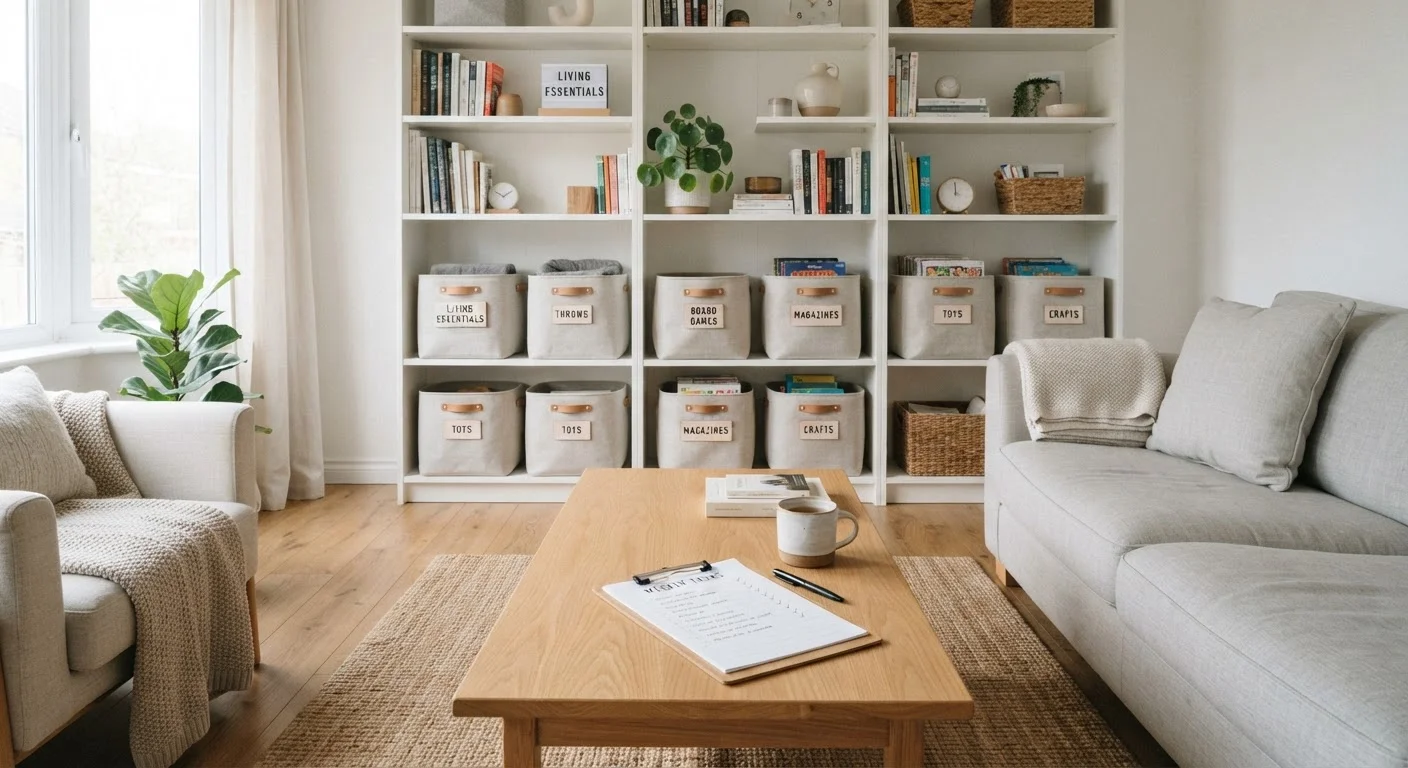
Why a Room-by-Room Audit Works Better Than a General Sweep
Most decluttering advice tells you to tackle everything at once, which often leads to half-finished piles and decision fatigue before lunch. A room-by-room audit flips the approach: you assess one space completely — its purpose, its contents, and its storage capacity — before moving on. This makes problems visible and solvable in manageable chunks.
The goal of this audit isn't to throw everything out. It's to understand whether each room is set up to support how you actually use it. A bedroom closet overflowing with items that belong in the garage isn't a willpower problem; it's a zoning problem. This checklist helps you see the difference.
If you're also rethinking closet contents, the wardrobe audit checklist covers clothing decisions in depth. And if a new pet is part of the household equation, this room-by-room pet preparation checklist works as a useful companion guide.
Notebook or Note-Taking App
Record findings room by room, including items to relocate, discard, or contain.
Painter's Tape and Marker
Temporarily label shelves, bins, or zones during the audit before committing to permanent labels.
Label Maker or Pre-Cut Labels
Create clear, durable labels for storage bins, drawers, and pantry containers.
Three-Box or Bag System
Sort items on the spot into keep, relocate, and discard/donate categories as you move through each room.
Measuring Tape
Measure shelves, cabinets, and open floor areas before purchasing any new storage containers.
How to Use This Checklist
Walk through each room with a notebook or your phone. For every space, you're answering three core questions: What's here? Does it belong here? Does the storage work? Mark items as keep-in-place, relocate, donate/discard, or needs-a-container. Don't buy anything until you've finished the full audit — you may find containers in other rooms that solve the problem.
Items marked must below are foundational to a functional space. Items marked should represent strong improvements most households benefit from. Nice-to-have items are refinements worth considering once the essentials are handled.
Don't Buy Storage Before You Audit
It's tempting to pick up bins and baskets before starting, but buying organizers without knowing your actual needs is one of the most common and costly organizing mistakes. Complete the full audit first, take measurements, and identify what you already own that can be repurposed. You'll likely need fewer new items than you think.
Entryway & Hallways
Kitchen
Living Room
Bedrooms
Bathrooms
Home Office or Work Area
Garage, Basement & Storage Areas
After the Audit: Turning Findings Into Action
Once you've completed every room, review your notes for patterns. Recurring issues — no designated spot for incoming mail, bathroom cabinets used as junk drawers, garage shelving that's never labeled — point to system gaps rather than one-off problems.
Prioritize fixes that affect daily friction first. An entryway without a hook for keys causes stress every morning; a rarely-visited guest room with a cluttered shelf does not. Sequence your improvements accordingly.
For storage containers, think before you shop. Rigid bins versus flexible bags each have distinct advantages depending on what you're storing and where — a breakdown worth reading before purchasing. If the audit surfaces financial strain around organizing costs, budgeting basics can help you prioritize spending. And if a disorganized home is adding to daily stress, the resources in mental well-being offer practical strategies for managing that load.
Revisit this checklist seasonally — especially before holidays, after a move, or when a new household member joins.