
What the Labels Actually Tell You
Rug material labels can be easy to gloss over at the point of purchase, but they predict a lot about how a rug will perform over years of daily use. Broadly, rugs fall into two camps: natural fibers (wool, jute, sisal, seagrass, cotton) and synthetic fibers (polypropylene, nylon, polyester, acrylic). Within each category, performance varies substantially.
Understanding fiber differences is similar to learning what goes into other home textiles — the same way bedding labels reveal durability and comfort trade-offs, rug material descriptions signal how a rug will feel underfoot, resist wear, and respond to cleaning. The material doesn't just affect aesthetics; it determines the rug's practical ceiling.
Natural Fibers: Wool, Jute, Sisal, and Cotton
Wool is widely regarded as one of the most durable natural rug fibers available. Its natural crimp helps it spring back from compression, resist crushing underfoot, and hide soiling longer than most alternatives. Wool also has a degree of natural lanolin content that provides mild moisture resistance — though it is not waterproof and should be kept away from prolonged dampness. Professionally cleaning wool rugs periodically is advisable, since aggressive DIY cleaning methods can cause shrinkage or fiber distortion.
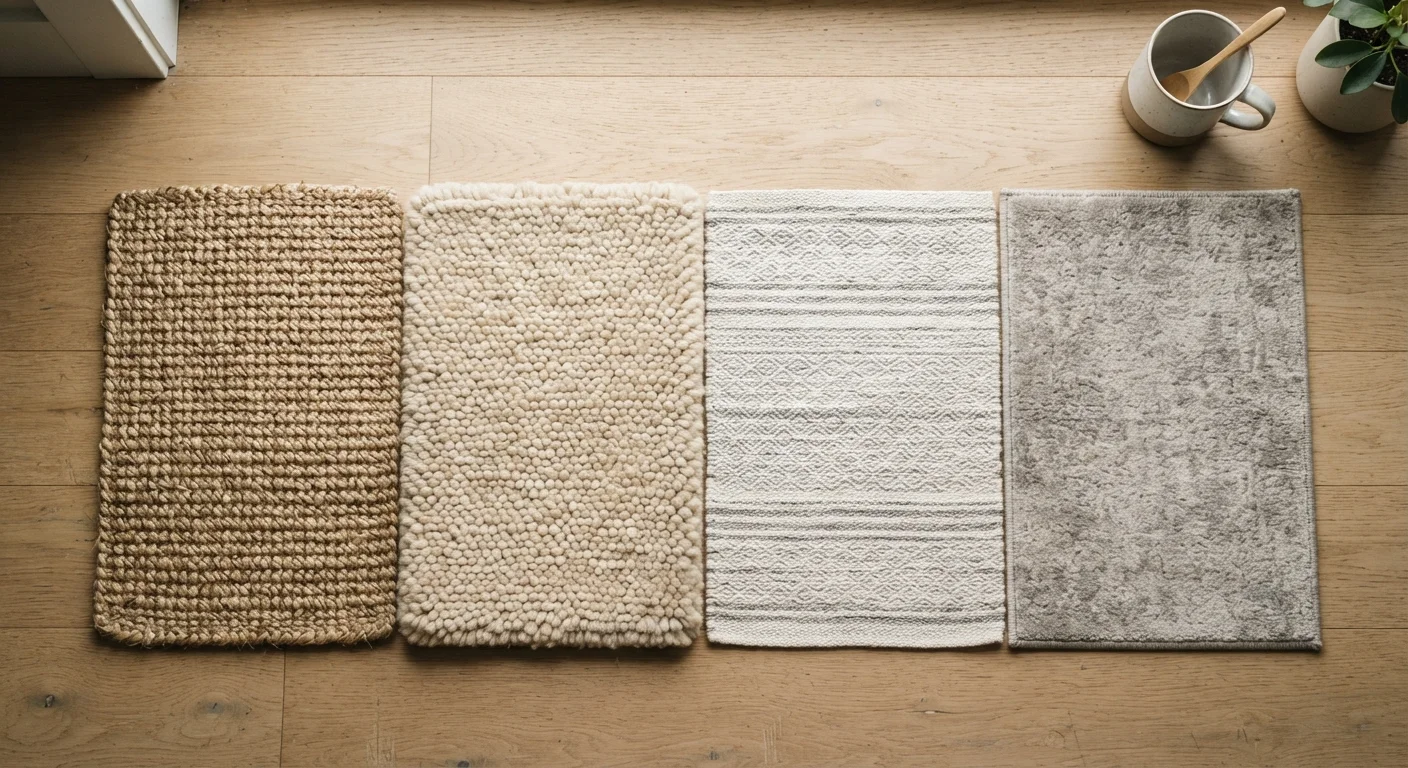
Jute and sisal are plant-based fibers harvested from tropical plants and agave respectively. Both offer a coarse, natural texture that works well in casual or organic-style interiors. The trade-off: they absorb moisture readily and can develop mildew if placed in damp areas like bathrooms or entryways in wet climates. Neither fiber handles stains well — liquid spills spread quickly and can leave permanent marks. These materials are best suited to low-traffic decorative use.
Cotton rugs are soft, lightweight, and often fully machine washable — a genuine practical advantage. However, cotton fibers compress over time and pill or flatten under heavy foot traffic faster than wool or synthetics. Cotton works well in bedrooms, laundry rooms, and other light-use spaces where washing convenience matters more than longevity.
Test Texture Before Committing
If possible, handle rug samples in person rather than relying solely on photos. Natural fibers like jute and sisal vary considerably in coarseness between manufacturers — what reads as 'natural texture' can range from pleasantly casual to uncomfortably rough underfoot. Softness ratings online are rarely standardized, so a tactile check saves surprises after delivery.
Synthetic Fibers: Polypropylene, Nylon, and Polyester
Polypropylene (also marketed as olefin) has become one of the most common rug materials for a straightforward reason: it resists moisture, staining, fading, and mildew at a lower price point than most natural fibers. It's frequently used for indoor-outdoor rugs because it tolerates humidity and can typically be hosed down. The downside is texture — polypropylene tends to feel less plush underfoot and can flatten more noticeably in high-traffic lanes over time.
Nylon offers a step up in resilience compared to polypropylene. It handles abrasion well, recovers from compression better, and tends to hold its shape longer under sustained foot traffic. It is one of the more durable synthetic options for hallways or family rooms.
Polyester sits in the middle ground — good color vibrancy and stain resistance, softer than polypropylene, but more prone to flattening and pilling than nylon over time. It's a reasonable option for moderate-use rooms where color fidelity matters.
| Wool | Jute/Sisal | Cotton | Polypropylene | Nylon | |
|---|---|---|---|---|---|
| Durability | High | Moderate | Low–Moderate | Moderate | High |
| Stain resistance | Moderate | Low | Low–Moderate | High | High |
| Moisture tolerance | Low–Moderate | Low | Moderate | High | Moderate–High |
| Softness underfoot | High | Low | High | Low–Moderate | Moderate |
| Ease of cleaning | Moderate (professional recommended) | Difficult | Easy (machine washable) | Easy | Moderate |
| Typical price range | Higher | Moderate | Lower | Lower–Moderate | Moderate–Higher |
| Best room fit | Living rooms, bedrooms | Low-traffic decorative | Bedrooms, kitchens | Entryways, outdoors | Hallways, family rooms |
Durability, Maintenance, and Long-Term Value
Durability depends on two interacting factors: fiber quality and construction density. A tightly woven wool rug will generally outlast a loosely constructed polypropylene one, even though polypropylene resists stains more easily. When evaluating any rug, check the knot count or pile density alongside the fiber type.
On maintenance, synthetics have a clear edge for households managing regular messes. Most polypropylene and nylon rugs can be cleaned with a basic water-and-mild-soap solution and allowed to air dry. Natural fibers — especially jute and sisal — require more caution. Over-wetting can cause shrinkage, color bleed, or structural damage. Even wool benefits from prompt blotting rather than scrubbing when spills occur.
It's also worth noting that home goods in general wear out on different timelines than most people expect. For a broader look at lifespan expectations across home furnishings, see home goods that wear out faster than expected. A rug placed in the wrong environment for its fiber type can deteriorate well ahead of its potential lifespan.
5–10 years
Typical lifespan of a quality wool rug
With regular vacuuming and prompt stain treatment, densely woven wool rugs can remain serviceable well beyond the lower end of this range.
2–5 years
Common lifespan of cotton rugs in high-traffic areas
Cotton compresses and thins over time under sustained foot traffic; light-use placement extends longevity considerably.
Choosing by Room: A Practical Framework
The most useful question to ask before selecting a rug material is: what does this room demand?
- Entryways and mudrooms: High moisture and dirt exposure make synthetic rugs or seagrass a practical choice. Avoid jute here.
- Living rooms: Wool or nylon handles the foot traffic while maintaining comfort and appearance over years.
- Bedrooms: Cotton or low-pile wool work well; softness and washability often matter more than extreme durability.
- Kitchens and dining areas: Flat-weave cotton or polypropylene makes spill cleanup manageable. Avoid high-pile or loosely woven fibers.
- Outdoor or semi-outdoor spaces: Polypropylene is purpose-built for this use and handles UV exposure and moisture without degrading quickly.
Just as fabric choices shape performance in clothing — a topic covered in depth in our plain-English guide to fabric types — the fiber composition of a rug is a practical specification, not just a style detail. Treating it that way leads to purchases that hold up across seasons of real use.
Avoid Mismatching Fiber to Environment
Placing a jute or sisal rug in a bathroom, damp basement, or covered porch in a humid climate is one of the more common and costly rug-care mistakes. These fibers absorb moisture readily and can develop mildew within days of persistent dampness — and that damage is typically irreversible. Check the room's average humidity and drainage conditions before selecting any plant-based natural fiber rug.