
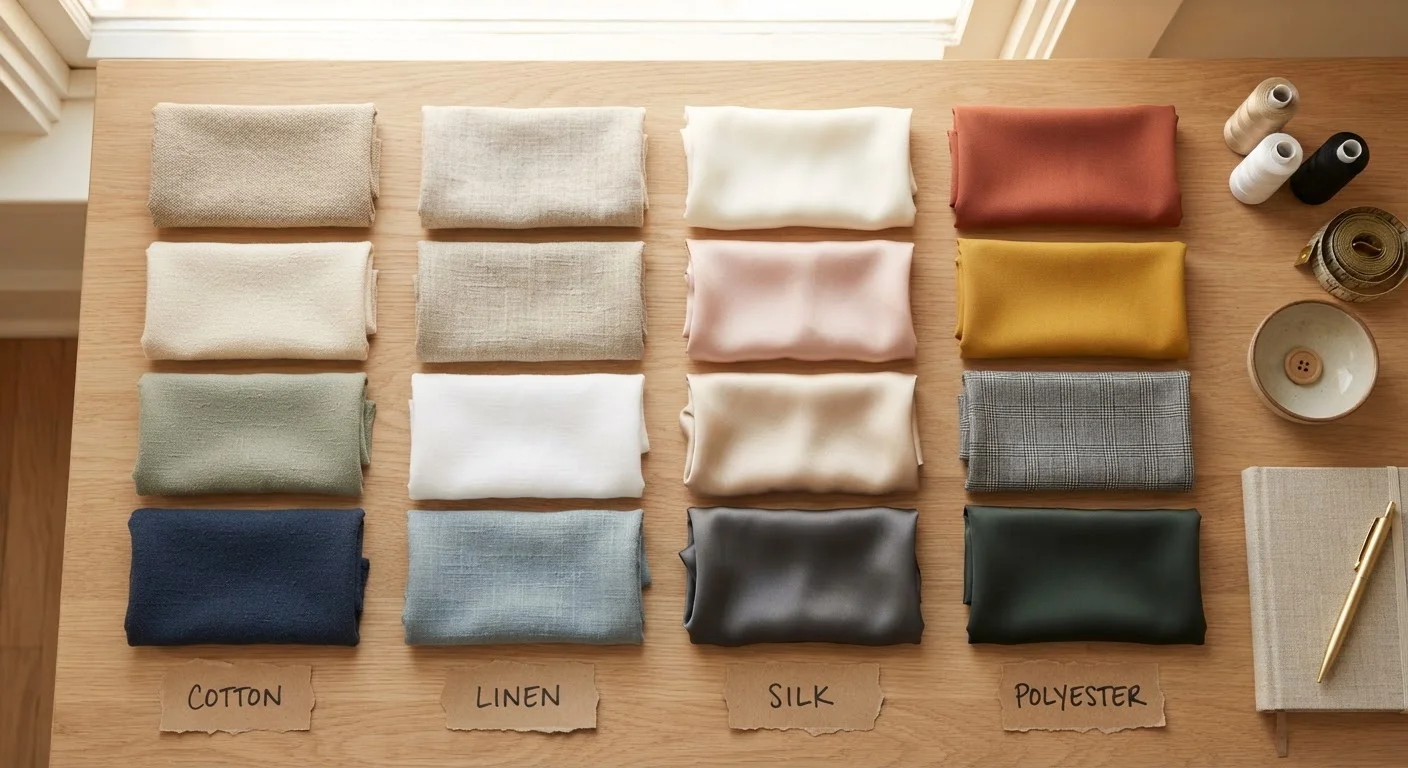
Why Fabric Type Actually Matters
Most of us have grabbed a shirt off a rack because we loved the color, brought it home, and discovered it felt scratchy, trapped heat, or pilled after three washes. That disconnect almost always comes down to fabric. Understanding what your clothes are made of isn't about becoming a textile expert — it's about making smarter, more satisfying choices with the money you're already spending on your wardrobe.
Fabric affects everything: how cool or warm you feel, how often something needs ironing, whether it survives the dryer, and how long it holds its shape. Once you know a few basics, checking that label before you buy becomes second nature. It pairs naturally with understanding how to dress for specific situations — see our dress code guide for context on matching fabric choices to occasions.
~35%
Global fiber production that is polyester
According to textile industry research, polyester consistently accounts for the largest share of global fiber output, reflecting its dominance in everyday clothing manufacturing.
~24%
Share of global fiber production from cotton
The Food and Agriculture Organization of the United Nations tracks cotton as the leading natural fiber in global apparel production.
60–70%
Americans who say comfort drives clothing choices
Consumer surveys in the apparel industry consistently find that comfort — closely linked to fabric choice — ranks as a primary driver of clothing purchase decisions for U.S. adults.
Natural Fibers: The Originals
Natural fibers come from plants or animals and have been used in clothing for thousands of years. Here's what you actually need to know about the most common ones:
- Cotton — Soft, breathable, and widely available. It absorbs moisture, which keeps you comfortable in heat but can make it slow to dry. It wrinkles easily and may shrink without care, but it's durable over time and easy to launder. Most everyday basics — T-shirts, jeans, underwear — are primarily cotton.
- Linen — Made from the flax plant, linen is even more breathable than cotton and has a distinctive, slightly textured feel. It wrinkles significantly (embrace it or iron it) but softens beautifully with each wash. Ideal for warm-weather wear.
- Wool — A natural insulator that regulates temperature in both cold and mild weather. It resists odor and can repel light moisture, but finer wool varieties require gentle washing to avoid felting or shrinkage. Merino wool is especially prized for its softness.
- Silk — Smooth, lightweight, and temperature-regulating, silk has a natural sheen and feels luxurious. It's delicate and often requires hand-washing or dry cleaning, so it rewards careful owners.
Feel It Before You Buy
Whenever possible, touch the fabric before purchasing. Rub it gently between your fingers — does it pill immediately? Does it feel rough or scratchy? Your skin will give you honest feedback that the label alone can't. This is especially useful when evaluating natural fibers like linen or wool, where texture varies widely by quality.
Synthetic and Semi-Synthetic Fibers
Synthetic fibers are man-made, typically derived from petroleum-based chemicals, while semi-synthetics like rayon start with natural materials but are heavily processed. Each brings trade-offs worth knowing:
- Polyester — The most widely used synthetic. It resists wrinkles, holds color well, and is extremely durable. The downside: it doesn't breathe as well as natural fibers and can trap odor if worn during intense activity. Blended with cotton, it performs much better.
- Nylon — Strong, lightweight, and quick-drying. You'll find it in activewear, hosiery, and outerwear linings. Like polyester, it doesn't breathe as freely as natural fibers.
- Rayon (Viscose) — Made from plant cellulose, rayon drapes softly and mimics the feel of silk or linen at a lower cost. It's comfortable but tends to wrinkle easily, can shrink, and often requires gentle handling.
- Acrylic — Often used as a wool substitute in sweaters and knitwear. It's warm, lightweight, and more affordable, but it pills more readily than wool over time.
For a parallel look at how these fiber categories play out in home goods, our natural vs. synthetic fiber guide for rugs covers similar trade-offs in a different context.
Blends: The Best of Both Worlds (Usually)
Fabric blends are engineered to combine desirable properties from two or more fibers. A classic example is the cotton-polyester blend: the cotton adds breathability and softness, while the polyester adds structure and wrinkle resistance. This is why so many everyday shirts and work pants are 60/40 or 50/50 blends.
Blends can be genuinely great — but they can also inherit weaknesses. A wool-acrylic sweater may feel warm and wash more easily than pure wool, but it may also pill faster. Reading the percentage breakdown matters: a fabric that's 95% polyester and 5% cotton is functionally synthetic, even if cotton appears on the label.
Blend Percentages Tell the Real Story
When a garment is labeled as a blend, the fiber listed first is typically present in the highest percentage. A "polyester-cotton" blend usually contains more polyester than cotton, which affects breathability and feel. Always look at the actual percentage breakdown rather than just the fiber names to understand what you're really buying.
Once you feel confident about fabrics, the next logical step is understanding care labels — our care label symbol guide takes all the guesswork out of laundry settings. And if you want to put this knowledge to work in your actual closet, our wardrobe staples guide shows which fabric choices tend to deliver the most versatility across everyday occasions.