
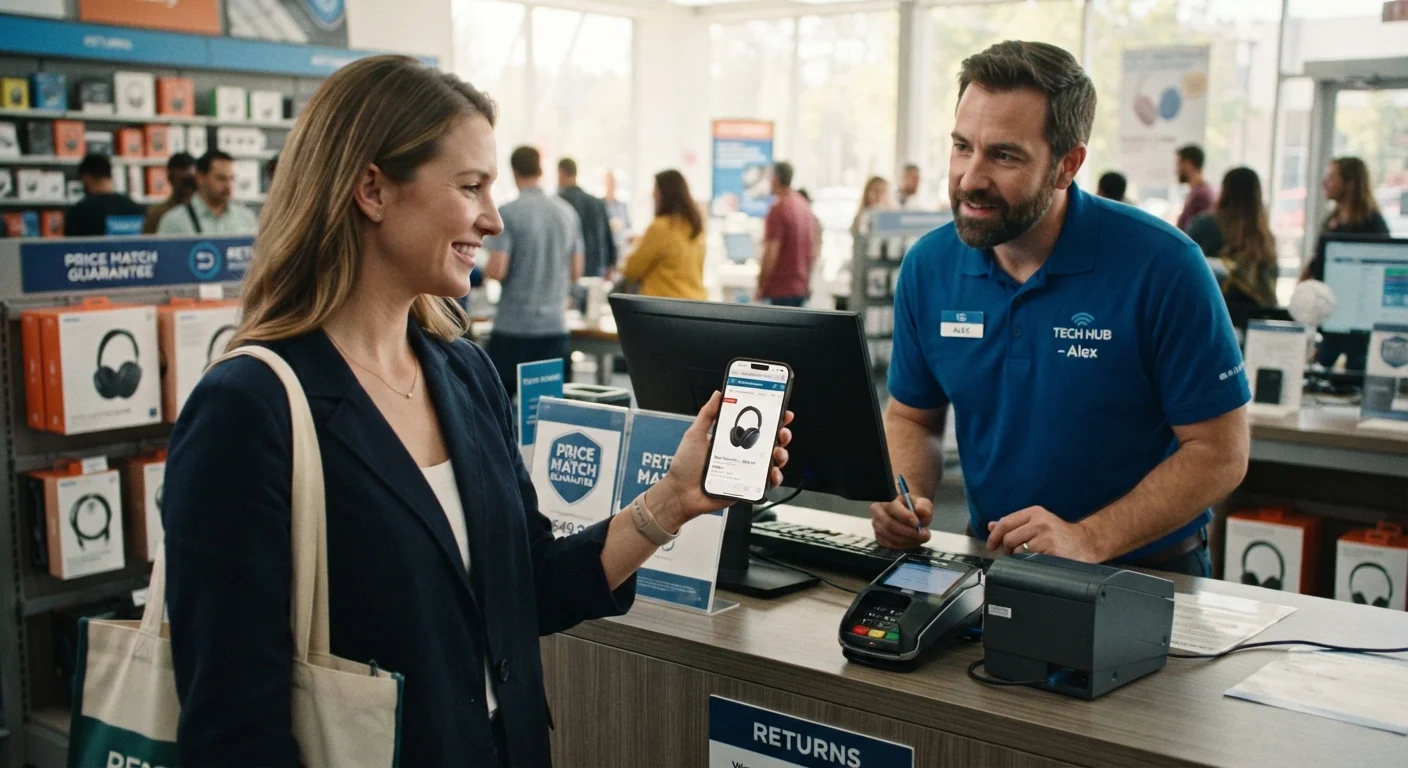
What Price Matching Actually Means
Price matching is a retailer policy that allows you to pay a competitor's lower advertised price for an identical item — without leaving the store where you're shopping. It's not a universal right, and it's not automatic. Each retailer writes its own policy, which means the rules about which competitors qualify, what counts as proof, and which items are eligible all vary from store to store.
The core idea is straightforward: if you can show that a specific item is being sold for less somewhere else right now, the retailer agrees to honor that price. Stores offer this partly as a customer retention tool, but that doesn't make it any less useful for shoppers who come prepared.
Price matching is different from coupons, cashback, or loyalty rewards — those involve earning value back after a purchase. This is about adjusting what you pay upfront. For a broader look at how other savings mechanisms compare, see our breakdown of cashback and rewards programs.
Check Online Before You Shop In-Store
Many retailers now allow price match requests through their website chat or app, not just in person. If you're buying online, look for a price adjustment option during checkout or contact customer support before completing your order. This can save you a trip entirely.
Where Price Matching Typically Applies — and Where It Doesn't
Most major brick-and-mortar retailers in categories like electronics, home goods, and general merchandise offer some form of price matching. Many also extend the policy to their own website vs. in-store pricing, which can work in your favor if you spot a discrepancy.
Common exclusions you'll encounter:
- Third-party marketplace sellers — prices from independent sellers on platforms like Amazon Marketplace are usually not eligible, even if listed on a major retailer's site.
- Clearance, closeout, or liquidation pricing — these are typically carved out because they reflect inventory disposal, not regular competition.
- Limited-time or doorbusters — flash sales and short-window promotions are frequently excluded.
- Membership-only pricing — prices that require a club membership or subscription at the competing store generally don't qualify.
- Used, refurbished, or open-box items — unless the item condition is identical, most retailers won't match.
The list of approved competitor stores is also limited and spelled out in each retailer's written policy. Checking that list before you shop saves time. Understanding return policies at the same store can also affect your strategy — our guide on reading a return policy before you reach the register is worth reviewing alongside this one.
Policies Can Change Without Notice
Retailers update their price match terms periodically, and what was eligible last month may no longer qualify. Always read the current written policy — not a summary from a third-party site — before building your strategy around it. Staff members' verbal descriptions can also be incomplete or outdated.
How to Request a Price Match: Step by Step
The process is short, but preparation is what separates a smooth transaction from a frustrating one. Follow these steps before and during your visit.
What you will need
Look up the retailer's price match policy before you go
Find the written policy on the retailer's website — usually under customer service or FAQs. Note which competitors are listed as eligible, what proof is required, and any stated exclusions. Policies change, so check the current version each time rather than relying on memory from a previous visit.
Confirm the item is identical at both stores
Verify that the model number, size, color, and configuration match exactly. Retailers will compare item specifics, and a slight variation — such as a different bundle or storage capacity — is enough to disqualify the match. Check both the physical product and any online listing carefully.
Capture clear proof of the competitor's lower price
The competitor's price must be currently active and verifiable. A screenshot works well, but have the live page ready on your phone as backup in case a staff member wants to verify in real time. Make sure the screenshot shows the item name, price, and ideally the website URL or store name.
Approach customer service or the checkout associate
Ask for a price match before the transaction is finalized — adjusting a completed sale often requires a separate return-and-repurchase process. Calmly state that you'd like to request a price match, name the competitor, and present your proof. Keep the interaction straightforward and factual.
Review your receipt before leaving
Once approved, confirm the adjusted price appears correctly on your receipt before you walk away. Errors at the register are easier to correct on the spot than after you've left the store.
Price matching fits into a broader habit of shopping deliberately. Pairing it with attention to unit price details on shelf tags gives you a more complete picture of actual value — especially for grocery and household staples. These small practices, taken together, connect directly to practical budgeting strategies that help spending stay on track over time.