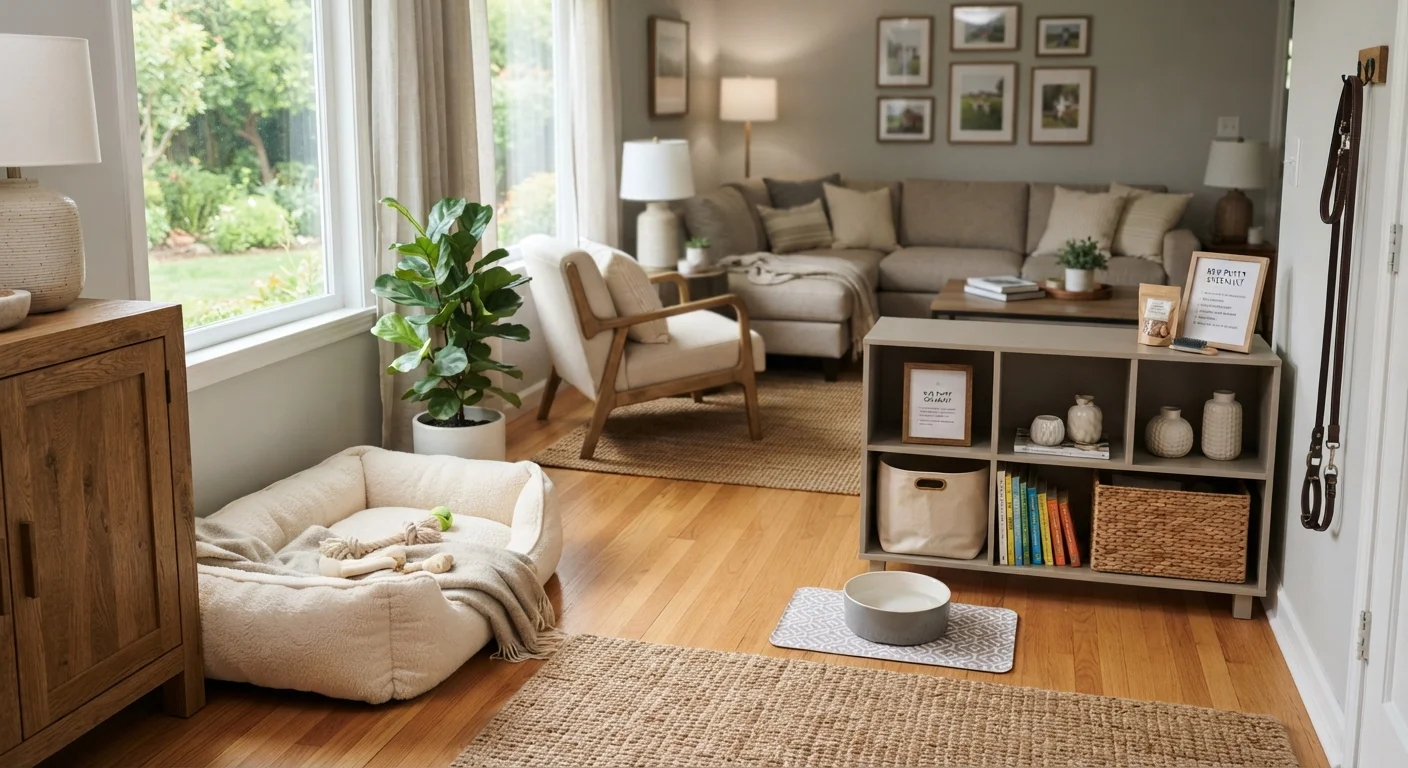
Removing household hazards before your pet arrives is the single most impactful safety step you can take.
Every pet needs a dedicated rest area, feeding station, and elimination spot set up from day one.
Toxic plants, unsecured cabinets, and loose cords are among the most commonly overlooked dangers.
Your home setup should be tailored to your specific pet's species, size, and energy level.
A well-prepared space reduces stress for both the pet and the people welcoming it home.
Before your pet arrives, your home needs a few thoughtful adjustments. This checklist covers hazards, rest areas, feeding stations, and more.
Why Your Home Setup Matters More Than You Think
Most pet owners focus on supplies — the bed, the bowls, the toys. But the physical environment your pet encounters in those first hours shapes how safe they are and how quickly they settle in. An unprepared space isn't just stressful; it can be genuinely dangerous.
This checklist is designed to work across common household pets — dogs, cats, small mammals, and birds — though some items will be more relevant depending on your animal. If you're still weighing the full picture of pet ownership, our guide on everything you need to know before getting your first pet covers the broader foundation. For a room-by-room deep dive, see our room-by-room preparation checklist.
Work through the groups below before your pet's arrival day — not after.
Hazard Removal
Remove or relocate toxic houseplants — common culprits include pothos, lilies, sago palm, and philodendron; check a vet-approved list for your specific pet species.Must
Secure or conceal electrical cords and charging cables using cord covers, clips, or furniture placement to prevent chewing.Must
Install childproof latches on cabinets containing cleaning products, medications, and food items that are harmful to animals.Must
Pick up small objects from floors and low surfaces — rubber bands, coins, hair ties, and bottle caps are common choking hazards.Must
Check for gaps behind appliances, under furniture, and inside recliners where small pets can become trapped.Should
Rest and Retreat Areas
Choose a quiet, low-traffic corner for your pet's primary rest area — away from HVAC vents, direct sunlight, and household foot traffic.Must
Set up an appropriately sized bed, crate, or enclosure before the pet arrives so the space is familiar from the first moment.Must
Place a worn piece of your clothing near the rest area to provide a comforting scent for dogs and cats during the adjustment period.Nice to have
Ensure the rest area is inaccessible to young children and other household pets during the initial introduction window.Should
Feeding and Hydration Stations
Designate a fixed spot for food and water bowls — consistency helps pets learn routines and reduces anxiety.Must
Use a mat or tray under bowls to contain spills and simplify daily cleanup.Should
Position water sources away from litter boxes (for cats) or elimination areas — animals generally avoid drinking near where they eliminate.Must
For birds and small mammals, confirm that feeders and water dispensers are sized correctly and installed securely in the enclosure.Must
Boundaries and Access Control
Install baby gates or door barriers to limit access to stairways, certain rooms, or kitchen areas where hazards are concentrated.Should
Check that window screens are secure — cats in particular will test screens near open windows.Must
Identify and block any escape routes in fenced outdoor areas or on balconies before allowing unsupervised access.Must
Designate a consistent elimination spot — a litter box location indoors or a specific outdoor area — and introduce the pet to it immediately.Must
Enrichment and Comfort Essentials
Provide at least two or three appropriate toys before the pet arrives to redirect natural chewing, scratching, or foraging behaviors.Should
Set up a scratching post or pad in a visible, accessible location for cats — this reduces the likelihood of furniture damage.Should
For birds and small mammals, add species-appropriate enrichment items (tunnels, perches, foraging materials) inside the enclosure.Should
Confirm ambient room temperature is appropriate for your pet's species before bringing them home.Nice to have
Tools and Supplies You'll Want On Hand
Before you start pet-proofing, gather the basic supplies that make the process faster and more thorough. Some are one-time purchases; others become permanent fixtures in a pet-friendly home.
Required
Cabinet safety latches
Secure lower cabinets containing cleaning products, medications, or food that could harm your pet.
Required
Cord management covers
Protect electrical cords from chewing and reduce electrocution risk for curious pets.
Required
Baby gates or pet barriers
Control which rooms or stairways your pet can access during the adjustment period.
Optional
Non-slip bowl mat
Keep food and water bowls in place and contain daily spills around the feeding station.
Required
Species-appropriate enclosure or crate
Provide a secure, properly sized rest and retreat space for your specific pet.
Required
Toxic plant reference list
Cross-check every houseplant in your home against a vet-verified list of plants harmful to your pet's species.
Once your space is set up, the work isn't over. The first month of pet ownership brings its own health milestones — vaccinations, parasite screening, and behavioral baselines. See our health checklist for the first 30 days to stay on track after the homecoming. And if you're in a smaller living situation, our apartment pet ownership guide offers practical strategies for making compact spaces work well for both of you.
Some Hazards Are Invisible to Owners
Many common household items — certain essential oils in diffusers, dryer sheets, scented candles, and sugar-free foods containing xylitol — are toxic to specific animals but cause no obvious alarm. Before your pet arrives, research hazards specific to their species rather than relying on general pet-safety lists. When in doubt, consult your veterinarian.
Don't Wait Until Moving Day to Pet-Proof
Pet-proofing done in a hurry on the day of arrival is pet-proofing done incompletely. Walk through each room at your pet's eye level — literally crouch down — to spot hazards that are invisible from standing height. Cords behind furniture, gaps under cabinets, and low shelves packed with breakables are easy to miss in a quick scan.
The content on this site is for informational purposes only and is not a substitute for professional advice. Always consult a qualified professional for guidance specific to your situation.