
Start with the Right Match
Not every pet thrives in a studio or one-bedroom apartment, and choosing one that genuinely suits your space is the foundation of success. Before you adopt, consider the animal's activity level, noise output, and space requirements — not just how adorable it looks. Our guide to matching a pet's lifestyle demands to your own walks through this in detail.
For dogs, low-energy breeds such as Basset Hounds, French Bulldogs, and Shih Tzus generally adapt to apartment living better than high-drive working or sporting breeds that need room to run. Cats are naturally well-suited to indoor apartment life when given adequate enrichment. Small mammals — guinea pigs, rabbits — and birds can also work well, provided their environmental and social needs are met. Exotic pets often carry additional care and legal considerations worth researching first.
Know the Rules Before You Commit
Review your lease agreement and building policy in full before bringing any animal home. Many leases specify permitted species, weight limits, breed restrictions, and required pet deposits or monthly fees. These terms are legally binding, and violations can result in fines or even eviction.
Always Get Pet Rules in Writing
Verbal agreements with landlords about pet permissions carry little legal weight. Ask for any pet-related allowances to be noted in your lease or in a signed addendum. This protects you if management changes or disputes arise. When in doubt, consult a tenant rights resource in your state.
Even if your current landlord is permissive, document any verbal agreements in writing. If you move, you'll want a clear record of what was permitted. Always re-read the pet clause when renewing a lease, as terms can change.
Check local ordinances too — some municipalities have noise regulations that apply to barking dogs, or rules around exotic animals. Doing this homework upfront protects both you and your pet.
Best Practices for Apartment Pet Ownership
Success in a small space depends less on square footage and more on how consistently you meet your pet's core needs. The following practices are the foundation of making apartment life genuinely comfortable for your animal.
Prioritize daily outdoor exercise even when your apartment has no yard.
Dogs especially need physical exertion to burn energy and avoid frustration-based behaviors. Without a yard, this responsibility falls entirely on scheduled walks and outings. Unmet exercise needs are the most common root cause of destructive behavior in apartment dogs.
Provide daily mental stimulation through enrichment activities, not just physical exercise.
Mental fatigue is as effective as physical exercise for settling a restless pet. Puzzle feeders, training sessions, and scent games engage a pet's brain and reduce boredom-driven problems. This is especially relevant in apartments where sensory input is more limited.
Manage noise proactively by training and addressing the root cause of barking or vocalization.
Noise complaints are among the most common reasons apartment dwellers are asked to rehome pets. Persistent barking is usually a sign of unmet needs — anxiety, insufficient exercise, or boredom — rather than a simple obedience failure. Addressing the source is more effective than suppressing the symptom.
Establish a dedicated elimination routine and stick to it consistently.
Without a yard on demand, timing matters enormously. Regular, predictable bathroom breaks prevent accidents and reduce the stress of a pet waiting too long. This is particularly important for puppies, senior dogs, and animals recently moved to a new home.
Use vertical space and furniture arrangement to maximize your pet's perceived territory.
Pets, particularly cats, experience space partly in terms of elevated vantage points and defined zones. A well-arranged apartment with cat trees, shelving, or sectioned-off resting areas feels richer to an animal than an open, undivided room of the same size.
Make the Space Work Harder
Small apartments can feel much larger to a pet when the environment is thoughtfully arranged. For cats, vertical space is crucial — wall-mounted shelves, cat trees, and window perches give them territory to explore and observe without requiring floor space. Our article on indoor vs. outdoor cats explains why environmental enrichment is particularly important for cats kept inside full-time.
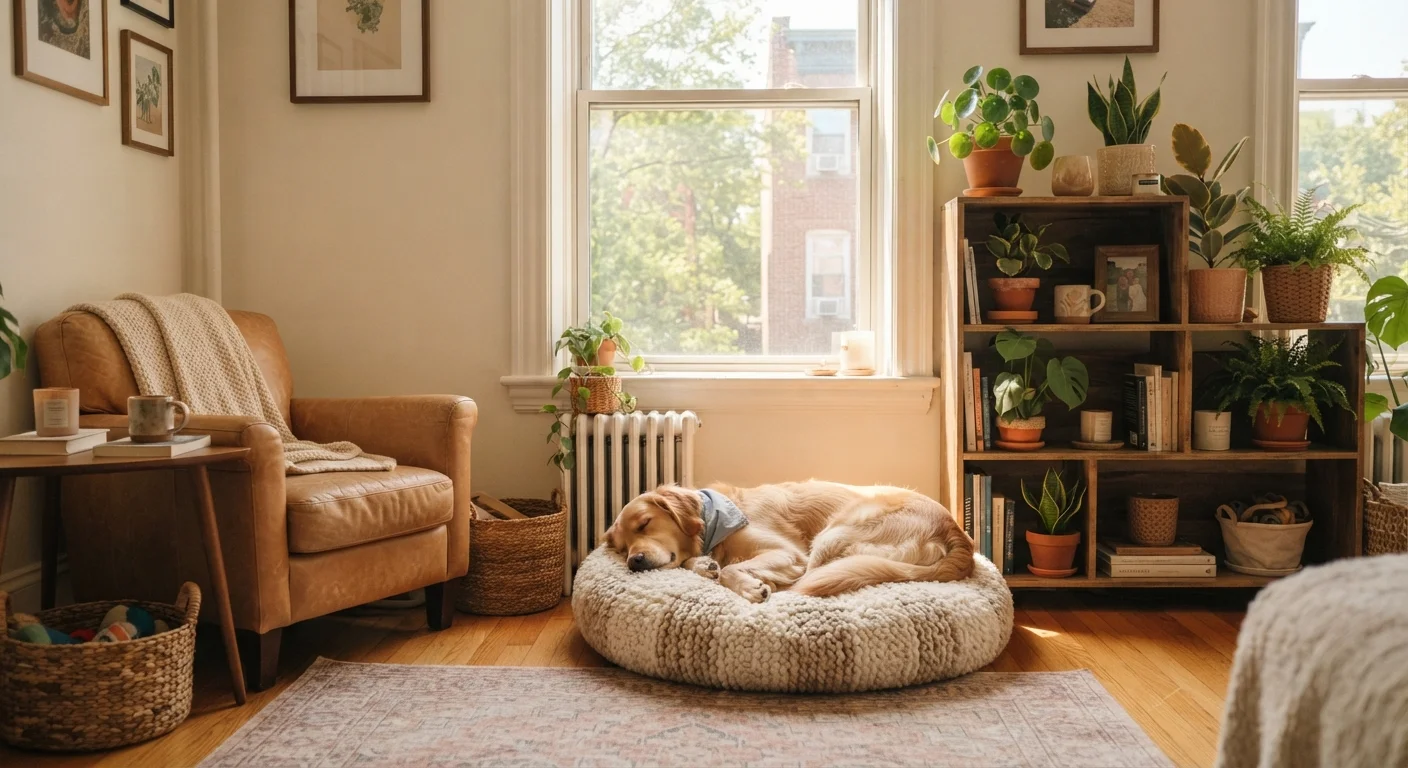
For dogs, a designated resting zone — a crate or a defined bed area — provides a sense of security even in an open-plan layout. Puzzle feeders, sniff mats, and rotating toys extend mental engagement without requiring more physical space. See our checklist on setting up a safe living space for a room-by-room approach to pet-proofing and organizing a smaller home.
Routine Is Your Most Powerful Tool
Predictable schedules reduce anxiety in pets, which directly reduces problem behaviors like excessive barking, destructive chewing, and inappropriate elimination. In an apartment — where space is limited and neighbors are close — minimizing those behaviors matters enormously.
~72%
U.S. renters who live with a pet
According to the American Pet Products Association, the majority of American renters share their home with at least one pet, making apartment pet ownership the norm rather than the exception.
2x
Increased behavior issues in under-exercised dogs
Veterinary behaviorists broadly agree that insufficient physical and mental exercise is the leading contributor to destructive and anxious behavior in companion dogs kept in smaller living spaces.
Structure feeding, walks, play sessions, and rest times into a daily pattern. Our companion guide on building a daily routine that works for both you and your pet offers a practical framework for doing this sustainably. If your work schedule is unpredictable, consider a dog walker or pet sitter to cover midday needs — especially for puppies or senior dogs who can't comfortably hold long gaps between bathroom breaks.
This article is for general informational and educational purposes only. For specific health or behavioral concerns about your pet, consult a licensed veterinarian or certified animal behaviorist.