
How Each Method Actually Works
Exfoliation, at its core, is about removing the layer of dead skin cells that can make your complexion look dull and contribute to clogged pores. But how you do it matters enormously — and the two main camps work through completely different mechanisms.
Chemical exfoliants use acids or enzymes to dissolve the molecular bonds holding dead skin cells together. Alpha hydroxy acids (AHAs) — like glycolic acid and lactic acid — work mainly on the skin's surface and are water-soluble. Beta hydroxy acids (BHAs) — salicylic acid being the most common — are oil-soluble, meaning they can travel through sebum into pores. Enzyme-based exfoliants, often derived from papaya or pineapple, work similarly but more gently. No rubbing required; the chemistry does the work.
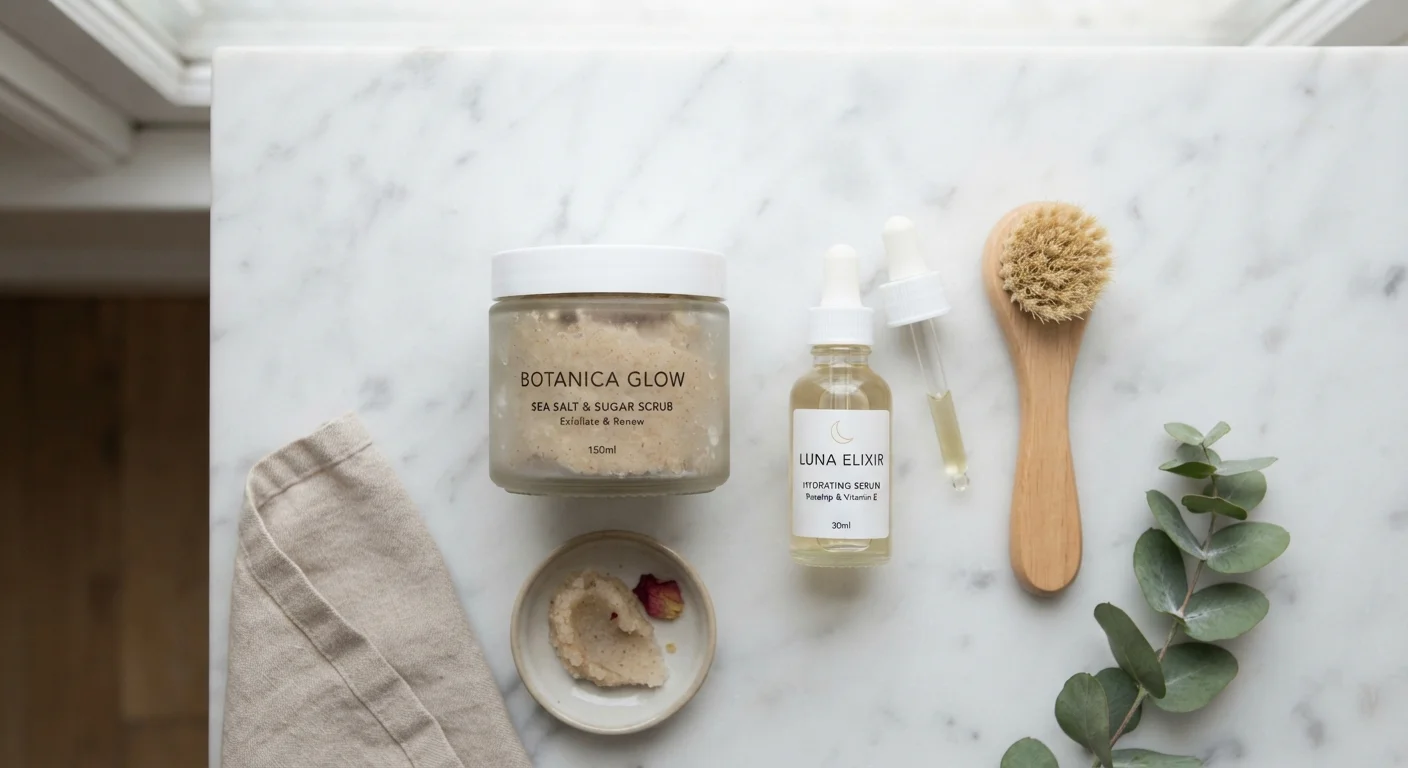
Physical scrubs, by contrast, rely on manual abrasion. They contain granular particles — sugar, salt, ground walnut shell, synthetic microbeads (now largely banned due to environmental concerns), or finely milled oats — that physically dislodge surface cells when you massage the product in circular motions.
Understanding your skin type shapes which approach fits your routine. See our guide to skin types for a deeper breakdown of what oily, dry, combination, and sensitive skin actually mean for product choices.
| Criterion | Chemical Exfoliants | Physical Scrubs |
|---|---|---|
| How it works | Dissolves bonds between dead skin cells | Manually buffs away surface cells |
| Main types | AHAs, BHAs, enzymes | Sugar, salt, oat, synthetic granules |
| Pore penetration | BHAs penetrate into pores | Surface-level only |
| Best suited for | Sensitive, acne-prone, or dull skin | Normal to oily, resilient skin |
| Sun sensitivity risk | Yes — especially with AHAs | Minimal |
| Risk of over-exfoliation | Possible if overused or too concentrated | Higher if particles are coarse or used daily |
| Immediate smoothing effect | Gradual over days | Noticeable right after use |
| Typical use frequency | 1–3 times per week | 1–2 times per week |
The Risks Worth Knowing About
Neither method is without caveats, and knowing the pitfalls helps you exfoliate smarter.
With physical scrubs, the most common issue is over-aggressiveness. Coarse particles — especially irregularly shaped ones like crushed shells — can create micro-tears in the skin barrier, leading to inflammation, increased sensitivity, and in some cases, worsened breakouts. Pressing too hard or using a scrub too frequently amplifies this risk. Dermatologists generally recommend choosing scrubs with smooth, rounded particles and limiting use to once or twice per week on resilient skin.
With chemical exfoliants, the primary consideration is sensitivity, particularly when starting out. Introducing an acid too frequently or at too high a concentration can cause stinging, peeling, or redness. AHAs also increase photosensitivity — meaning your skin becomes more vulnerable to UV damage — so daily broad-spectrum sunscreen is non-negotiable when using them. If you're exploring active ingredients more broadly, our ingredient explainer can help you read labels with more confidence.
~30%
Skin cell turnover slowdown with age
Research indicates that the natural rate of skin cell turnover slows by roughly 30% between young adulthood and middle age, which is part of why exfoliation becomes a more discussed topic in skincare.
8–10 days
Average surface skin cell renewal cycle
The outermost layer of skin (stratum corneum) renews itself roughly every one to two weeks under typical conditions, providing the biological basis for regular exfoliation.
This article is for general informational purposes only and is not a substitute for professional skincare or medical advice. If you have a skin condition or concern, consult a qualified dermatologist.
Building Exfoliation Into Your Routine
The biggest mistake most people make with exfoliation isn't choosing the wrong type — it's using either one too often. More is rarely better when it comes to removing your skin's protective layer.
A general starting point: most skin types do well with exfoliation one to three times per week, not daily. If you're new to chemical exfoliants, beginning with a lower-concentration formula and gradually increasing frequency gives your skin time to adjust.
Layer order matters too. Chemical exfoliants are typically applied after cleansing and before moisturizer. Physical scrubs replace your cleanser step or follow it. Both should be followed by a hydrating moisturizer to support the skin barrier you've just worked on. For more on how to slot different products into a sensible sequence, our routine simplicity guide and moisturizer vs. serum breakdown cover the essentials without overcomplicating things.
A final note: mixing chemical and physical exfoliation in the same session is generally unnecessary and potentially irritating. Pick one approach per use, and let your skin tell you — through how it looks and feels over time — whether the method and frequency are working.
A Note on Product Label Claims
Terms like 'gentle,' 'natural,' or 'dermatologist-tested' on scrub or exfoliant packaging carry no standardised legal definition in the U.S. A scrub labelled 'natural' can still be abrasive; an acid product labelled 'gentle' still requires a patch test. For a closer look at what beauty label language actually means, our label claims explainer is worth a read before your next purchase.