
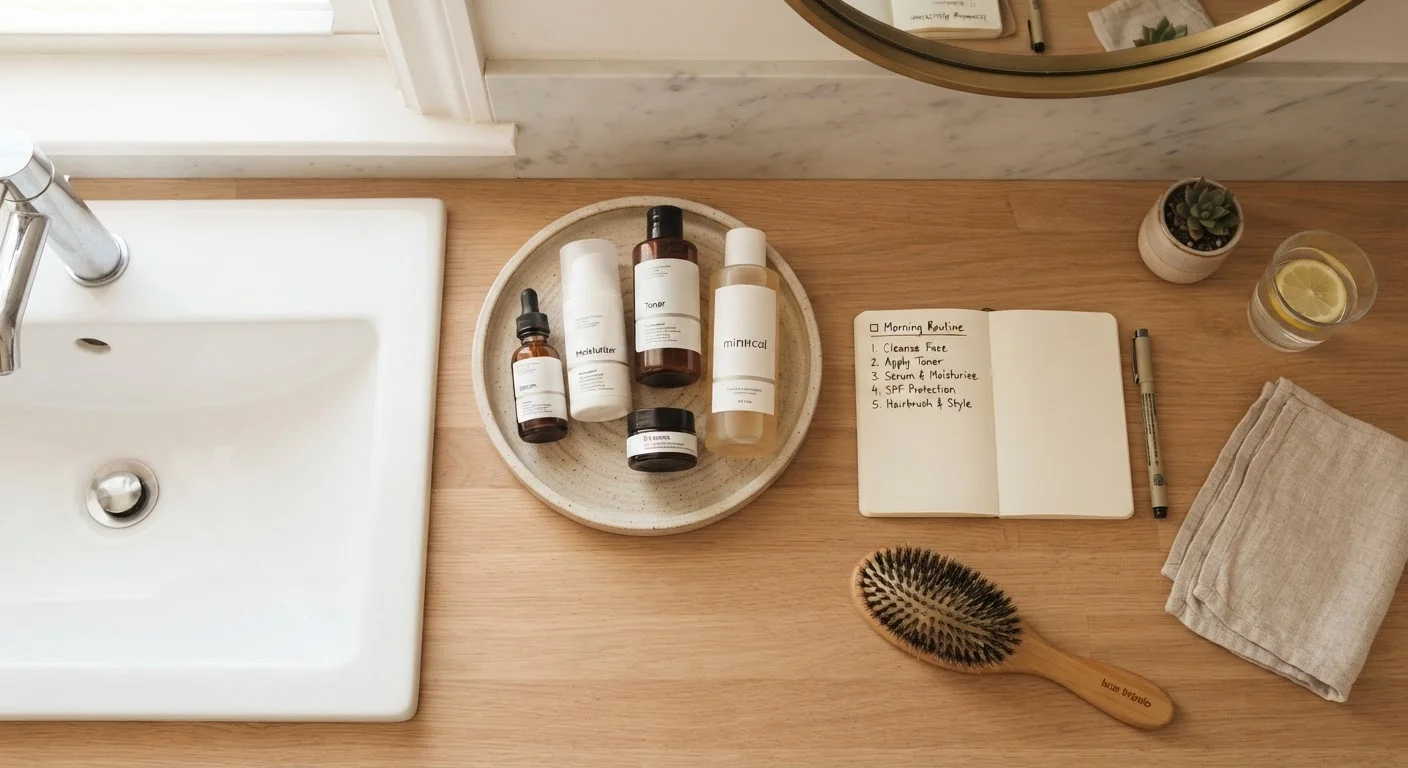
Why a Weekly Beauty Audit Actually Pays Off
Most of us build a beauty routine once and then just run it on autopilot. Products pile up. Habits drift. You keep reaching for that serum out of habit even though it stopped doing anything noticeable months ago. A weekly audit is the reset button—short, structured, and genuinely useful for keeping your routine purposeful instead of performative.
Think of it less like a chore and more like a five-minute check-in with yourself. Similar to how a wardrobe audit helps you stop keeping clothes you never reach for, a beauty routine audit helps you stop buying (and hoarding) products you never actually use.
This checklist covers four areas: skincare, hair care, makeup hygiene, and routine consistency. Work through it once a week—Sunday evenings tend to work well—and you'll start catching small issues before they become bigger skin or hair problems.
A small notebook or notes app
Keeps a running log of weekly observations so you can spot patterns over time rather than relying on memory.
Gentle brush cleanser or dish soap
Used to clean makeup brushes and sponges as part of the weekly hygiene check.
Permanent marker or label tape
Mark the date you opened new products so you can accurately track their period-after-opening timeline.
Phone camera
Take weekly skin selfies in consistent lighting to compare progress or changes objectively.
How to Work Through the Checklist
Start with your skincare section because it has the most direct connection to your skin's health. Pay close attention to any skin changes you noticed over the week—texture shifts, new dryness, or breakouts are useful data points, not just frustrations. Our guide on skincare routines for common concerns can help you troubleshoot what you observe.
For the hair care section, be honest about your habits—not the habits you intend to have. If you've been skipping heat protectant or over-washing, noting it here is the first step to changing it. For deeper context on how washing frequency affects your scalp, see our article on hair washing habits that can quietly damage your scalp.
The makeup hygiene section often gets skipped entirely—which is exactly why it's here. Brush cleaning and expiration checks take five minutes and meaningfully reduce the risk of transferring bacteria to your skin.
Finally, the consistency check is the most honest part of the whole audit. A routine you skip half the time isn't really your routine. If your current regimen doesn't fit your schedule, that's not a willpower problem—it's a design problem. If you want to think through what's truly essential versus extra, this guide to simplifying your routine is a good companion read.
Skin Changes May Need Professional Attention
A weekly self-audit is a helpful tool for routine maintenance, but it's not a substitute for professional skin advice. If you're experiencing persistent breakouts, unusual dryness, rashes, or any changes in moles or skin texture, consult a licensed dermatologist. This checklist is general guidance, not medical advice.
Skincare Audit
Hair Care Audit
Makeup & Tools Hygiene
Routine Simplicity & Consistency Check
Don't Layer Active Ingredients Without Research
Combining certain skincare actives—like retinoids with AHAs, or vitamin C with niacinamide in some formulations—can reduce effectiveness or irritate skin. During your audit, map out which actives you're using and in what order. When uncertain, consult a licensed dermatologist rather than relying on social media guidance.
Expired Products Can Do More Harm Than Good
Using expired skincare or makeup isn't just ineffective—it can introduce bacteria, cause breakouts, or trigger irritation. Pay particular attention to anything applied near the eyes. If a product smells off, has separated, or changed texture, toss it regardless of the date.
Making Adjustments Without Starting Over
One of the easiest traps after an audit is overcorrecting—clearing your entire shelf and rebuilding from scratch. That's rarely necessary. Most routines just need a small tweak: one product swapped, one step reordered, one habit made more consistent.
If this audit surfaced bigger lifestyle signals—stress affecting your skin, sleep patterns showing up as dullness—it may be worth pairing this check-in with a broader self-check. A mental wellness check-in can help you see where physical and mental wellbeing are overlapping.
Set a recurring weekly reminder, keep your notebook or app note accessible, and aim for forward momentum rather than perfection. Over time, these small weekly adjustments add up to a routine that actually reflects your skin, your schedule, and your life.
This article is for informational and educational purposes only and is not a substitute for advice from a licensed dermatologist or healthcare professional. If you have concerns about your skin or scalp health, consult a qualified provider.