
Why Dress Codes Feel So Confusing
You receive an invitation. It says smart casual. You stare at your closet and feel absolutely nothing. You're not alone — dress code language was never designed for clarity. Terms like "business casual" and "cocktail attire" evolved from different industries and social contexts, meaning they can read differently depending on the room, the region, and the decade.
The good news: once you understand what each label is actually signaling, you stop second-guessing yourself. This guide breaks down the most common dress codes in plain English, so you can show up feeling right — not overdressed, not underdressed, just confident.
For a broader look at how dressing polished versus casual plays out in everyday American life, see our guide to the casual-to-polished spectrum.
| Most misunderstood dress code | Smart Casual |
| Dress codes on a spectrum | 6 main levels: Casual → Smart Casual → Business Casual → Business Professional → Cocktail → Black Tie |
| Key factor at every level | Fit — a well-fitting outfit outperforms an expensive one that doesn't fit |
| Where denim gets complicated | Business Casual — acceptable in some workplaces, not others |
| Safest universal rule | When unsure, dress one level above your estimate |
The Main Dress Codes, Explained
Think of dress codes as points on a spectrum — from the most relaxed to the most formal. Here's where each one lands and what it actually calls for.
Casual
This is your most relaxed setting. Jeans, t-shirts, sneakers, and comfortable everyday pieces all work here. The only real guideline: clean, well-fitting clothes in good condition. Casual doesn't mean sloppy.
Smart Casual
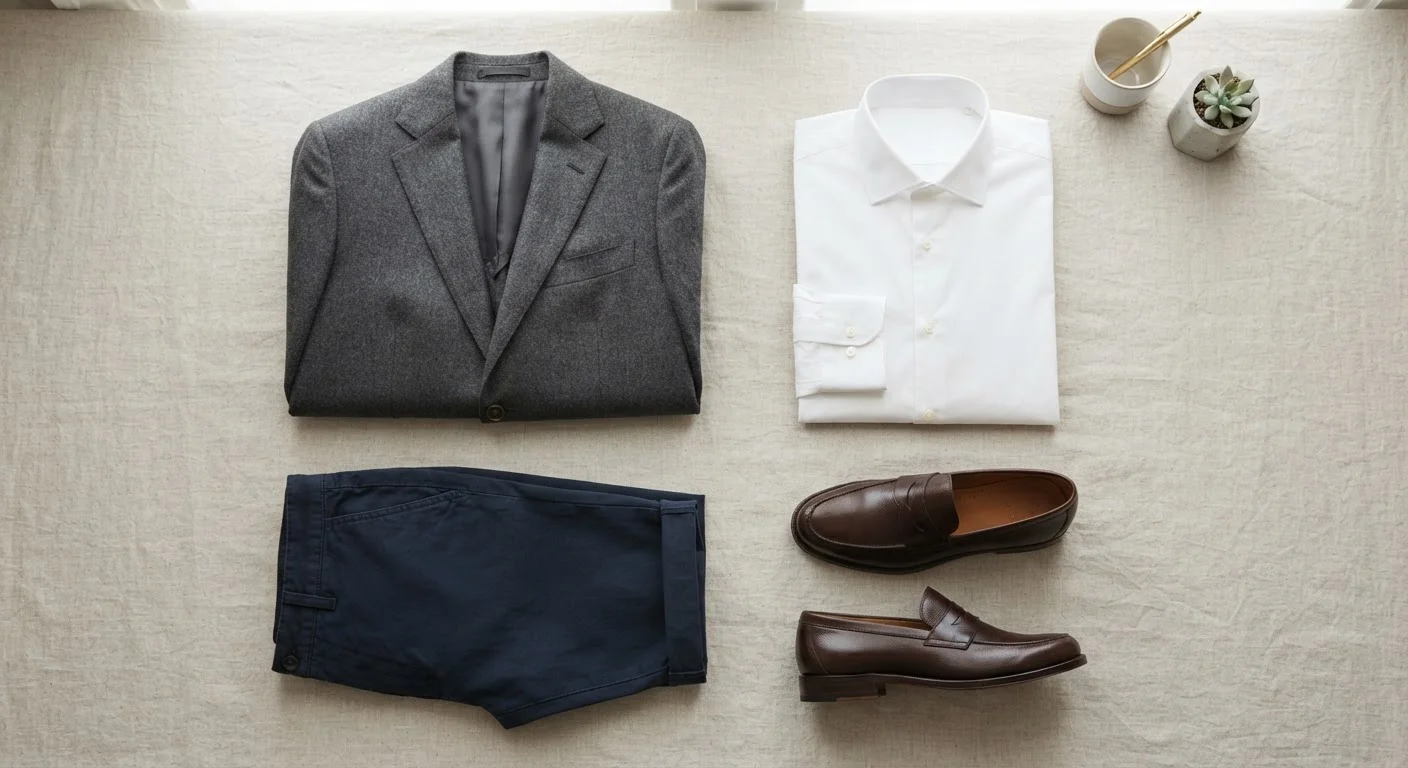
This is arguably the trickiest label. Smart casual sits between relaxed and polished — think neat trousers or dark-wash jeans paired with a blouse, sweater, or casual blazer. Clean footwear matters here. It's the dress code of dinner parties, casual Fridays at more creative workplaces, and gallery openings.
Business Casual
A workplace staple in American offices. Tailored trousers, chinos, collared shirts, blouses, and blazers are all fair game. Denim is usually a gray area — if in doubt, leave it out. Sneakers may be acceptable depending on the workplace culture, but a leather or polished shoe generally reads more credibly.
Business Professional (or Business Formal)
A full suit or coordinated separates in neutral tones — navy, charcoal, gray, or black. For women, this extends to tailored dresses and skirt suits. Dress shoes, minimal accessories, and a restrained color palette are the norm here.
Cocktail Attire
A step up from business formal in terms of style, but not quite black tie. Think knee-to-midi length dresses, jumpsuits, or a sharp suit with a tie. The occasion calls for a bit of polish and intention — this isn't the place for business separates.
Black Tie
Floor-length gowns or sophisticated formal separates for women; a tuxedo for men. The standard is elevated and unambiguous. When an invitation says black tie, it means it.
Casual
The most relaxed dress code level. Everyday comfortable clothing is appropriate — jeans, t-shirts, sneakers — as long as garments are clean and well-fitting.
Smart Casual
A middle-ground dress code that blends relaxed and polished elements. Neat, put-together outfits that avoid both athletic wear and full office attire.
Business Casual
A workplace-focused dress code allowing tailored trousers, collared shirts, blouses, and blazers. Generally avoids athletic wear, graphic tees, and sometimes denim.
Business Professional
A formal workplace dress code calling for coordinated suits or tailored separates in neutral tones, with polished footwear and minimal accessories.
Cocktail Attire
An elevated social dress code for evening events — think knee-to-midi dresses, jumpsuits, or a suit with a tie. More stylish than office formal, but less strict than black tie.
Black Tie
The most formal common dress code, calling for floor-length gowns or formal separates for women and a tuxedo for men. Leaves little room for casual interpretation.
Reading the Room (and the Invitation)
Even the clearest dress code label leaves room for interpretation. A few things worth considering:
- Industry context matters. Business casual at a law firm looks different from business casual at a design studio. When in doubt, observe what people already wear in that environment.
- Venue and occasion type. An outdoor garden party labeled "smart casual" has different expectations than a smart casual company dinner at a restaurant.
- Regional norms vary. Dress expectations in New York City often skew more formal than the same label might in a West Coast city. Factor in local culture where you can.
- Fit is always the great equalizer. A well-fitting outfit at any code level reads better than an expensive outfit that doesn't fit properly. For more on this, explore what fit guidance actually gets right.
Dress codes are also a jumping-off point, not a rigid uniform. Understanding how occasion dressing fits into your personal style can help you feel like yourself across very different settings.
Finally, fabric choice affects how formally or casually a piece reads. A linen shirt signals summer-casual; a wool blazer reads polished. Learn what different fabrics actually communicate to make smarter choices at any dress code level.
When the Invitation Isn't Clear
If a dress code label is missing from an invitation, consider the venue type and time of day as your guide. A daytime weekend event at a restaurant generally calls for smart casual; an evening event at a hotel or formal venue leans toward cocktail attire. It's always reasonable to ask the host directly — most people appreciate the thoughtfulness.