
Where the Idea Came From
The capsule wardrobe isn't a social media invention. Susie Faux, owner of a London boutique called Wardrobe in the 1970s, coined the term to describe a core set of timeless, well-fitting pieces that could be refreshed each season with a few additions. About a decade later, designer Donna Karan brought the concept to mainstream attention with her "7 Easy Pieces" — a tightly edited collection built around a bodysuit, a skirt, trousers, a jacket, a dress, a cashmere top, and a leather jacket.
The idea has evolved considerably since then. Today it ranges from strict 33-piece challenges to loose philosophies about buying with intention. What connects every version is the same core logic: own less, wear more of what you own.
As interest in sustainable fashion and mindful consumption has grown, so has the appeal of capsule thinking — not as a trend, but as a practical response to closets full of clothes that somehow still leave us feeling like we have nothing to wear.
What a Capsule Wardrobe Actually Looks Like
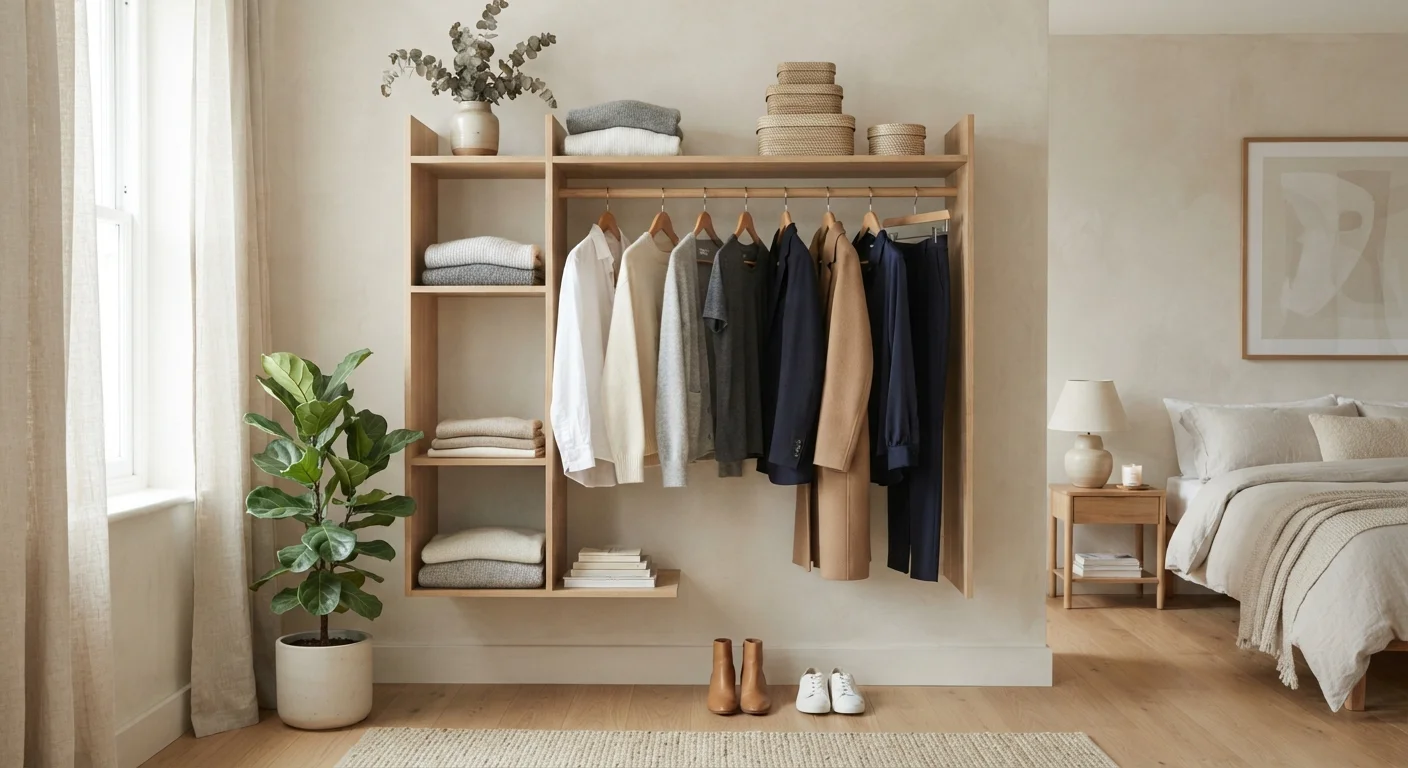
In practice, a capsule wardrobe is a set of pieces — usually clothing, sometimes including shoes and accessories — where virtually everything coordinates with everything else. Think of it as a system rather than a count. A classic structure might include:
- Neutral-toned basics (tees, trousers, simple tops) that act as the foundation
- A few statement or layering pieces (a blazer, a denim jacket, a cardigan)
- One or two occasion-appropriate items (a versatile dress, tailored pants)
- Footwear that crosses multiple contexts (a comfortable everyday shoe, a slightly dressier option)
The palette tends to be cohesive — not necessarily all neutrals, but colors that genuinely mix rather than clash. Someone who loves jewel tones can absolutely build a capsule; they'd simply ensure their teal blouse works with their navy trousers and burgundy jacket.
~30%
Clothes worn regularly by average person
Studies on clothing behavior suggest most people regularly wear only about 30% of the items in their wardrobe, leaving the majority unworn.
33 items
Pieces in Project 333 capsule challenge
Project 333, a popular capsule challenge created by Courtney Carver, limits participants to 33 items of clothing, shoes, and accessories for 3 months.
7
Pieces in Donna Karan's 1985 collection
Donna Karan's influential '7 Easy Pieces' collection in 1985 helped bring capsule wardrobe thinking into mainstream American fashion consciousness.
It's worth noting that a capsule isn't static. Most people rotate seasonal items in and out, keeping the core stable while adapting to weather and occasion shifts throughout the year. Wardrobe staples that earn their keep are the backbone of any successful capsule approach.
Does It Actually Work?
The honest answer: it depends on how you define "works."
Research on decision fatigue — the idea that making too many choices depletes mental energy — suggests that reducing low-stakes decisions, like what to wear, can free up cognitive space for more meaningful ones. A smaller, well-edited wardrobe can genuinely reduce morning stress for many people.
But a capsule wardrobe isn't a magic fix. It fails when it's built around an aspirational version of your life rather than your actual one. A collection anchored in sleek office wear won't serve someone who works from home most days. A minimalist neutral palette won't bring joy to someone who genuinely lights up around bold prints.
Build Around Your Real Life, Not Your Ideal One
Before editing your closet, spend a week noticing what you actually reach for each morning — not what you wish you wore. A capsule built around your true daily routine will serve you far better than one modeled on a fantasy lifestyle. Honest self-observation is the most powerful wardrobe tool you have.
It also requires honest self-knowledge — about how you spend your time, what you actually reach for, and what you've been holding onto out of guilt rather than use. A structured wardrobe audit is one of the most useful first steps before committing to any version of this approach.
For readers starting completely fresh, building a wardrobe from scratch with capsule principles in mind can be less overwhelming than it sounds — especially when you're not trying to replace everything at once.
How to Know If It's Right for You
You don't have to go full capsule to benefit from capsule thinking. Even applying a few of its principles — buying pieces that coordinate rather than compete, auditing your closet before shopping, asking whether an item has multiple uses — can meaningfully improve how your wardrobe functions day to day.
A more structured capsule approach tends to suit people who:
- Feel overwhelmed by a full closet but still struggle with outfit choices
- Frequently buy items that never get worn
- Want to spend less time and mental energy getting dressed
- Are open to a more cohesive personal aesthetic
It tends to require more flexibility for people with highly variable lifestyles — those who dress for vastly different contexts across a single week, for example, or those whose jobs involve specific dress codes alongside casual weekend routines.
The takeaway: the capsule wardrobe is a useful framework, not a mandate. Borrow what works for your life, and leave the rest.
“Style is knowing who you are, what you want to say, and not giving a damn. A smaller wardrobe can actually help you get there faster — because it forces you to be honest about what you actually love to wear.”
— Susie Faux, London boutique owner credited with coining the term 'capsule wardrobe'