
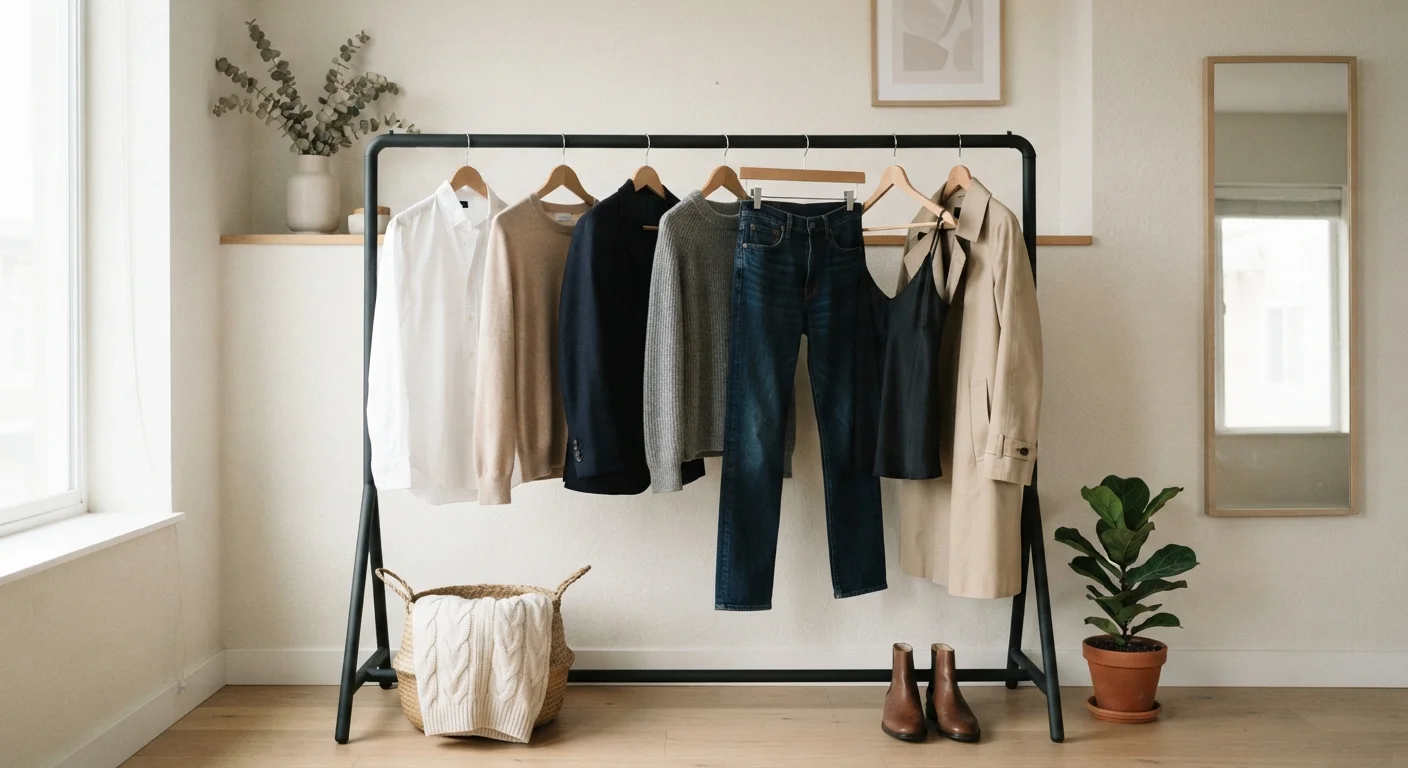
Why Some Clothes Do More Work Than Others
Most Americans have experienced the paradox of a full closet and nothing to wear. The culprit is usually a wardrobe built reactively — one impulsive purchase at a time — rather than anchored by pieces that genuinely pull their weight. The fix isn't buying more; it's understanding what makes certain items consistently useful.
Versatility in clothing comes down to a few honest factors: silhouette, color, fabric behavior, and how well a piece scales across formality levels. A truly hardworking item moves from a casual Saturday errand to a low-key work meeting to a dinner out without requiring a complete outfit overhaul. That adaptability is what separates a staple from a one-occasion purchase gathering dust.
If you're thinking about the bigger picture of how your closet is structured, the capsule vs. full wardrobe comparison is worth a read. But regardless of your overall approach, the pieces below earn their spot in nearly any closet. Here's what makes each one genuinely indispensable — and how to make sure yours is actually working for you.
Fit First, Everything Else Second
No staple piece performs well if the fit is off. Before evaluating color, fabric, or price, confirm that a garment sits correctly at the shoulders, doesn't pull or gap across key areas, and has a hem length that works with how you actually wear it. Minor tailoring adjustments — hemming trousers, taking in a waist — are relatively affordable and transform how a piece functions. Build the habit of asking 'does this fit?' before 'do I like this?'
The Staples Worth Having in Your Corner
A well-fitted white or light blue button-down shirt
Few items log more hours across more contexts than a classic button-down in a light, neutral tone. Worn tucked into trousers for a polished meeting, half-tucked with dark denim for the weekend, or layered open over a tee for a relaxed layered look — this shirt adapts without argument.
The key is fit. A button-down that pulls across the shoulders or drowns in extra fabric loses most of its versatility. Look for a cut that follows your natural shape without being restrictive. Cotton and cotton-blend options tend to breathe well and press easily, which matters when you're relying on a piece this frequently. Understanding fabric behavior is genuinely useful here — a plain-English guide to fabrics covers what different materials actually deliver in everyday wear.
Fit determines whether this shirt works — fabric choices determine how long it lasts.
Dark, well-fitting straight or slim jeans
A dark rinse jean in a straight or slim cut is one of the most reliable dual-role pieces in American dressing. The dark wash reads more formal than a faded or distressed style, making it genuinely appropriate for casual workplaces, dinner out, or dressed-up weekend plans — not just weekend errands.
Straight and slim cuts tend to work across body types and stay current without chasing trends. The sweet spot to look for: a waistband that sits comfortably without gaping, a leg that doesn't bunch at the ankle, and a length that works with both boots and sneakers. When those fit elements are right, one pair of jeans covers a remarkable amount of your weekly rotation.
A dark rinse does more heavy lifting than almost any other jean finish.
A tailored blazer in a neutral or complementary tone
A blazer is the closest thing to a formality dial that fashion offers. Throw one over a plain tee and jeans and the whole outfit moves up a register — instantly. Pair it with matching trousers and it becomes a suit-adjacent option for interviews or professional events. Remove it and your base outfit stands on its own.
Neutral tones — navy, charcoal, camel, and warm greige — layer most easily with what the average wardrobe already contains. Structure matters: a blazer with light shoulder padding and clean lapels photographs and reads better in-person than a shapeless one. If you dress for changing seasons, a blazer is also one of the most efficient layering tools you can own. The guide to dressing across seasons goes deeper on how to maximize pieces like this year-round.
A blazer functions as a formality dial — up, down, or removed entirely.
Simple, solid-color crewneck or V-neck tees
The humble solid tee is underestimated precisely because it's so familiar. A small collection in white, grey, black, and one color that works well with the rest of your wardrobe does serious lifting as a base layer, standalone casual piece, or layering element under open shirts and jackets.
Quality makes the difference between a tee that pills and fades after a season and one that looks sharp for years. Heavier-weight fabrics — generally 180 grams per square meter or more — hold their shape better than thinner alternatives. This is also one of the places where the case for neutral color choices is most practical: a neutral tee layers with everything and creates zero friction when getting dressed.
Three or four well-made solid tees are more useful than a dozen novelty ones.
Versatile, clean-lined casual trousers or chinos
Chinos and casual trousers in a mid-tone — tan, olive, warm grey, or navy — occupy the useful middle ground between formal dress pants and casual jeans. They pair naturally with both button-downs and tees, dress up with a blazer or down with a simple knit, and cross the professional-to-casual spectrum more smoothly than denim in some workplaces.
Straight and tapered cuts tend to photograph well and read as intentional rather than accidental. A flat front keeps the silhouette clean. This is the kind of piece that, once you have it in two complementary colors, quietly solves a large portion of your weekly outfit decisions. For a complete framework on how these pieces interact, the everyday style playbook covers the full picture.
Well-fitted chinos bridge the gap between professional and casual more reliably than almost anything else.
A clean, simple sneaker or low-profile shoe
Footwear shapes the formality read of an entire outfit. A clean, low-profile sneaker — minimal branding, solid color, neat silhouette — works with jeans, chinos, and even certain casual trousers in a way that a heavily branded athletic trainer simply doesn't. It's the shoe category that has earned genuine flexibility in American casual dressing over the past two decades.
Leather or leather-look options extend versatility further, landing closer to a casual dress shoe on the formality spectrum while still reading as relaxed. Keep them clean. A scuffed or worn-down shoe undercuts even a well-assembled outfit. One or two pairs in white or neutral tones cover most everyday scenarios without requiring a large footwear collection.
A clean, understated sneaker is one of the most quietly powerful outfit-elevating tools available.
Staples Look Different for Everyone
The pieces listed here reflect broadly applicable starting points, not a universal prescription. Your lifestyle, workplace, climate, and personal style all shape which items are truly foundational for you. Someone in a formal office environment may lean harder on tailored pieces; someone working outdoors may find the button-down less relevant than a well-fitted henley or polo. Use these as a framework, not a rulebook, and prioritize the items that actually reflect how you spend your days.
Building Around What You Now Know Works
Once you can identify what makes these pieces effective — neutral base, clean silhouette, fabric that holds its shape — you start shopping with a different eye. The goal isn't a perfectly curated runway look; it's a closet where you can get dressed with confidence on any given morning.
If your wardrobe still has gaps or you're starting fresh, the practical guide to building a wardrobe from scratch offers a judgment-free starting point. And if you're ready to assess what you already own, a structured wardrobe audit helps you see clearly what's actually earning its space. For more on how these foundational pieces fit together visually, the principles behind outfits that look put-together explains the logic behind cohesive dressing.
Staples aren't about dressing the same every day. They're about giving yourself enough strong foundation pieces that the rest of your wardrobe — the expressive, seasonal, or statement items — actually has something to anchor itself to.