
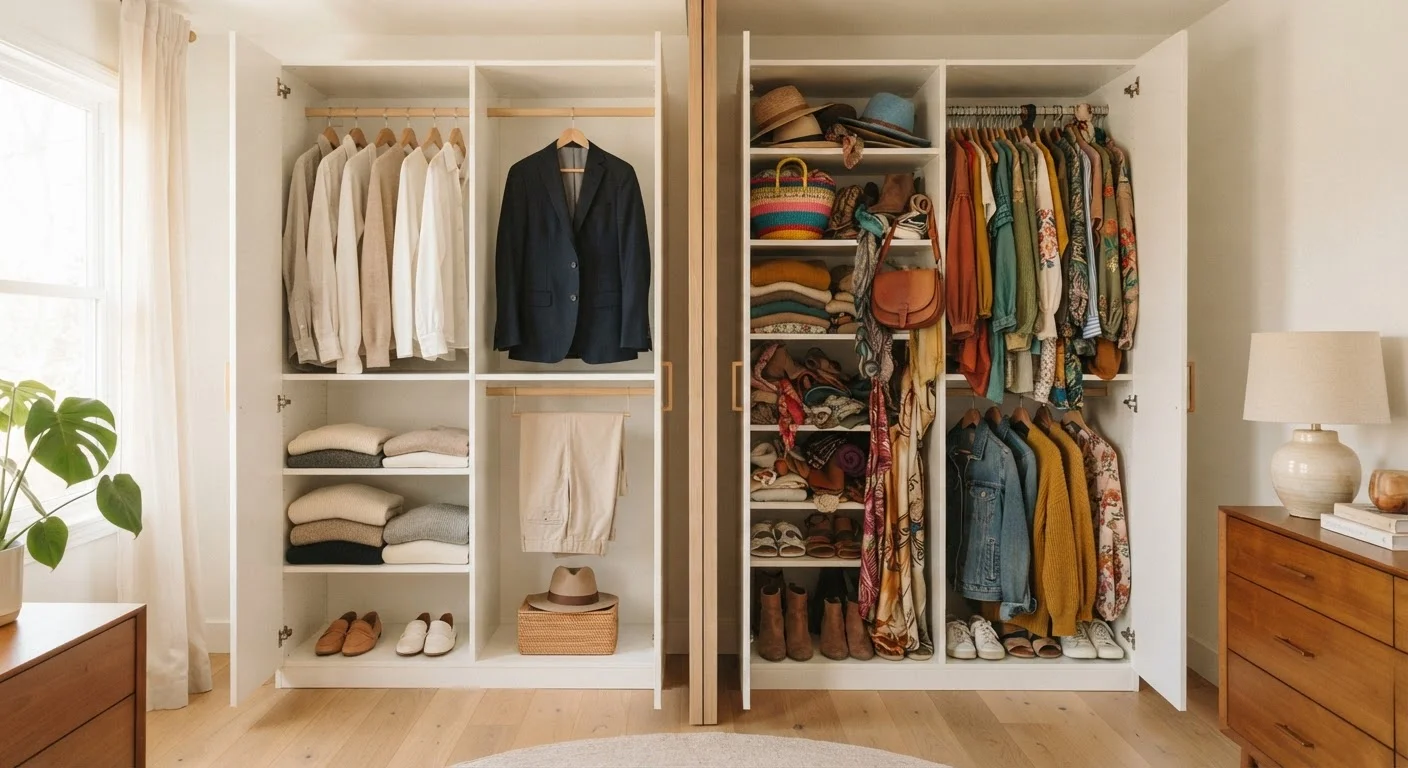
Two Very Different Closet Philosophies
When it comes to building a wardrobe, two broad schools of thought dominate the conversation. The capsule wardrobe asks you to pare down to a tight, curated collection of pieces — typically 30 to 50 items — that mix and match seamlessly. The full wardrobe embraces accumulation: more options, more variety, more room to dress for every mood and moment.
Neither is a trend. Both reflect genuine values about how clothing fits into daily life. Before deciding which camp you belong in, it helps to understand what each approach actually demands of you — not just in closet space, but in time, spending habits, and how you use clothes to express who you are. For a deeper look at the capsule concept specifically, see The Capsule Wardrobe Explained.
| Criterion | Capsule Wardrobe | Full Wardrobe |
|---|---|---|
| Number of items | Typically 30–50 pieces | 60+ pieces, often much more |
| Decision fatigue | Low — pieces mix easily | Higher — more choices daily |
| Upfront cost per piece | Often higher quality, higher price | Varies widely across price points |
| Seasonal flexibility | Requires careful planning | More naturally accommodating |
| Storage requirements | Minimal — suits small spaces | Significant — needs more room |
| Creative expression | Limited by design | High — supports experimentation |
| Best for lifestyle type | Consistent, routine-driven life | Varied, multi-context lifestyle |
The Real Costs (and Savings) of Each Approach
A common assumption is that fewer clothes automatically means spending less. That's not always true. Capsule wardrobes often rely on higher-quality, more durable pieces that cost significantly more per item — the logic being that you wear each one far more often, so the cost-per-wear evens out. A full wardrobe, by contrast, might include many lower-cost items, but the sheer volume can quietly add up.
What actually drives clothing costs isn't the philosophy you follow — it's buying intentionally versus reactively. If you're curious how wardrobe spending fits into a broader financial picture, Budgeting Basics is a practical starting point for tracking and managing those decisions.
~$1,800
Average annual American clothing spend
According to the U.S. Bureau of Labor Statistics Consumer Expenditure Survey, American households spend roughly this amount on apparel and services annually.
20%
Clothes worn 80% of the time
A commonly cited wardrobe behavior principle suggests most people regularly wear only about 20% of what they own, regardless of closet size.
Worth noting: a bloated full wardrobe and a poorly chosen capsule can both leave you feeling like you have nothing to wear. Why a Bigger Closet Doesn't Always Mean More to Wear unpacks the wardrobe traps that make this frustratingly common.
How Each Approach Fits Different Lifestyles
Your wardrobe isn't living in a vacuum — it's serving your actual life. A capsule wardrobe tends to work exceptionally well for people with relatively consistent routines: a steady work environment, predictable social calendar, and a clear personal aesthetic. The simplicity becomes a genuine asset when you don't need to dress for wildly different contexts on a weekly basis.
A full wardrobe, on the other hand, is often not excess — it's necessity. If your week includes business meetings, weekend hikes, formal dinners, and casual errands, a capsule of 35 pieces may genuinely fall short. Trying to make one set of clothes stretch across radically different dress codes creates constant compromise.
Seasonality is another factor worth considering. Dressing Well Across Seasons explores how to work with what you already own as temperatures shift — a skill that applies whether your closet is compact or capacious.
The Hybrid Approach Is Valid
Many style-conscious people maintain a capsule core for everyday dressing while keeping a separate, fuller selection for specific needs — workwear, formal occasions, or athletic wear. This hybrid model lets you enjoy the clarity of a curated closet without forcing artificial constraints on genuinely diverse lifestyle demands. There's no rule that says you must choose one philosophy absolutely.
Finding Your Own Version of the Right Wardrobe
For most people, the honest answer is somewhere in the middle. You might maintain a tight core of versatile everyday pieces — the wardrobe staples that earn their keep across many occasions — while keeping a fuller selection for specific contexts like workwear, formalwear, or seasonal dressing.
Before making any sweeping changes to your closet, a structured evaluation of what you actually wear is genuinely useful. A wardrobe audit can reveal patterns — the items you reach for constantly, and the ones that haven't moved in a year — that make the capsule-vs.-full question much easier to answer for your specific life.
Style is ultimately about self-expression, not adherence to a system. The approach that helps you feel confident, prepared, and like yourself most consistently is the one worth building on.