
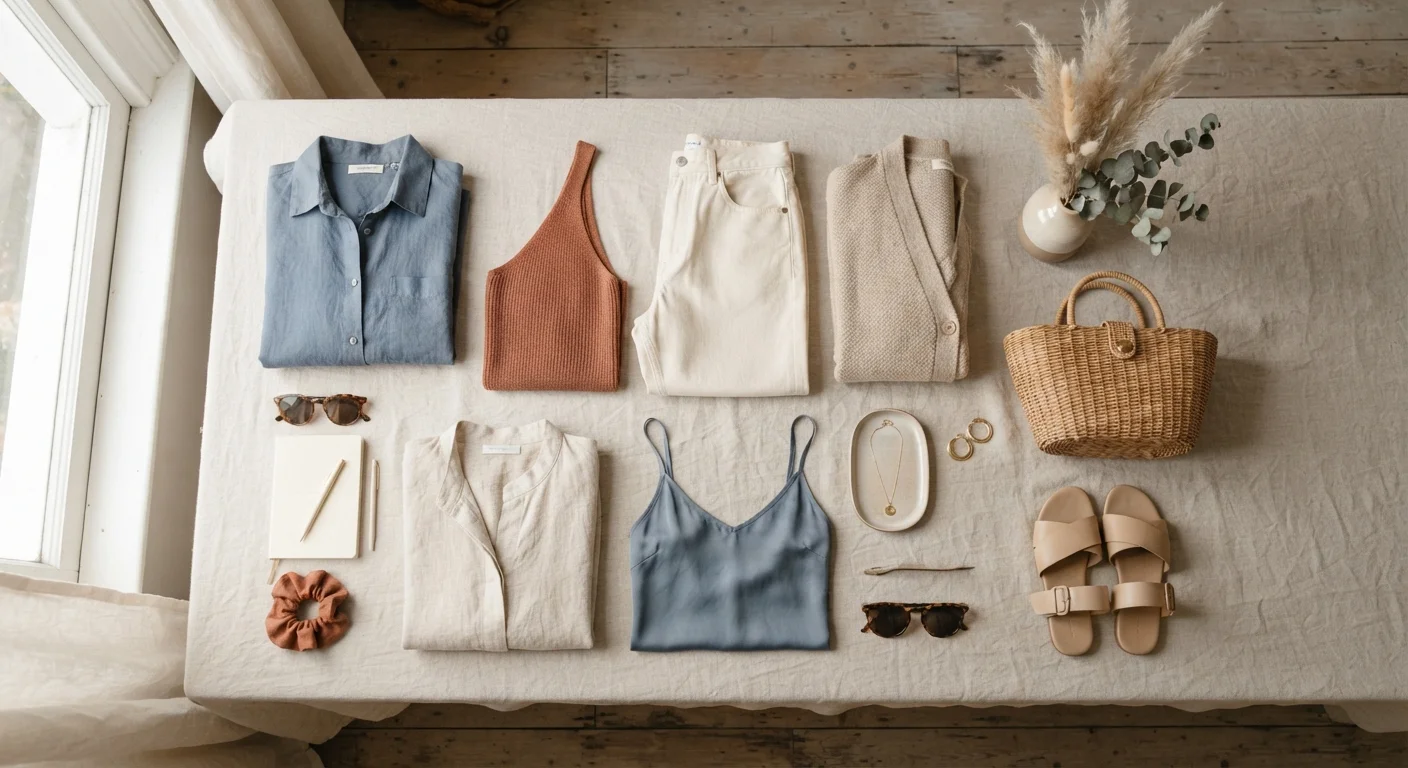
Why a Personal Palette Changes Everything
Getting dressed shouldn't feel like a puzzle — but for many people, it does. The culprit is rarely a shortage of clothes; it's an absence of a color system. When your wardrobe is a collection of individual impulse buys rather than a cohesive set of pieces, coordination becomes work.
A personal color palette solves this by creating a shared visual language across everything you own. When your neutrals, accents, and statement pieces all belong to the same family of hues, any combination feels intentional. That's not magic — it's structure. And structure, counterintuitively, is what gives you the freedom to get creative with how you dress.
Color is also deeply personal. It communicates mood, references culture, and signals identity — often before you've said a word. Building a palette that's genuinely yours, rather than borrowed from a trend cycle, is an act of self-expression. If you want to explore what that means more broadly, our end-to-end guide to building a personal style covers the full picture.
Full-length mirror
Lets you evaluate how colors read against your complexion and overall look from head to toe.
Fabric swatches or scarves in various hues
Used to test colors near your face without committing to a purchase.
Natural light source (window or outdoor space)
Provides accurate color rendering when assessing how shades interact with your skin tone.
Notebook or phone notes app
Records the colors that consistently generate positive reactions so you can reference them while shopping.
Color wheel reference (physical or app-based)
Helps visualize how colors relate to one another — complementary, analogous, or neutral — for better outfit building.
How to Build Your Palette: Step by Step
The following steps guide you through identifying your best colors, choosing your anchors and accents, and testing that your palette actually functions as a wardrobe system — not just a mood board. Before you begin, make sure you have what you need.
What you will need
Test Colors in Natural Light
Store lighting is notoriously misleading. Before committing to a new piece, step near a window or outside to see how the color interacts with your complexion in real daylight. What reads as warm coral indoors may shift significantly in natural light.
Identify Your Skin's Undertone
Undertone — the subtle hue beneath your skin's surface — is one of the most reliable guides to which colors will make you look vibrant versus washed out. The three primary undertones are warm (yellow, peachy, golden), cool (pink, red, bluish), and neutral (a mix of both).
A simple at-home test: look at the veins on your inner wrist in natural light. Greenish veins typically signal warm undertones; bluish-purple veins suggest cool undertones; a mix of both indicates neutral. Another method is noticing whether gold or silver jewelry tends to complement your complexion more naturally.
Pull Your Most-Worn Pieces and Spot Patterns
Lay out every item you've worn in the last month. You'll almost certainly notice a color story already emerging — most people gravitate toward a handful of shades instinctively. These unconscious choices are meaningful data.
Group pieces by color family. Notice which clusters are largest, and pay attention to how you feel wearing each group. Items you always feel good in are early candidates for your core palette.
Choose 2–3 Neutral Anchors
Neutrals are the backbone of a functional palette. They're the colors that work with nearly everything else you own, reducing the mental load of getting dressed. Common neutrals include white, cream, black, navy, grey, camel, and olive — though what reads as 'neutral' for your palette depends on your undertone.
Warm undertones often find camel, warm white, and olive more wearable than stark black or cool grey. Cool undertones typically gravitate toward true navy, charcoal, and bright white. Choose neutrals that feel genuinely easy rather than defaulting to what seems conventional. For a deeper look at this question, see our exploration of neutral wardrobes.
Select 2–3 Accent Colors That Express Your Identity
Accent colors are where personality enters. These are the shades that light you up — whether that's a rust orange, a dusty sage, a deep burgundy, or a clear cobalt blue. They don't need to be bold; a muted rose or soft teal can serve just as well as a saturated statement color.
The goal is that your accents complement your neutrals and each other. An easy test: hold two accent candidates side by side. If they create a pleasing combination without competing, they likely belong in the same palette. If your style feels disconnected from who you are at a deeper level, this guide on rebuilding alignment between identity and style is worth exploring alongside this exercise.
Test Your Palette for Mix-and-Match Versatility
Lay your chosen neutrals and accents together physically or sketch them out. Then count how many outfit combinations they produce. A well-functioning palette of five colors should generate at least a dozen distinct outfit combinations when you factor in tops, bottoms, and layers.
If certain colors don't play well with others in the group, set them aside. Versatility is the metric that separates a true wardrobe palette from a collection of individual favorites. For help building reliable outfit combinations from your palette, see the outfit formula approach.
Refine Over Time, Not All at Once
Your palette is a living document. As you wear outfits intentionally built around your chosen colors, you'll learn quickly which choices hold up and which feel off. Give yourself a few weeks of real-world testing before swapping anything out.
When shopping for new pieces, reference your palette before purchasing. Ask: does this fit within my neutrals or accents? Does it play well with at least three things I already own? Applying this filter consistently is what transforms a palette from a one-time exercise into a long-term wardrobe strategy. For a broader view of how color fits into your overall look, these principles behind outfits that look put-together offer excellent context.
Your Palette, Your Rules
Color theory offers useful guidelines, but it isn't law. If a color makes you feel alive and confident, that data matters more than any chart. Use the steps below as a framework to experiment, not a rigid prescription.
Avoid Overhauling Your Wardrobe at Once
Building a personal palette is a gradual process. Replacing everything simultaneously is costly and often leads to regret. Refine incrementally, letting your palette inform new purchases over time rather than requiring a full reset.
Once your palette is in place, you'll find that dressing with confidence becomes far more natural — because every choice is grounded in colors you already know work for you.