
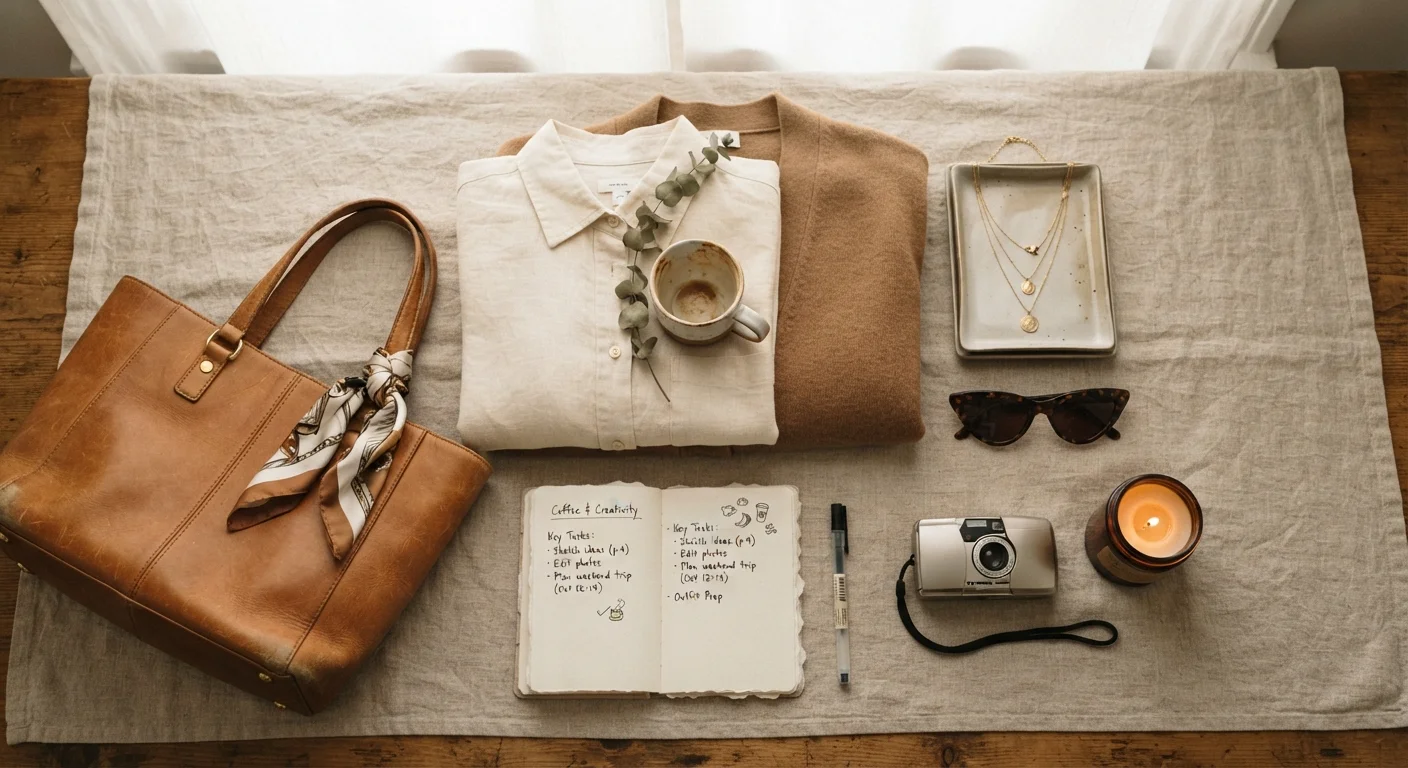
Why Style Feels So Confusing at First
If you've ever stood in front of a full closet and felt like you had nothing to wear — or scrolled through style content and thought, that's cool, but that's not me — you're not doing anything wrong. Style confusion is incredibly common, and it usually isn't about lacking taste. It's about not yet having a framework for understanding your own preferences.
The fashion industry tends to present style as something you either have or you don't, which isn't accurate or helpful. Personal style is actually a skill that gets clearer with practice and attention. It's less about following a formula and more about learning to recognize what genuinely resonates with you — and why.
Personal style
The consistent way a person chooses to present themselves through clothing, accessories, and grooming — shaped by their personality, lifestyle, and preferences rather than trends alone.
Aesthetic
A general visual mood or sensibility that ties a look together — for example, minimalist, maximalist, vintage, or utilitarian.
Mood board
A collection of images, colors, or textures gathered to capture a visual direction or feeling — a useful tool for spotting patterns in what you're drawn to.
Capsule wardrobe
A small, curated set of versatile clothing pieces that work well together, designed to reduce decision fatigue and reflect a clear personal aesthetic.
Style range
The natural variation in how a person dresses across different contexts — for example, relaxed weekend wear versus polished workday attire — within an overall consistent aesthetic.
One important reframe: discovering your style isn't about finding the "right" look for your body type, budget, or life stage. It's about building a visual language that expresses who you are. That language will be unique to you, and it takes a little time to develop.
Start With What You Already Know You Like
The best raw material for building your personal style is already available to you: your existing reactions to the world around you. Think about the last time you saw someone's outfit — in person, on screen, anywhere — and thought I love that. What specifically caught your attention? The color? The silhouette? The way casual and polished elements were mixed together?
Try this exercise: open your camera roll or flip through a magazine and pull any image where the clothing catches your eye. Don't filter by what seems realistic or affordable — just respond instinctively. After you collect 10–15 images, look at them together. You'll likely notice patterns: recurring color families, recurring proportions, a consistent mood (minimalist, bold, relaxed, structured).
Let Your Gut React First
When collecting inspiration images, try not to analyze too early. Your initial gut reaction — a quick yes or no — is often more revealing than a reasoned judgment. Collect what draws you instinctively, then look for patterns afterward. That sequence tends to surface your genuine preferences rather than your ideas about what you should like.
Your wardrobe history is also useful data. Think about the pieces you've owned that you reached for again and again versus the ones that hung untouched. What was different about them? Those patterns reveal your real preferences, not just your aspirational ones.
Gathering Inspiration Without Getting Lost
Inspiration is a valuable tool when it's used intentionally. The challenge with platforms like Pinterest and Instagram is that they're designed to show you more of what you engage with — which can quickly create an overwhelming, slightly generic feed rather than a genuine reflection of your taste.
For a more grounded approach, explore style inspiration sources beyond social media. Films, books, art, music, and even places you love can all offer aesthetic cues that feel more authentically connected to who you are than a trending hashtag.
When gathering inspiration, try asking yourself: Does this feel like me, or does it feel like someone I admire? Both are valid starting points, but they're different. Borrowing from styles you admire is a great way to experiment, as long as you're also paying attention to what actually makes you feel comfortable and confident when you put it on.
Admiring a Style Isn't the Same as Owning It
It's common to love a look on someone else but feel uncomfortable or unlike yourself when you try it on. This doesn't mean your taste is off — it often means that style belongs to a different lifestyle, body type, or personality than yours. Noticing that gap is actually useful information: it tells you what to keep borrowing from (the color, the proportion, the mood) and what to leave behind.
Translating Inspiration Into Actual Choices
A mood board full of beautiful images doesn't automatically translate into a functional wardrobe. The translation step is where many people get stuck — and it's also where it gets interesting.
Start with one specific quality you've identified from your inspiration gathering. Say you keep noticing you're drawn to earthy tones. The move isn't to go out and replace everything; it's to look at what you already own through that lens and see if anything fits. Then, when you're choosing something new, you have a clear filter to apply.
This approach keeps things manageable and avoids the trap of buying trendy pieces that don't fit your emerging style identity. For more on building a functional wardrobe once you've got a clearer sense of your aesthetic, our wardrobe-building guide is a practical next step.
If your daily context is part of the puzzle — like figuring out how your personal style fits into a professional setting — getting dressed for work without a clear dress code offers grounded, judgment-free guidance.
Building From Here
Finding your style isn't a one-time project — it's an ongoing relationship with how you present yourself to the world. As your life shifts, your style will likely shift with it, and that's not a sign that you got it wrong the first time. It's a sign that you're paying attention.
For a broader roadmap of what comes next once you've got your footing, our end-to-end personal style guide covers the full arc from aesthetic clarity to wardrobe building. And if you're curious about how style evolves naturally over time, developing personal style over time is worth a read.
Style Inspiration Sources That Go Beyond Social Media
Expand your aesthetic vocabulary by drawing from film, art, and everyday life — not just trending feeds. A useful read for anyone building an authentic style foundation.
Personal Style from the Ground Up
A comprehensive end-to-end guide covering aesthetic clarity, wardrobe building, and creating a look that genuinely reflects who you are — the logical next step after finding your style direction.
The most important thing is to stay curious and low-pressure about the process. Style discovery works best when it feels like exploration rather than homework.