
Why Your Feed Isn't the Whole Picture
Social media platforms have made style discovery faster and more visual than ever — but they've also made it narrower. Algorithms surface content based on what you've already engaged with, which means your feed tends to confirm and amplify your existing tastes rather than genuinely expand them. The result? A lot of people end up dressing for an aesthetic that feels borrowed rather than built.
Personal style is less about mirroring what's trending and more about understanding the visual language that resonates with you. That process gets richer when you pull inspiration from a wider, less curated range of sources. Here are some of the most rewarding places to look.
Art Museums and Gallery Exhibitions
Standing in front of a painting, sculpture, or textile installation engages your visual imagination in a way that scrolling simply doesn't. Notice the color palettes, fabric textures, and silhouettes that appear in portraits across different eras. The way a 17th-century Dutch painter rendered fabric folds, or how a modernist textile artist used geometric repetition, can translate directly into how you think about pattern and proportion in your own wardrobe.
Many museum permanent collections are free or low cost, and rotating exhibitions often cover fashion and design explicitly — costume galleries, in particular, are underused goldmines of historical style context.
A single museum visit can surface color and silhouette instincts no algorithm would ever surface for you.
Film and Television from Different Eras
Costume design is one of the most intentional forms of style storytelling that exists. Watching films from the 1940s through the 1980s — or exploring international cinema — exposes you to how clothing was used to convey character, class, and culture before fast fashion flattened everything. Pay attention not just to what characters wear, but how they wear it: the ease, the proportion, the context.
You don't need to dress like a period piece — you're looking for visual cues about what resonates emotionally with you. Those cues are honest signals about your aesthetic.
Costume design is intentional style storytelling — watching closely teaches you what silhouettes and palettes genuinely move you.
Architecture and Interior Design
The visual principles that make a building or room feel cohesive — balance, contrast, texture layering, a clear focal point — apply directly to how you put an outfit together. Someone drawn to minimalist Scandinavian interiors often finds they're also drawn to clean lines, neutral palettes, and quality materials in clothing. Someone energized by ornate Victorian rooms may gravitate toward layering and rich color.
Architecture and interior design magazines, books, and even neighborhood walks can surface aesthetic preferences you didn't know you had. This cross-disciplinary approach to inspiration tends to produce more original personal style than drawing solely from fashion sources.
The visual logic of spaces you love often mirrors the aesthetic logic of clothing that feels right on you.
Literature and Poetry
Descriptive writing activates visual imagination differently than images do — it asks you to fill in the picture yourself. Pay attention to how authors describe clothing, texture, color, and physical presence. Classic novels, contemporary literary fiction, and even poetry can surface imagery and emotional registers that help you articulate what your style is actually trying to communicate.
Some readers find it useful to keep a small notebook of passages that create vivid visual impressions. Over time, patterns emerge — and those patterns often point toward a coherent personal aesthetic.
Descriptive writing forces you to construct your own visual world — and what you picture says a lot about your aesthetic instincts.
People-Watching in Real Life
Busy public spaces — train stations, farmers markets, university campuses, cultural festivals — are endlessly instructive. Real people dress for real weather, real body proportions, and real lives, which makes what you observe far more practical than editorial photography. Notice what draws your eye: is it a specific color combination, an unexpected layering choice, or the way someone's proportion creates a particular silhouette?
This form of observation also helps calibrate the gap between inspiration and wearability — a distinction that matters a lot when you're deciding between a signature style and trend-driven dressing.
Real people dressed for real life offer the most wearable, body-diverse style reference you'll ever find.
Your Own Past Photographs
Scrolling back through years of your own photos — even candid snapshots — reveals patterns in what you wore when you felt most like yourself. You may notice recurring colors, a preference for a certain silhouette, or that you were consistently happiest in specific types of outfits. This self-archiving approach removes the external noise entirely and grounds style development in personal history rather than external trend cycles.
It's also a useful tool for identifying the gap between what you own and what you actually reach for — foundational insight when building or refining a wardrobe. If you're exploring classic personal style archetypes, your photo history can help you quickly locate where you naturally land.
Your own photo archive is a bias-free record of what you actually love wearing — no algorithm required.
Take What You Find and Make It Yours
The goal of gathering inspiration from unexpected places isn't to copy what you see — it's to notice what consistently catches your attention and use that as data about your own sensibility. Keep a running mood board (physical or digital) of images, colors, textures, and silhouettes that genuinely excite you, regardless of where they came from.
Build a Physical Mood Board
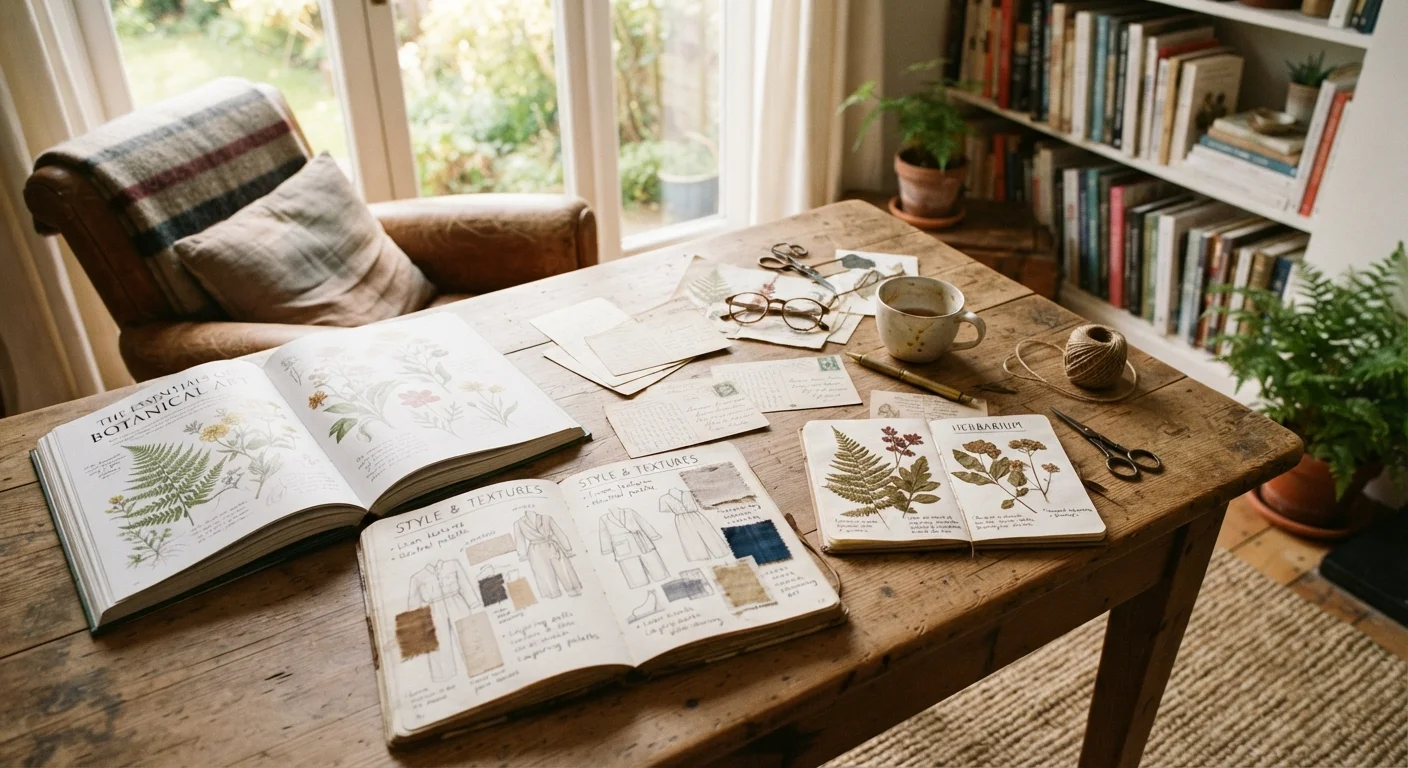
Tearing pages from magazines, printing images, or collecting postcards and pinning them to a corkboard produces a different kind of visual thinking than a digital Pinterest board. Physical mood boards let you see patterns in color, texture, and shape across diverse sources at once — and they don't disappear when an algorithm changes. Try building one over a month using only non-digital sources and see what emerges.
If you're still figuring out the shape of your aesthetic, our beginner's guide to finding your style is a solid starting point. And once you have a clearer sense of your preferences, the end-to-end guide to building a look you love can help you translate inspiration into an actual wardrobe.
Style evolves — and that's expected. What you're drawn to today may shift as your life and priorities change. The richer your inspiration sources, the more naturally that evolution tends to unfold. See how personal style develops over time for a closer look at that process.