
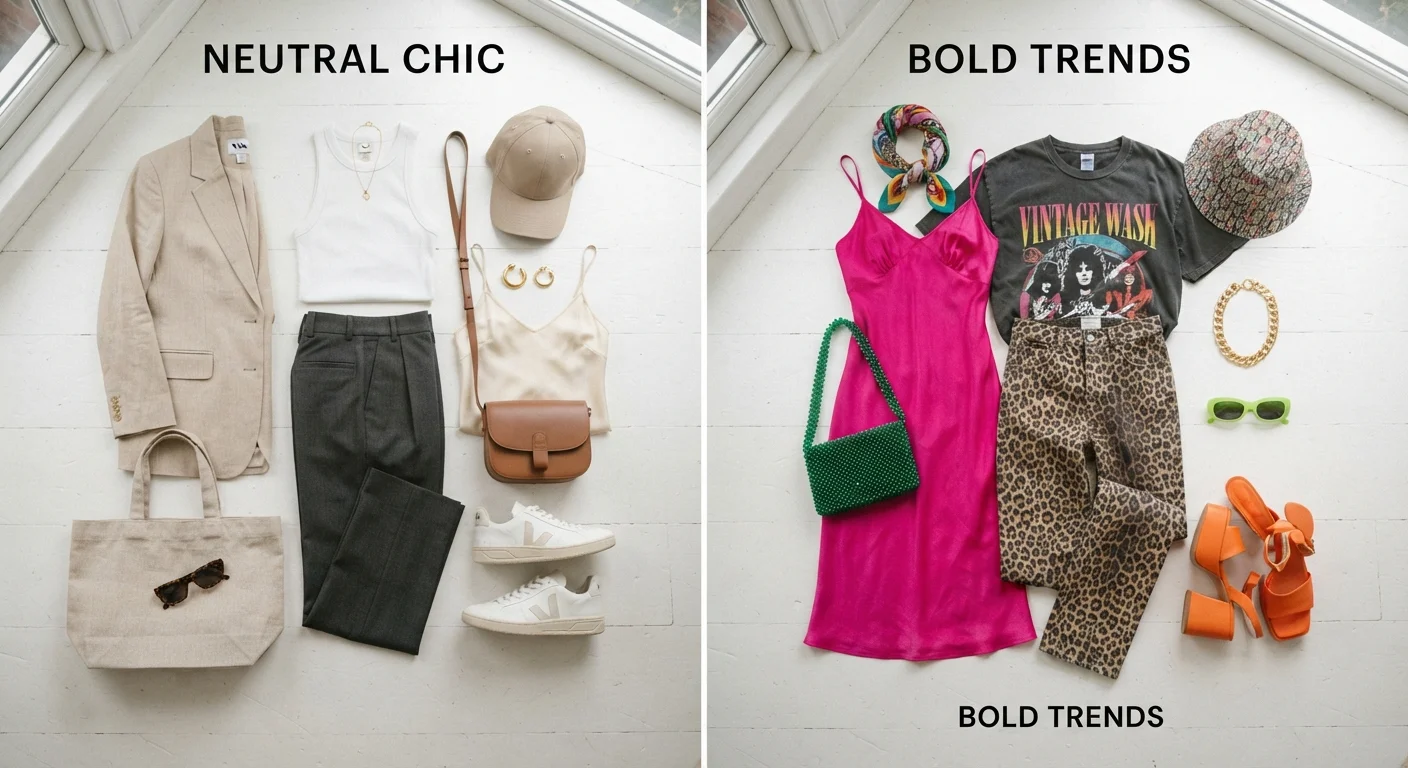
Two Distinct Philosophies, One Closet
Every wardrobe reflects a set of choices — whether they were made consciously or not. At the heart of those choices is usually a tension between two broad philosophies: developing a signature style that stays consistent across seasons, or embracing a trend-driven approach that evolves with what's culturally current.
Neither is a personality flaw. Both are legitimate ways to engage with clothing. But they come with meaningfully different outcomes — financially, practically, and emotionally. Understanding those trade-offs is what makes the choice feel intentional rather than accidental. For a deeper look at what style identity actually involves, see what personal style actually means.
The Case for Signature Style
A signature style is a recognizable, repeatable aesthetic — the kind where people can describe how you dress in a sentence or two. Think: always in tailored neutrals, or reliably in vintage-inspired prints. It's not about wearing a uniform; it's about having a clear visual point of view.
Reduces daily decision fatigue significantly
When your aesthetic is defined, getting dressed becomes a system rather than a puzzle. Research on decision fatigue suggests that repeated low-stakes choices deplete the same mental resources as high-stakes ones.
Encourages more intentional, less impulsive spending
Knowing your style parameters makes it easier to evaluate whether a new piece actually earns its place in your wardrobe, reducing the likelihood of regret purchases.
Builds a recognizable personal presence
Consistency in how you dress contributes to how others perceive and remember you — professionally and socially — in ways that a constantly shifting wardrobe typically doesn't.
Pieces work together across more occasions
A cohesive aesthetic means individual items are more versatile by design, increasing the practical value of everything you own.
The practical upside is real. When you know your aesthetic, getting dressed takes less mental effort, shopping becomes more deliberate, and pieces tend to work together rather than competing. There's also a financial argument: a cohesive wardrobe built around durable staples generally requires fewer replacements than one constantly chasing seasonal trends. The end-to-end guide to building a look you love explores how to put this kind of wardrobe together systematically.
That said, signature style isn't static — it can evolve naturally over time without losing its core identity. How personal style shifts across life stages is worth understanding if you're worried that committing to a look means getting stuck in one.
The Case for Trend-Driven Dressing
Trend-following gets a lot of criticism, but it also offers things signature style genuinely doesn't. Engaging with what's current can be a form of cultural participation — a way of connecting with a moment, a community, or a creative conversation happening right now in fashion.
Can feel creatively repetitive over time
Locking into a single aesthetic sometimes produces boredom, especially for people who experience clothing as a form of play or creative expression.
May disconnect you from cultural moments
Fashion functions partly as a shared cultural language. Opting out of trends entirely can mean missing conversations and references that feel relevant to your community or industry.
Ongoing spending pressure from rapid trend cycles
Trend-driven wardrobes require consistent financial investment to stay current, and fast-fashion cycles have shortened the useful lifespan of many trend pieces considerably.
Trend pieces often lack long-term versatility
Items purchased specifically to be on-trend frequently have narrower styling options and a shorter window of feeling current, which limits cost-per-wear value.
Trends also push people to experiment with silhouettes, colors, and textures they might never try on their own. That experimentation isn't always wasteful; sometimes it reveals something new about what actually works on your body and in your life. The key is approaching trends with some selectivity rather than wholesale adoption of every cycle.
The financial picture is worth watching, though. Trend-led wardrobes can generate ongoing spending pressure, especially when items feel dated quickly. Connecting style decisions to a broader sense of saving and spending priorities helps keep that pressure in check.
~60%
Of clothing items rarely or never worn after purchase
Industry research and sustainability studies consistently estimate that a significant share of wardrobe purchases go largely unworn, a pattern more common in trend-driven buying.
52 micro-seasons
Trend cycles per year in fast fashion
Some fast-fashion analysts have noted the industry now operates on near-weekly trend rotations, compared to the traditional two-season calendar, accelerating spending pressure.
Finding the Right Balance for You
In practice, most people don't live entirely in one camp. The more useful question isn't which approach is better but how much of each serves your actual life. A wardrobe anchored in a signature aesthetic, with selective room for trend pieces, tends to perform well across different occasions and contexts.
Occasion dressing is one place where this balance gets tested most visibly. How occasion and identity can coexist in a wardrobe is a useful read for anyone who feels like their everyday look and their event wardrobe are completely disconnected.
You Don't Have to Choose Absolutely
Most style frameworks aren't all-or-nothing. A practical middle path is building a core wardrobe around your signature aesthetic — pieces you know work — and allocating a smaller, defined portion of your clothing budget for seasonal or trend-driven experimentation. This preserves creative freedom without requiring a complete wardrobe overhaul every few months. The goal is intentionality, not rigidity.
Looking beyond the usual scroll for inspiration also helps. Style inspiration sources beyond social media can surface references that feel more genuinely you — and less like what the algorithm decided everyone should want this week.