
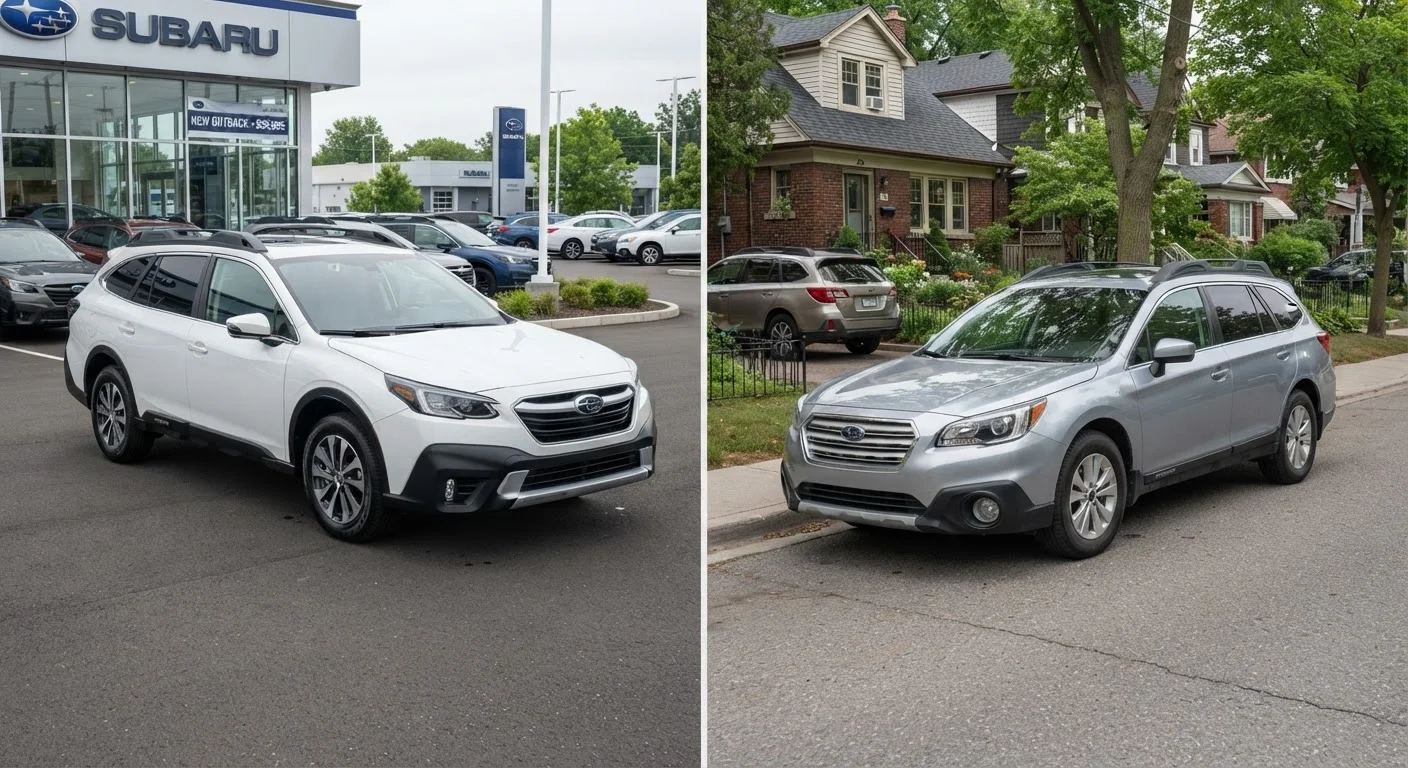
The Price Gap Is Real - But It's More Complicated Than It Looks
The sticker price on a new vehicle is almost always higher than on a comparable used model, sometimes by tens of thousands of dollars. But that gap narrows - or widens in unexpected ways - once you factor in financing costs, insurance premiums, and the rate at which each vehicle loses value over time.
Depreciation is the largest single cost most car owners never see on a bill. New vehicles typically lose a significant portion of their value in the first one to three years of ownership. Buying used means a previous owner has already absorbed that steepest part of the depreciation curve. For a deeper look at how those numbers actually work, see how depreciation curves affect resale value.
Used vehicles, meanwhile, often carry higher interest rates on auto loans. Lenders view used cars as higher-risk collateral, so if your financing rate on a used vehicle is several percentage points above what you'd get on a new one, the monthly payment gap can shrink considerably - particularly on longer loan terms.
| New Car | Used Car | |
|---|---|---|
| Upfront Purchase Price | Higher sticker price | Lower sticker price typically |
| Depreciation Impact | Steepest in years 1-3 | Prior owner absorbed early drop |
| Financing Rates | Generally lower APR available | Typically higher APR from lenders |
| Warranty Coverage | Full factory warranty included | Limited or no remaining warranty |
| Maintenance Predictability | High - covered under warranty | Variable - depends on vehicle history |
| Insurance Premiums | Higher due to replacement cost | Generally lower on older models |
| Safety Technology | Latest driver-assist features standard | May lack newer active-safety systems |
Reliability, Warranty, and the Unknown Repair Factor
One of the most cited arguments for buying new is the manufacturer's warranty - typically covering the powertrain for five years or 60,000 miles, with a bumper-to-bumper component for three years or 36,000 miles, though terms vary by manufacturer. That coverage translates directly into cost predictability: if something breaks, the repair bill goes to the automaker, not you.
Used vehicles sold as certified pre-owned (CPO) through franchise dealerships often carry a limited warranty extension, but coverage scope and duration vary widely. If you're considering a used vehicle with no remaining factory warranty, understanding what an aftermarket plan actually covers is worth your time. Our companion piece on extended warranties for cars walks through the exclusions and fine print to scrutinize.
Modern vehicles - new and recent-vintage used alike - are generally more reliable than cars from earlier decades. A well-maintained three- to five-year-old vehicle from a reliability-strong manufacturer can be a very sound choice. The key variables are maintenance history, mileage relative to age, and whether any prior incidents appear on the vehicle history report.
Always Get a Pre-Purchase Inspection
For any used vehicle not covered by a remaining factory warranty, paying an independent, ASE-certified mechanic to inspect the car before you buy is one of the most cost-effective steps you can take. A thorough inspection can surface hidden issues - rust, transmission wear, deferred maintenance - that a vehicle history report alone won't reveal. Budget roughly $100-$200 for this step; it can prevent far larger surprises down the road.
How Financing and Insurance Costs Shape the Real Monthly Number
It's tempting to compare new and used by monthly payment alone, but that framing leaves out too much. Insurance premiums on new vehicles are typically higher than on older models because the replacement cost is greater - and if you're financing, your lender will likely require comprehensive and collision coverage. For new-car buyers, gap insurance (which covers the difference between what you owe and what the car is worth if it's totaled) is also worth considering, since depreciation happens fast.
Understanding how insurers value your vehicle - especially the distinction between actual cash value and replacement cost - matters more than most buyers realize. See how ACV and replacement cost differ on a claim for context on what that means if you ever file a total-loss claim.
If you're weighing whether to buy outright versus finance, or thinking about leasing as a third path, buying vs. leasing trade-offs may help clarify which structure fits your situation. For a fuller view of what car ownership actually costs annually, the full cost of owning a car breaks down insurance, fuel, maintenance, and depreciation in one place.
~20%
Average first-year depreciation on new vehicles
Industry analysts broadly estimate new cars lose roughly 15-20% of value within the first year, with steeper cumulative drops by year three.
1-2%+
Typical APR gap between new and used auto loans
According to Federal Reserve consumer credit data, interest rates on used-vehicle loans have historically run higher than new-vehicle rates from the same lenders.
Making the Call: Which Option Fits Your Situation
A new car tends to make sense when you plan to keep the vehicle for many years, value a predictable repair budget, or have strong enough credit to qualify for low-rate manufacturer financing. It's also worth considering if you prioritize the latest active-safety features - automatic emergency braking, blind-spot monitoring, and lane-keep assist - which are now standard on most new models but weren't universal even five years ago.
A used vehicle tends to make more sense when keeping upfront costs and monthly payments low is a priority, when you're comfortable conducting or paying for a pre-purchase inspection, or when you're buying a secondary vehicle where coverage flexibility matters less. What to inspect when buying secondhand offers a useful lens on due diligence, even though it covers goods more broadly.
First-time car owners in particular face this decision early. A practical walkthrough for first-time owners covers the registration, insurance, and maintenance steps that apply regardless of which route you choose. And before signing anything, it's worth mapping your overall budget and understanding how an auto loan fits into your broader debt picture.
This article is for general informational and educational purposes only. It does not constitute financial, legal, or professional automotive advice. Consult a licensed financial adviser and qualified mechanic or automotive professional before making significant vehicle purchase or financing decisions.