
Why You Don't Need a Diet Label to Eat Well
Named diets — keto, paleo, Mediterranean, whole30 — get enormous attention, but research consistently shows that the principles behind healthy eating matter far more than the label attached to them. Most well-regarded dietary patterns share a common core: plenty of vegetables, minimally processed whole foods, adequate protein, and limited added sugar.
Rather than committing to a rigid framework, understanding what a nutritionally complete meal looks like gives you the flexibility to eat well in any situation — at home, at a restaurant, or on a busy weeknight. For context on how global eating traditions reinforce these same themes, see what eating patterns from around the world reveal about long-term health.
This article provides general nutrition education and is not a substitute for personalized advice from a registered dietitian or healthcare provider.
The Core Proportions of a Balanced Plate
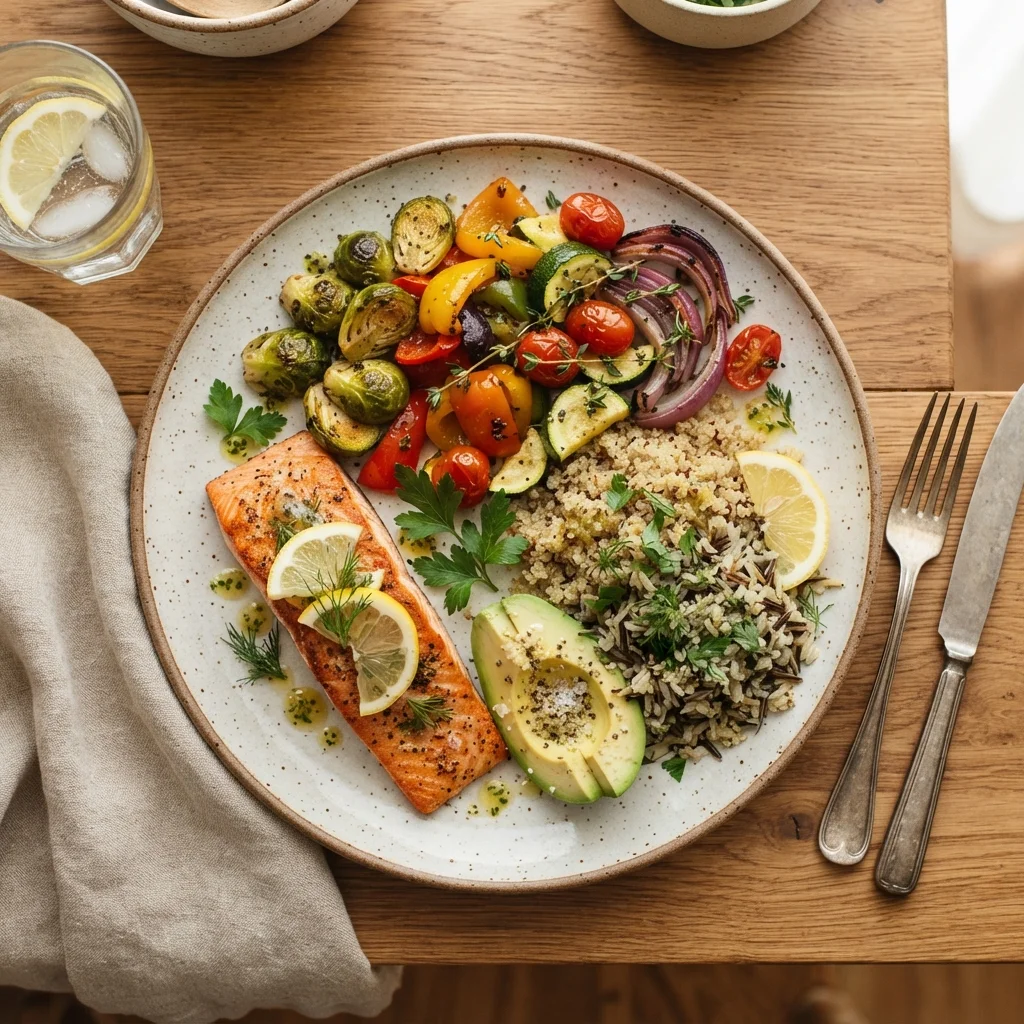
A practical starting point used by many nutrition educators is the idea of dividing a standard dinner plate into rough sections by food type:
- Half the plate: vegetables and fruit. Prioritize non-starchy vegetables — leafy greens, broccoli, bell peppers, carrots — as the foundation. Fruit can fill a smaller portion of this half.
- One quarter: whole grains or starchy vegetables. Brown rice, quinoa, whole-wheat pasta, potatoes, and legumes all qualify. These provide sustained energy and dietary fiber.
- One quarter: lean or plant-based protein. This includes poultry, fish, eggs, beans, lentils, or tofu. For a detailed comparison of protein sources, explore protein sources across dietary patterns.
A small amount of healthy fat — olive oil, avocado, nuts — rounds out the meal and supports fat-soluble vitamin absorption. This structure is adaptable: a stir-fry, grain bowl, or soup can follow the same proportional logic even without being served on a single plate.
90%
Americans not meeting vegetable intake recommendations
According to the U.S. Centers for Disease Control and Prevention, only about 1 in 10 American adults meets federal fruit and vegetable intake guidelines.
57%
of calories from ultra-processed foods in average U.S. diet
Research published in BMJ Open found that ultra-processed foods accounted for more than half of total caloric intake in a nationally representative U.S. dietary sample.
Best Practices for Building Balance Into Everyday Meals
Anchor every meal with a vegetable as the largest component.
Vegetables provide fiber, vitamins, minerals, and antioxidants with relatively few calories. Making them the largest portion by volume ensures you consistently meet micronutrient needs without relying on supplements.
Choose whole grains over refined grains most of the time.
Whole grains retain fiber and nutrients removed during refining. Fiber supports digestive health, slows glucose absorption, and helps regulate appetite.
Include a protein source at every meal, plant or animal.
Protein supports muscle maintenance, immune function, and satiety. Distributing intake across meals rather than concentrating it at dinner is generally more effective for the body's use of amino acids.
Limit highly processed foods rather than eliminating entire food groups.
Ultra-processed foods are often high in added sodium, sugar, and refined fats while low in fiber and micronutrients. Reducing — not necessarily eliminating — them leaves room for flexibility without nutritional sacrifice.
Drink water as your primary beverage.
Sugary drinks add significant calories and added sugar without contributing nutritional value. Many Americans consume a substantial share of their daily calories through beverages, often without noticing.
Pair these habits with a consistent approach to weekly food planning. Reviewing your grocery list through a nutritional lens is one of the most underused tools available — the weekly grocery list audit can help you spot patterns before they become deficiencies.
Quick Ways to Start Today
Sustainable eating improvements rarely come from overhauls. Small, consistent shifts — adding one more vegetable to dinner, swapping a refined grain for a whole one — compound meaningfully over time. The goal is a pattern of eating that works for your actual life, not an idealized version of it.
If you're also working on building a more active lifestyle alongside better nutrition, building a weekly exercise schedule that fits real life offers a similarly flexible, sustainable framework. And if you're curious about reducing animal products without a strict label, plant-based eating for beginners is a practical next step.
Always consult a qualified healthcare professional or registered dietitian before making significant changes to your diet, especially if you have an existing health condition.