
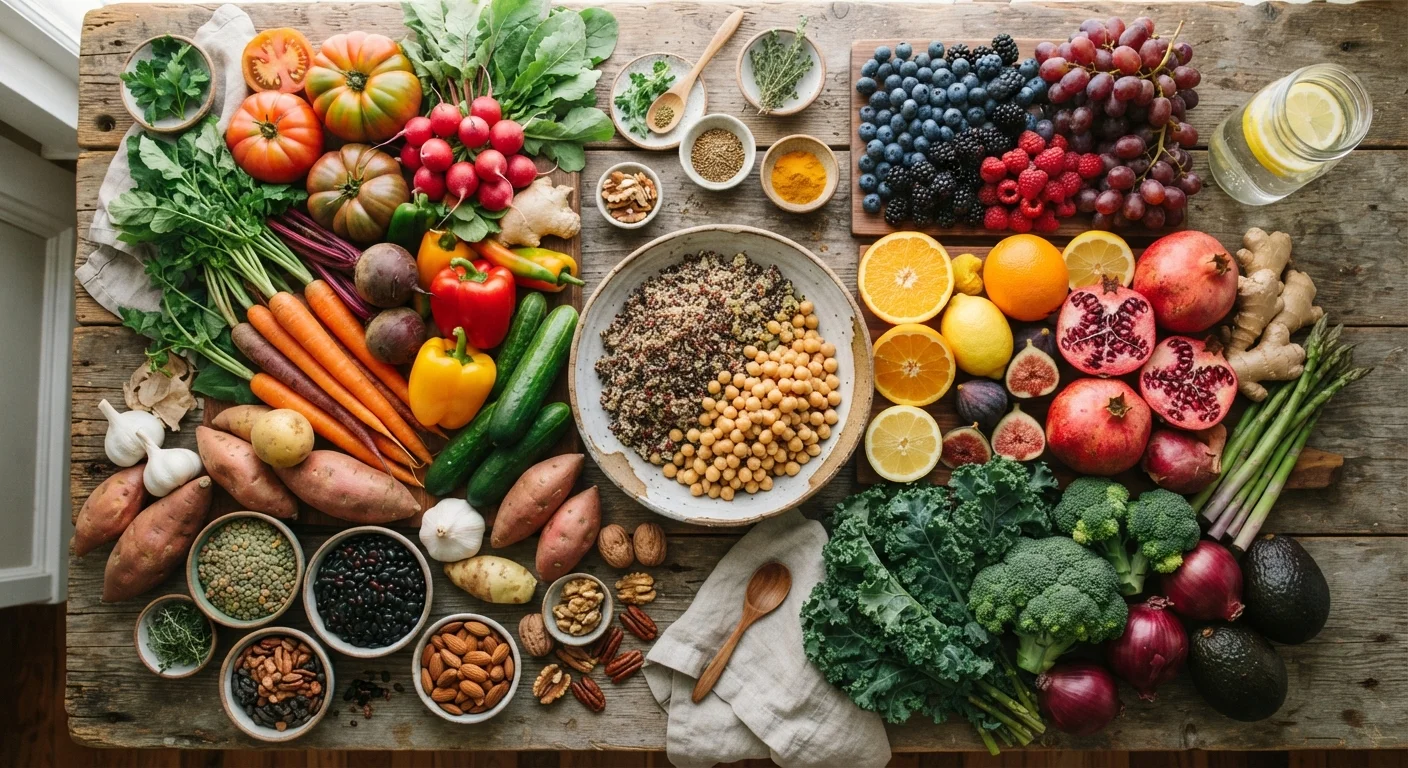
What 'Plant-Based' Actually Means
The term plant-based gets used loosely, and that's actually fine for beginners. At its core, plant-based eating means centering your diet around foods that come from plants — vegetables, fruits, whole grains, legumes, nuts, and seeds — rather than treating them as side dishes to animal proteins.
This is a spectrum, not a binary. Some people eat plant-based 80% of the time and still enjoy fish or eggs occasionally. Others go fully vegan. Neither approach is automatically superior; what matters is the overall pattern of eating, not the label you attach to it.
It's also worth distinguishing plant-based from highly processed plant food. A diet of plant-based frozen meals and packaged snacks may technically tick the box but misses the nutritional point. The evidence supporting plant-forward diets — improved cardiovascular markers, better fiber intake, reduced risk of certain chronic diseases — is largely rooted in whole, minimally processed foods. For a broader look at building meals without following a specific named diet, see Building a Balanced Plate Without Following a Specific Diet.
Whole food
A food that is minimally processed and close to its natural state — think lentils, oats, or broccoli rather than a processed snack made from plant ingredients.
Legumes
The family of plants that includes beans, lentils, chickpeas, and peas. They're a core protein and fiber source in plant-based diets.
Non-heme iron
The form of iron found in plant foods. The body absorbs it less readily than heme iron from meat, but pairing it with vitamin C can meaningfully improve uptake.
Fortified food
A food that has had nutrients added to it during processing — for example, plant milks fortified with calcium or B12 to match levels found in dairy.
ALA (alpha-linolenic acid)
A type of omega-3 fatty acid found in flaxseed, chia seeds, and walnuts. The body can convert it to EPA and DHA, but the conversion rate is generally low.
Key Nutrients to Pay Attention To
One of the most common beginner mistakes is assuming that removing meat automatically makes a diet healthier, without accounting for what's now missing. Several nutrients deserve deliberate attention when plant foods dominate your plate.
- Vitamin B12: Found almost exclusively in animal products. This is the one nutrient that genuinely warrants supplementation for anyone eating primarily plant-based, since deficiency can cause neurological harm over time.
- Iron: Plants contain non-heme iron, which the body absorbs less efficiently than the heme iron in meat. Pairing iron-rich plant foods (lentils, spinach, tofu) with vitamin C sources improves absorption.
- Calcium: Dairy isn't the only source — fortified plant milks, kale, bok choy, and white beans all contribute. Check whether your preferred plant milk is calcium-fortified.
- Omega-3 fatty acids: ALA (found in flaxseed, chia, and walnuts) is plant-based, but converting it to the EPA and DHA your body uses most is inefficient. Algae-based omega-3 supplements offer a direct plant source of DHA and EPA.
- Zinc and iodine: Often overlooked. Iodine in particular can be low without dairy or seafood; iodized salt or seaweed can help, though amounts vary significantly.
For a deeper look at protein specifically, Protein Sources Across Dietary Patterns covers quality and quantity across plant and animal foods in plain, factual terms.
Track your B12 from Day One
Unlike most nutrients, vitamin B12 cannot be reliably obtained from plant foods. If you're moving toward a primarily plant-based diet, discuss B12 supplementation with a healthcare provider early — don't wait until deficiency symptoms appear. This applies even if your transition is gradual.
How to Start Without Overhauling Everything
Most people who successfully shift toward plant-based eating don't do it overnight. They find entry points that fit their existing habits, then build from there.
Practical starting moves:
- Audit your current meals. Identify two or three dinners you already make that happen to be mostly plant-based — pasta with marinara, bean tacos, vegetable stir-fry. These require no change at all.
- Swap one protein per week. Replace ground beef in one meal with lentils, or chicken with chickpeas. The seasoning and technique stay the same; the protein source shifts.
- Stock a plant-based pantry foundation. Dried or canned legumes, whole grains (quinoa, farro, brown rice), canned tomatoes, and frozen vegetables make weeknight plant-based cooking fast and low-effort.
- Don't aim for perfection. A meal that's 70% plants and includes a little cheese is still a significant shift from a traditional American plate. Progress compounds over time.
If you're curious about the cookware that makes plant-forward cooking easiest, Cookware Materials From Cast Iron to Ceramic walks through practical trade-offs across materials.
Common Pitfalls and How to Avoid Them
Even well-intentioned transitions can stall or backfire. Here are the most common stumbling blocks beginners encounter.
Processed ≠ Healthier by Default
A product labeled 'plant-based' is not automatically nutritious. Many packaged plant-based foods are high in sodium, refined starches, and added oils. Read nutrition labels and ingredient lists the same way you would for any other packaged food. Whole food sources of plants deliver far more fiber, micronutrients, and fewer additives.
Relying too heavily on processed substitutes. Plant-based burgers, sausages, and cheeses have a place, but they're often high in sodium and saturated fat. They work best as an occasional bridge, not a dietary foundation.
Eating the same five foods repeatedly. Variety isn't just about avoiding boredom — it's how you cover your nutritional bases. Rotate your grains, try different legumes, and mix up your vegetables across colors and types.
Ignoring hunger signals. Plant foods are often lower in caloric density, which means some people don't eat enough volume, especially early in the transition. If you feel consistently low-energy, the issue may be quantity rather than quality.
Not planning for social situations. Eating out or at others' homes gets easier with a bit of pre-planning: looking at menus in advance, knowing which cuisines (Mexican, Indian, Middle Eastern) naturally offer substantial plant-forward options.
Building a Sustainable Routine
Sustainability is the real goal. A plant-forward diet you maintain most of the time will always outperform a strict approach you abandon after three weeks.
A few principles that tend to support long-term success:
- Batch cook grains and legumes. Having cooked lentils, rice, or roasted vegetables ready in the refrigerator makes plant-based meals faster and easier to assemble than reaching for processed food.
- Treat flavor as non-negotiable. Herbs, spices, acids (lemon juice, vinegar), and healthy fats make plant foods genuinely satisfying. Bland food doesn't stick.
- Track how you feel, not just what you eat. Energy, digestion, and satiety are useful feedback signals. If something feels off over several weeks, that's worth discussing with a healthcare provider.
- Get professional input if you're making major changes. A registered dietitian can help you identify gaps, plan for specific health conditions, and set realistic expectations without guesswork.
Pairing thoughtful eating with regular physical activity compounds the benefits of either habit alone. The Fitness & Exercise hub offers practical guidance for staying active at any starting point.
This article is for general informational and educational purposes only. It is not a substitute for professional medical or dietary advice. If you have a health condition or are making significant dietary changes, consult a qualified healthcare provider or registered dietitian.